TRACER Part III — AIM: Why Great Shots Still Miss
You can make a great swing… and still miss the target.
One of the most frustrating moments in golf:
You make a perfect swing. Contact feels crispy. The divot is flying. You’re holding your picture perfect finish and look up to see the ball heading in the wrong direction.
That’s not bad luck. That’s aim and alignment.
Great Shots + Bad Aim = Bad Results
Golfers love to talk about swing mechanics. But aim is the invisible fundamental that quietly impacts outcomes.
Here’s the reality:
The ball doesn’t know where the target is — it only knows where your face and body are aimed.
You can have great:
targets
low point control
contact
face control
…and still miss greens and fairways if your aim is off by just a few degrees.
At 150 yards:
2° off = ~5 yards
4° off = ~10 yards
6° off = bunker, water, short-sided, or worse
And most amateurs aim incorrectly far more than that. Combine misalignment with your natural errors in face control and hitting targets can be frustrating. The good news is…
You can improve aim and reduce dispersion without complicated swing changes.
Why Aim Is Harder Than It Feels
Golfers are terrible at aiming without reference.
Visual illusions on the course make it worse:
uneven terrain
undulating greens
wind
well placed hazards
targets are really far away
Your eyes lie to you — constantly.
That’s why aim drift is so common, even among great players.
Fun fact… for years I used to unknowingly line up 30-40 yards left of my target and played a massive push. Occasionally I’d hit this sniped left one that I never understood. Assumed it was a big pull…
That is until a teaching professional threw an alignment stick down and showed me where my feet were lined up. I wasn’t pulling 1 in 10 balls… I was pushing 9 out of 10 balls.
I had learned to compensate for poor alignment as a scratch golfer, but it was still costing me strokes!
Pros Practice Aim More Than You Think
Watch any professional practice session and you’ll see:
alignment sticks
clubs laid on the ground
repeated setup checks
constant recalibration
Why?
Because they know aim drifts over time. Not because they’re bad — because they’re human.
Pros don’t assume their aim is good. They verify it.
They understand something amateurs don’t:
You can’t fix what you don’t measure.
Tangent helps you measure.
Aim vs. Alignment (Related — But Not the Same)
Aim = where your clubface and body are pointed
Alignment = how your body is lined up relative to that aim
You can:
aim correctly but align poorly - Clubface is pointed at the target, but feet / shoulders are open / closed to that target
align “square” to a bad aim - clubface is pointed to the right, but feet / shoulders are aligned to the target
Both lead to inconsistent results.
That’s why aim has to be practiced deliberately. Unless you’re filming yourself on the golf course, you can’t see the mistakes you’re making… and we’ve all been there.
You flush one and watch it drift off into the rough as your buddy says…
“You were lined up over there.”

Tips to Improve Aim & Alignment
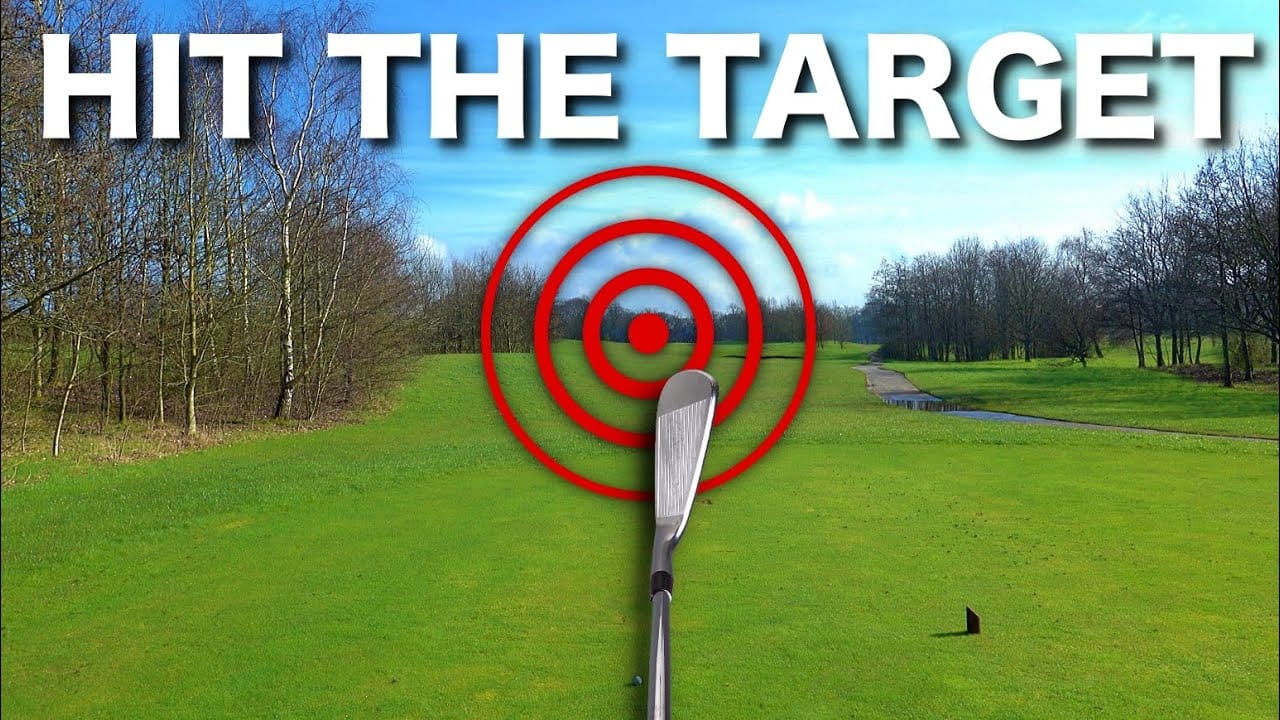
One of the oldest tricks in the book is pick a reference point that is closer to your golf ball when you’re aiming.
Here are the steps starting from behind the golf ball looking down the target line:
Pick a smart target with Tangent
Draw an imaginary line from the target back to your ball - Hold up your golf club if you need help visualizing a straight line
Find a visual marker that is on your intended line within 10-20 feet of the ball (could be a blade of grass, a divot, a tee, or mud… anything you can easily focus on)
Approach your ball and line up the club face to your visual marker (reference target)
Align your feet and body to the club face
Swing away
The first few minutes of this old Rick Shiels video show this perfectly.
Where Tangent Fits In
Most golfers have no idea if they’re aiming well — or if they’re just compensating.
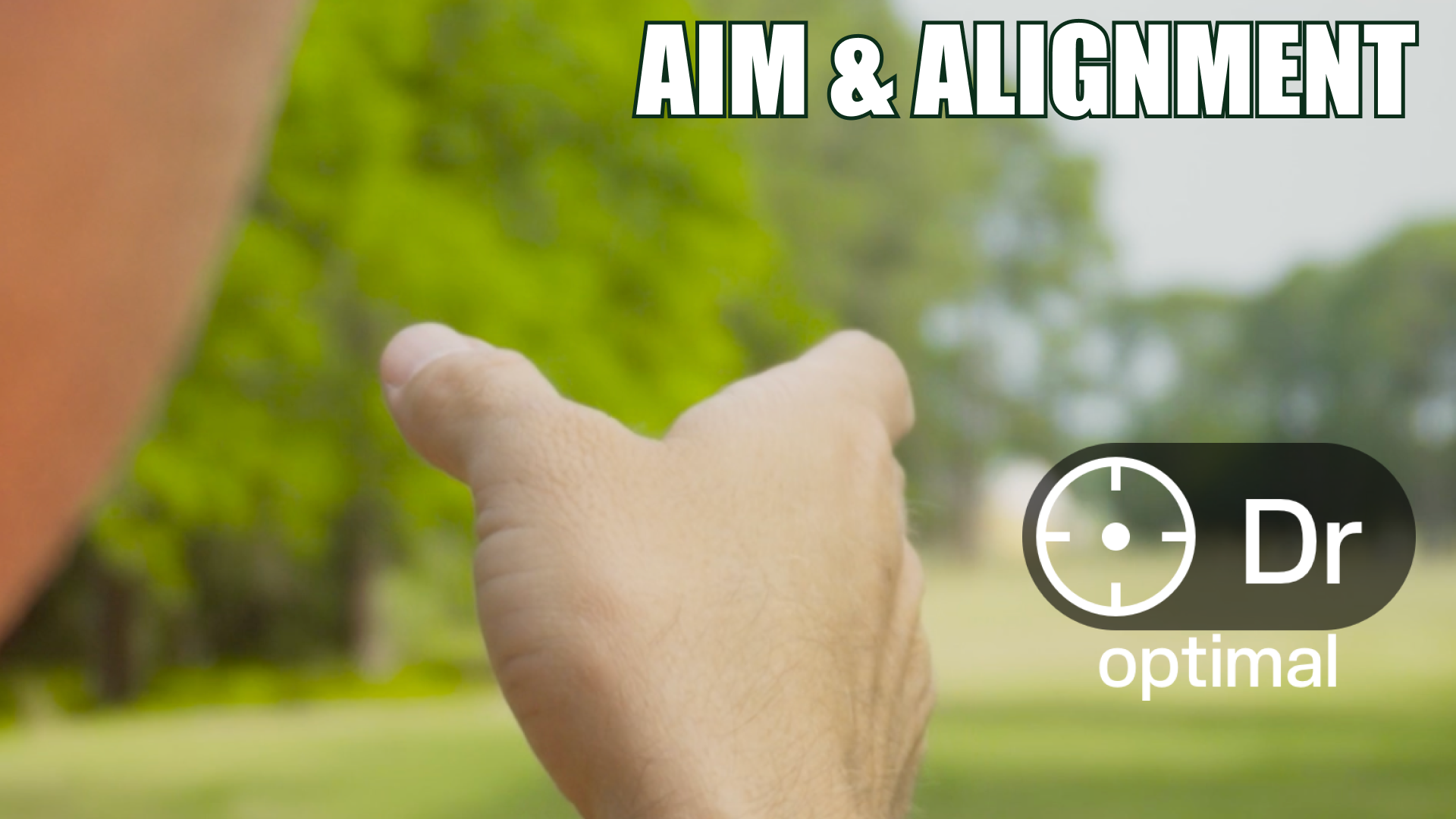
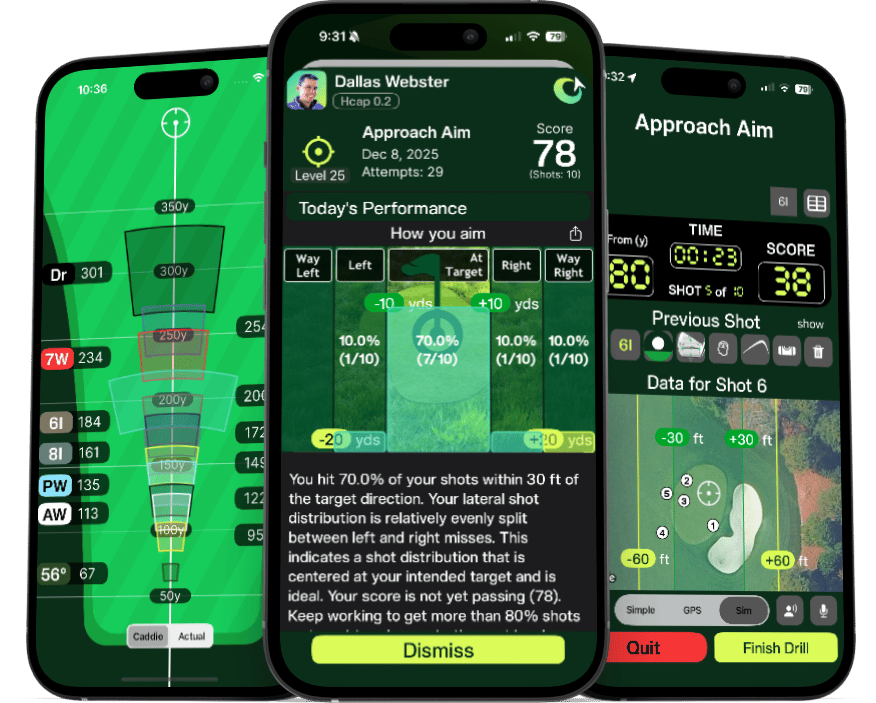
That’s why we built the Aim & Alignment Drill** in Tangent.
It helps you:
intentionally pick a target
measure whether your aim matches your intention
identify directional bias (left/right)
track improvement over time
This turns aim from a feeling into a skill you can train.
Once your aim improves:
dispersion tightens
misses become predictable
confidence increases
swing thoughts decrease
Because now your “good shots” actually go where they’re supposed to.
Practice Aim Like a Pro
The next time you practice:
use alignment sticks
pick precise targets
run your full routine
verify setup before swinging
use the Aim & Alignment Drill to track it
Don’t just hit balls. Train fundamentals.
Aim is one of the few fundamentals that:
costs zero athleticism
requires no swing changes
delivers immediate results
You don’t need a better swing to score better. You need better aim and alignment.
TRACER works best when:
the target is smart
the routine is consistent
the aim is intentional
Next up in the TRACER series: COMMIT — how your mindset impacts your golf shots.