

TPC Sawgrass doesn't reward flash. It rewards discipline, patience, and the ability to grind through stretches where the course is simply trying to take shots from you. This week, Cameron Young reminded us exactly what that looks like — and the data backed every bit of it.
He's a name that consistently appears near the top of ball-striking leaderboards without always getting the trophy. But this week, everything clicked. He was steady in every facet, avoided the blowup holes that swallowed other contenders, and saved his best for when the tournament was on the line.
Approach Play That Did the Heavy Lifting
Young averaged +1.2 Strokes Gained: Approach per round this week — the kind of number that quietly separates contenders from the field at a course like TPC Sawgrass, where a miss into the wrong spot doesn't just cost you a shot, it can unravel a hole entirely.
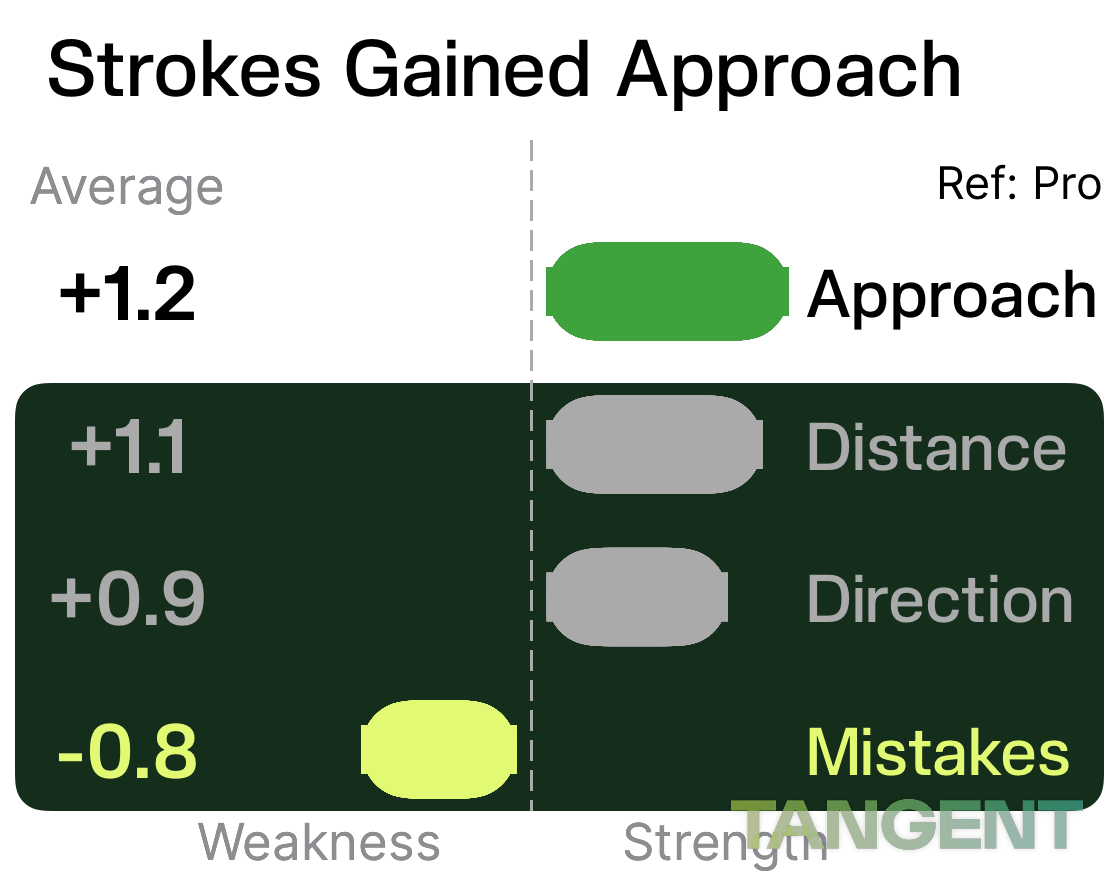
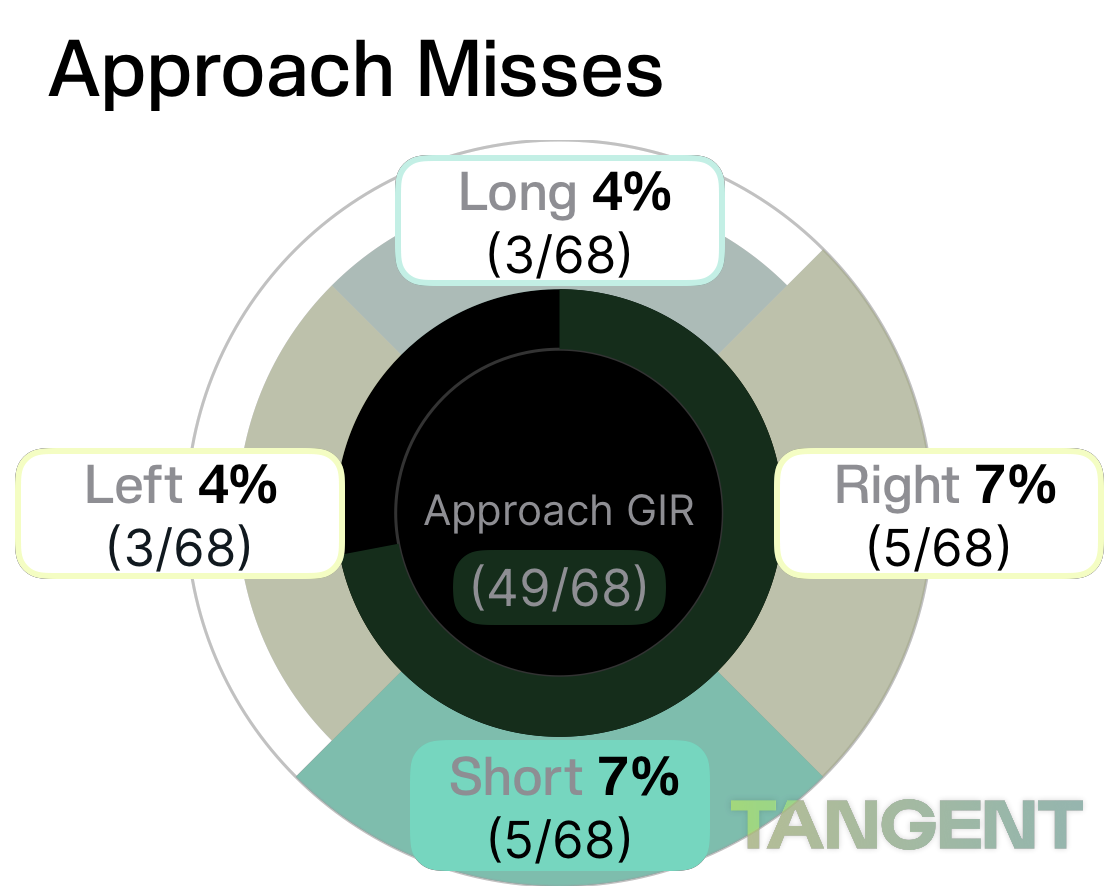
What made this especially impressive was his ability to capitalize on clean looks. When Young had an unobstructed approach — meaning his drive actually gave him a real shot at the green — he hit 72% of those greens. That distinction matters more than it might seem. Traditional GIR lumps in every hole, including the ones where a wayward drive leaves you punching out sideways or laying up short. That's not really an approach shot anymore. Tangent's Approach Misses data strips those holes out, so you're only measuring performance when you actually had a chance to hit the green. It's a cleaner, more honest picture of your iron game.
For everyday golfers, this reframe can be eye-opening. Your traditional GIR number might look discouraging — but how often is a bad drive quietly dragging that stat down and masking what's actually a pretty solid approach game? Or the flip side: your GIR looks fine, but Tangent's data reveals you're missing greens in a consistent pattern when you actually had a clean look. If you've noticed you tend to come up short more often than you'd like, that's exactly the kind of pattern Tangent helps you identify and fix.
Young's 72% on genuine approach opportunities is the number worth chasing. Pull up your Approach Misses chart in Tangent to see what yours actually looks like — and where the misses are tending to go when they do happen. Better yet, if your misses lean toward distance control issues, your strike quality might be the root cause worth investigating.
The Putter That Never Blinked
If the approach game was Young's engine, the flatstick was the fuel. He averaged +1.3 Strokes Gained: Putting per round — and the details behind that number are just as striking as the headline.
One three-putt. The entire week. On one of the most pressure-packed putting surfaces in professional golf, Young averaged 27 strokes per round and made an average of 82 feet of putts per round, well clear of the Tour average of 72 feet. That's not just making the easy ones — that's consistently converting from distance when the opportunity presents itself.
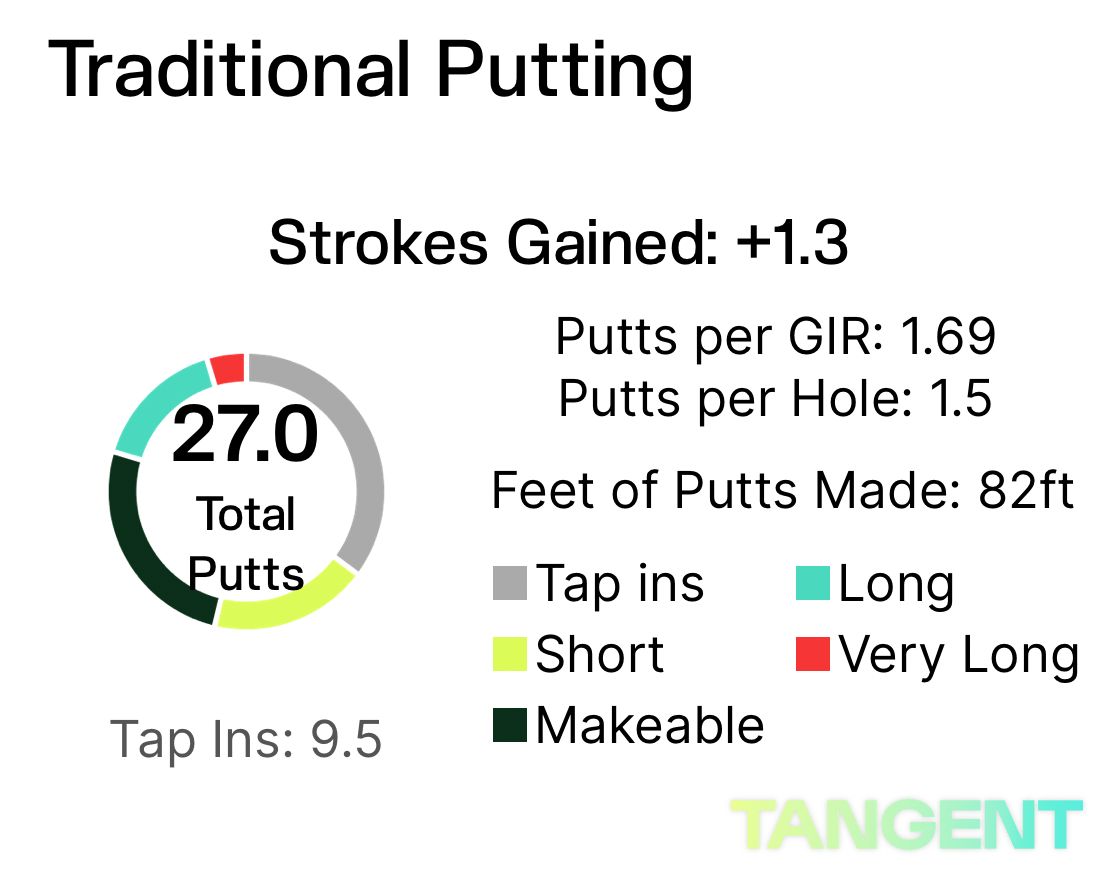
Traditional putting stats focus on data like total putts and putts per GIR. The problem is that most of your putts are tap ins. 30-40% of putts are statistically insignificant as they are the 2 footers we all almost always make. Typically the total number of putts is more reflective of how many greens you hit and your proximity, not how well you putted. If you've ever walked off the course frustrated with your putting despite a decent putt count, you're not alone — you're probably a better putter than you think.
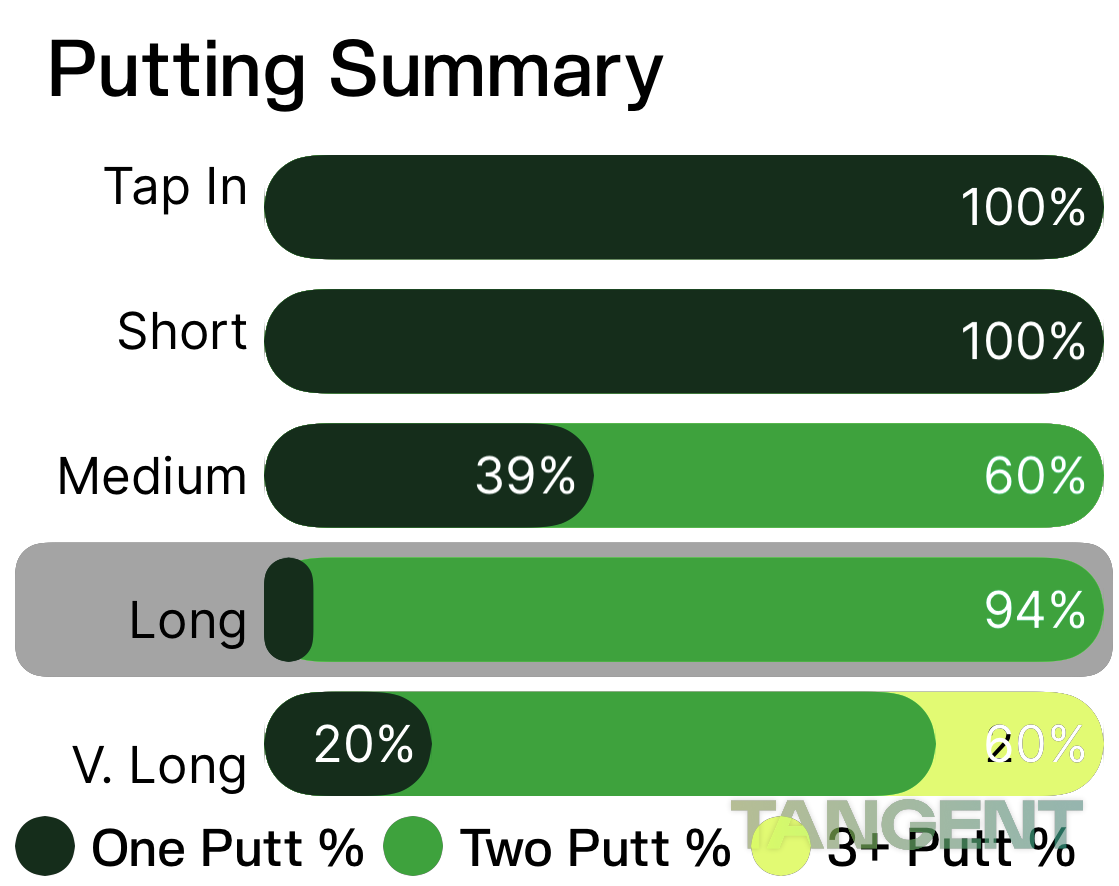
However, Tangent's Putting Summary is exactly the tool to measure true putting performance. Where are you losing strokes — from Short range where you should be converting? From Medium and Long where three-putts creep in? Young's week shows what it looks like when a player is operating cleanly across every range — Tap In through V. Long.
The Shot That Decided It All: Hole 17
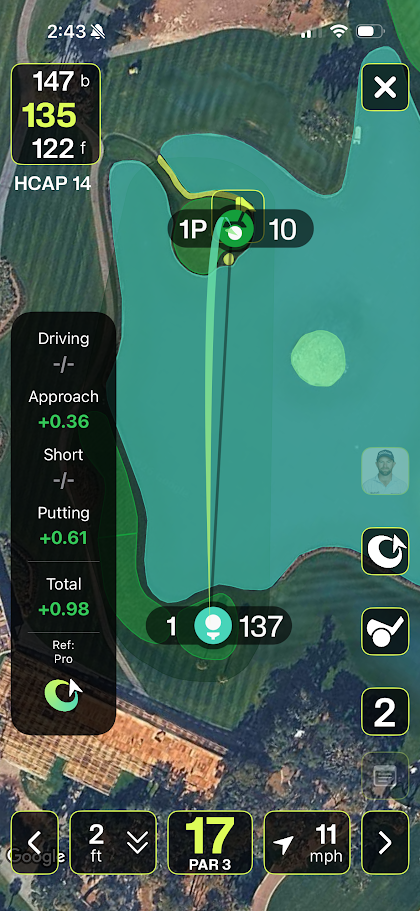
The defining moment came at the iconic 17th on Sunday. Facing a tee shot over water to that notorious island green, Young striped it to about 10 feet and rolled in the birdie. That single hole shifted the tournament — it tied him with playing partner Matt Fitzpatrick heading to 18, and Tangent's strokes gained data shows Young gained nearly a full stroke on the field with that birdie. That's one swing and one putt that changed everything.
It's worth sitting with that for a second. An entire week of steady, disciplined golf — and it still came down to one moment on one of the most nerve-wracking holes in the sport. Young was ready for it because he hadn't wasted shots getting there.
What Tangent Players Can Take From This
The core lesson from Young's week is simple: you don't have to be elite at everything to play the best golf of your life — but you do have to avoid being weak at anything.
This applies directly to how everyday golfers should think about their practice. Your Tangent data will almost always show one or two areas that need more attention. Give them that attention. But don't let a strong part of your game drift while you're focused elsewhere. Young didn't win The Players by having one skill that jumped off the page — he won it because nothing fell apart. If you want a simple framework for building that kind of consistency, the TRACER system is a great place to start.
When building your practice schedule in Tangent, distribute your sessions across all four strokes gained categories. Allocate more time to your weakest area, yes — but keep showing up for the areas where you're already competent. A well-rounded skillset that doesn't leak shots in any one place adds up fast on the scorecard, just like it did for Young at Sawgrass this week. And remember — whether you're chasing a Players Championship or trying to break 90 for the first time, the stats that matter are the same: hit more greens, avoid the big mistakes, and keep the putter from bleeding strokes.
The best rounds don't happen by accident — they're built with data. Start tracking your game in Tangent today.