Are your clubs holding you back?
Every golfer has had this thought.
You hit a few bad iron shots. Your driver spins too much. Your distances feel inconsistent. And somewhere between the range and seeing the latest Titleist ad, the question pops up:
“Do I need new clubs?”
It’s a fair question. Golf equipment does matter. But after years of playing competitive amateur golf—and now building a golf technology company—I’ve learned something important:
Most golfers buy clubs based on emotion. Better outcomes come from data.
Here's how to tell the difference between an equipment problem and a skill problem — and when upgrading actually makes sense.
5 Signs Your Equipment Might Be the Problem
Before you spend thousands on a new set, check whether any of these actually apply to you:
1. Inconsistent distance gaps between clubs. If your 7-iron and 8-iron go roughly the same distance, or there's a 25-yard gap where there should be 12, you may have a gapping problem. This can be caused by ball speed vs loft issues or clubs that simply aren't fit to your swing.
2. A sudden performance dropoff at a specific club. If you're great with your wedges but fall apart with your 7-iron and above, pay attention to where your bag transitions between club types or manufacturers. That's often where equipment mismatches hide.
3. Your clubs are 10+ years old with visible wear. Grooves wear down over time, especially on wedges. If your faces are smooth and shiny, you're losing spin — and that costs you stopping power on the green.
4. You've been properly fit before and your swing has changed significantly. If you've gained or lost speed, changed your swing significantly, or your body has changed, clubs that were once fit for you may no longer match.
5. Your dispersion patterns are unusually large for certain clubs. If some clubs produce tight shot patterns and others spray everywhere, the inconsistent clubs may not be suited to your swing. This is where data becomes essential.
What's NOT a sign you need new clubs: Having a bad round. Seeing a tour pro switch brands. Your buddy getting fit. A sale at the golf shop. These are emotions, not evidence.
How to Use Data to Answer the Question
Here's the framework I use — and it's the same process available to any Tangent golfer.
Step 1: Check Strokes Gained by Club
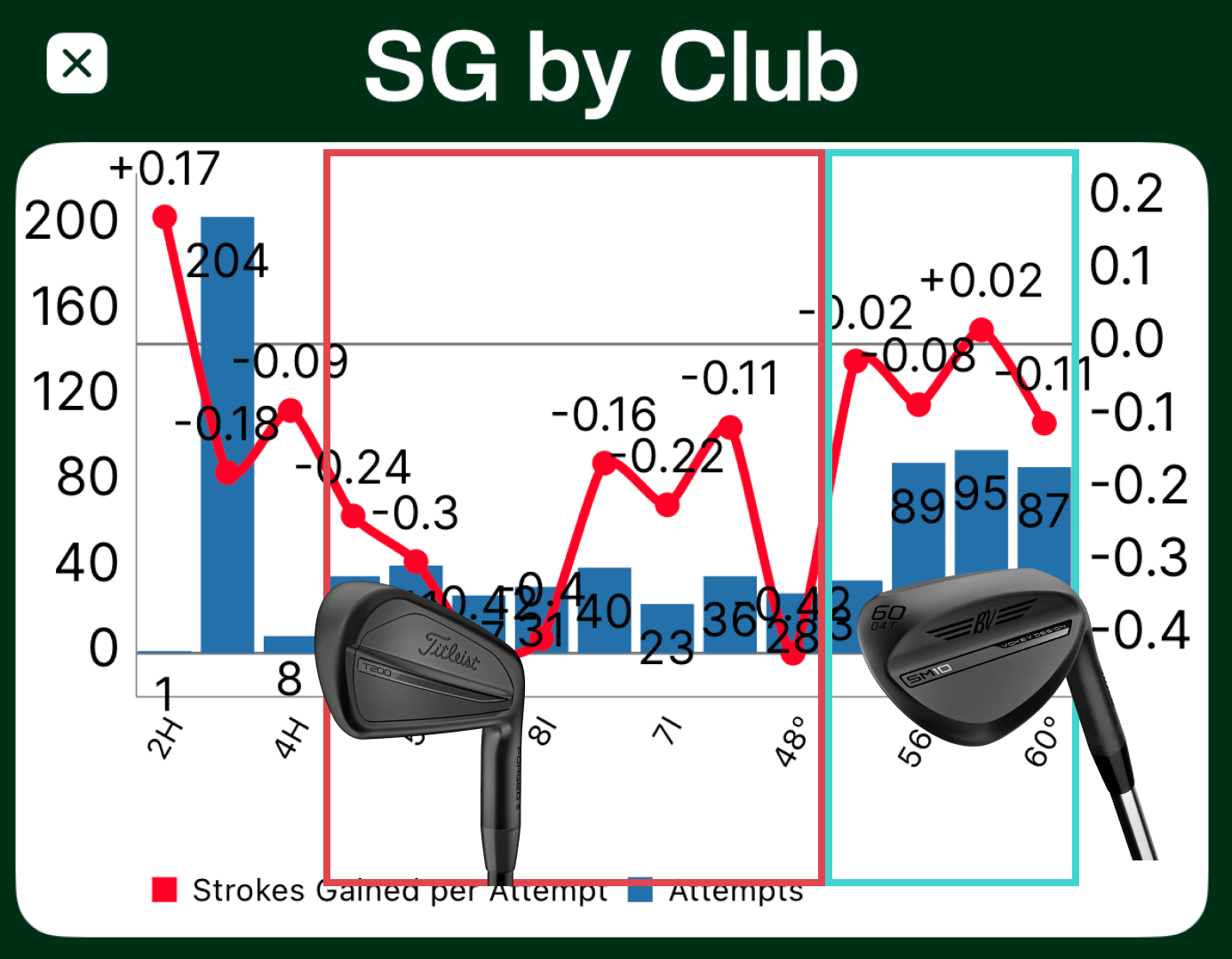
In the Tangent app, go to your profile under the data tab and find Strokes Gained by Club. This shows you which clubs are helping your game and which are costing you strokes.
You don't need 500 rounds — your last 20 will give you a solid read.
What you're looking for: a clear performance dropoff at a specific point in your bag. If everything above your wedges is losing strokes, that's a signal worth investigating.
Step 2: Review Your Dispersions and Gapping
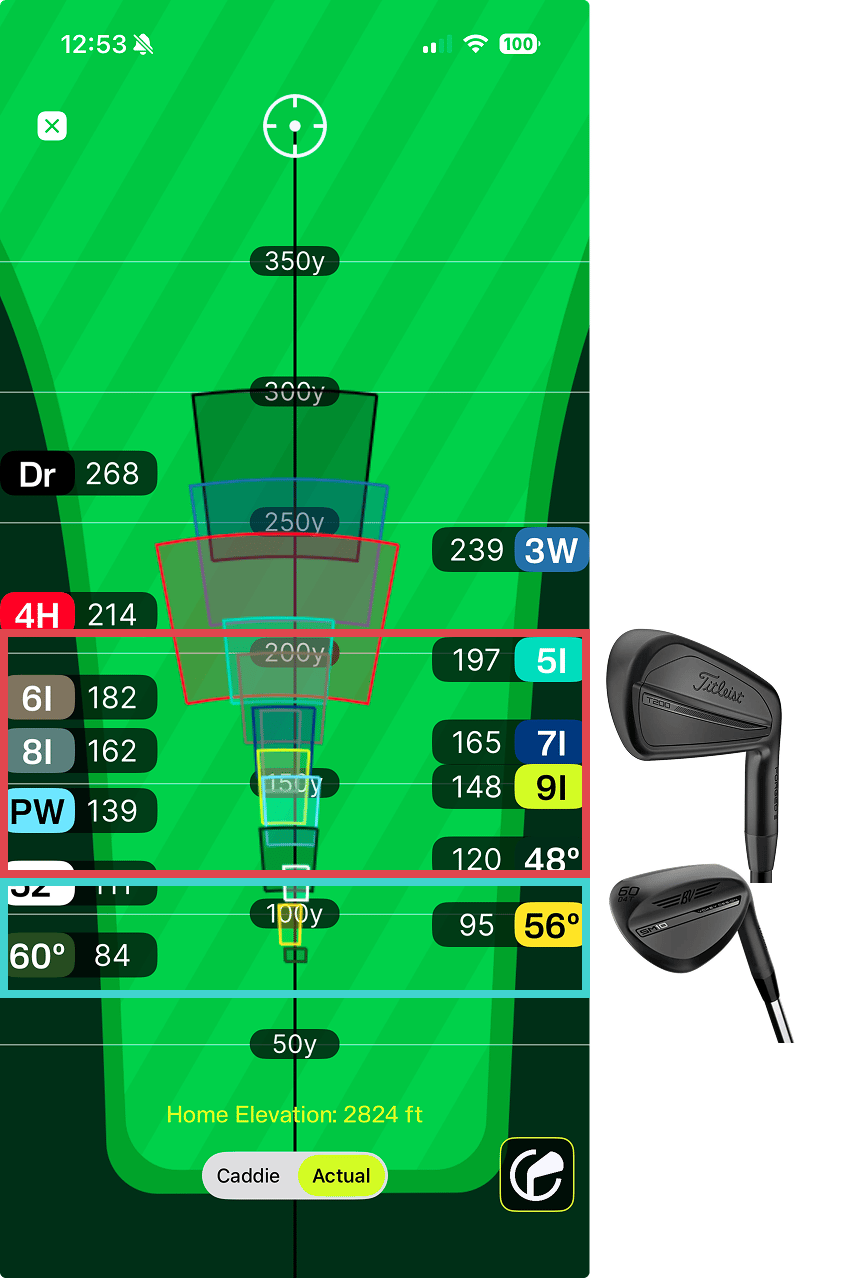
The gapping view in Tangent shows the expected outcome for every club in your bag. Each box represents the distance range and directional spread for that club. Bigger boxes mean more uncertainty. Smaller boxes are better.
Toggle from "Caddie" to "Actual" to see what your clubs are actually doing on the course.
What you're looking for:
- Dispersion jumps — Do your dispersions suddenly double when you switch from one club type to another? That's a potential equipment mismatch.
- Overlap — Are two clubs producing essentially the same distances? You might not need both.
- Outliers — Is there one club with wildly bigger dispersions than everything else? That club might not belong in your bag.
Step 3: Diagnose WHY You're Losing Strokes
Once you've identified the problem clubs, look at how you're losing strokes. Are you losing them to:
- Distance control? You're hitting them inconsistent distances — could be spin rate issues, could be shaft flex, could be strike quality.
- Direction? You're missing consistently one way — could be lie angle, could be shaft length, could be a swing issue.
- Both? That's the strongest signal that something's off with the equipment.
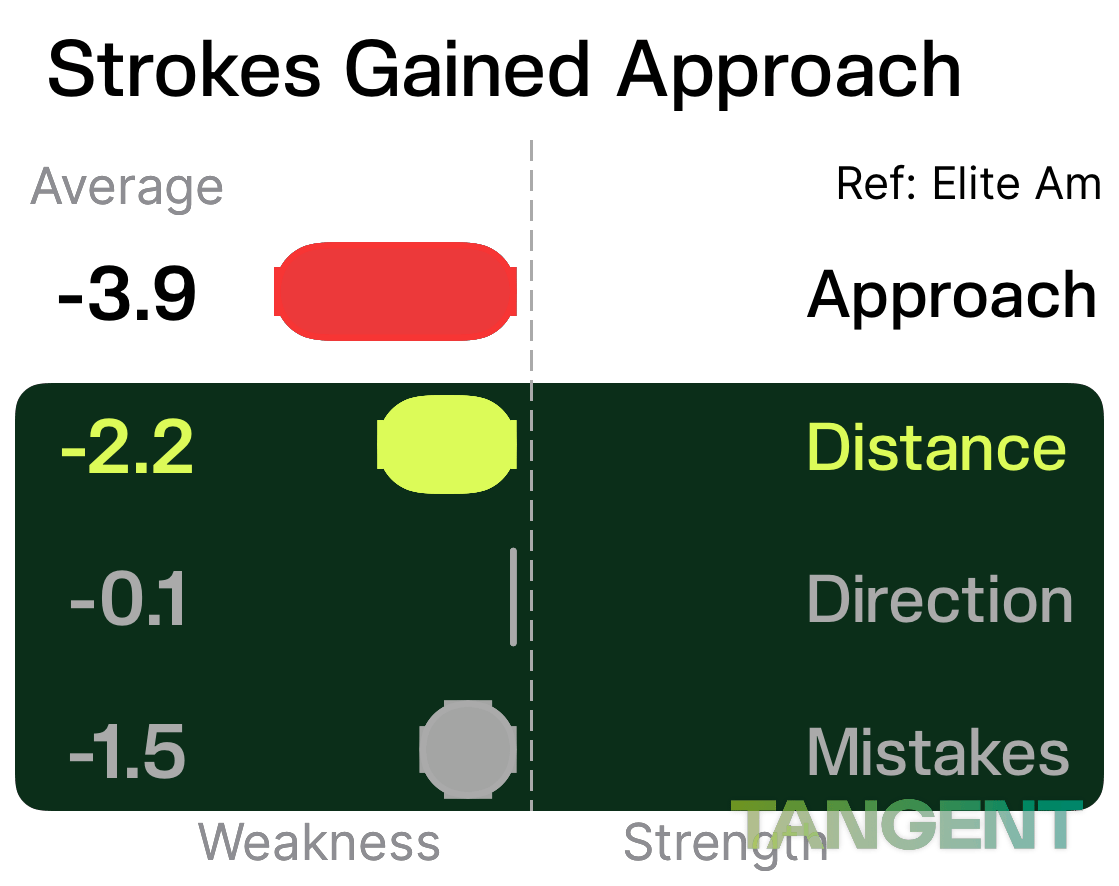
If the data points to distance control problems concentrated in specific clubs, that's your cue to start the equipment conversation.
My Case Study: Was It Me or My Irons?
I recently had a conversation that sent me down this exact path. I was playing with ZeroToScratch — Brandon, who is trying to go from zero golf experience to scratch in a year. We were filming his baseline round, and his ball striking coach Clayton was there too.
Clayton mentioned he thought my irons were holding me back. Those are strong words for a swing coach to say. Usually the answer is "hit it better." But he pointed out some things that had me thinking.
So I went to my Tangent data.
What the data showed:
There was a huge falloff in performance when I went from my 52° Vokeys to my 48° T200s. I was close to strokes gained neutral with the Vokeys — a pretty good player inside 115 yards. But as soon as we switched to the T200s, I was all over the place.
Looking deeper, I was losing most of my approach strokes to distance control. My T200s are designed to be forgiving on mishits (less distance loss), but they're also lower spin. I was trading control for forgiveness — and the data showed that trade wasn't working for my game.
My gapping view confirmed it:
- Dispersions more than doubled going from Vokeys to T200s
- Dispersions got very wide at the 6-iron
- My 4-hybrid had dispersions so large it had no business being in the bag
The verdict: The data supported what Clayton suspected. My irons weren't the right construction for my game. Time to start shopping — but this time with data, not emotion.
When New Clubs Won't Help
Here's the honest truth: for most golfers, new clubs will make a marginal difference at best. If your issue is:
- Inconsistent strike quality — new clubs won't fix off-center contact. Work on your strike first.
- Poor course management — the best clubs in the world can't fix aiming at the wrong target.
- Lack of practice structure — random range sessions won't improve whether you hit old clubs or new ones.
New clubs help when the data specifically shows an equipment-related performance gap. Not before.
The Bottom Line
Use this decision tree:
- Track your rounds and get real data on every club in your bag.
- Look for the dropoff — is there a specific point where performance falls off?
- Diagnose the cause — is it distance control, direction, or both?
- Rule out skill first — is your strike quality consistent? Is it the same issue with every club, or just specific ones?
- If the data points to equipment — now you can shop with confidence, knowing exactly what you need.
The goal isn't to avoid buying clubs. It's to buy the right clubs for the right reasons — so you're playing your best golf, getting equipment that actually helps, and having more fun.
Isn't that what it's all about?
Make sure to checkout our simple framework for better golf — with any equipment.
Frequently Asked Questions
How often should you replace golf clubs?
There's no fixed timeline. Wedges with heavy use may need replacing every 2-3 years as grooves wear down. Irons can last 5-10 years if well maintained. Drivers and woods typically last until technology or your swing changes enough to warrant an upgrade. The best indicator isn't age — it's performance data showing the club isn't delivering consistent results.
How do I know if my golf clubs are too old?
Look at the grooves. If your wedge faces are smooth and shiny, they've lost spin. For irons, age matters less than fit — a 10-year-old set that's properly fit to your swing will outperform brand new off-the-rack clubs. Track your club performance data over time: if dispersions are growing or distances are shrinking, it may be time.
Is club fitting worth it?
Yes — if you have a reasonably consistent swing. Fitting optimizes loft, lie angle, shaft flex, shaft length, and grip size to your specific swing characteristics. But getting fit when your swing changes every week is like getting a suit tailored while you're still growing. Get your fundamentals stable first, then get fit.
Should I upgrade my driver or my irons first?
Look at where you're losing the most strokes. Most amateurs lose more strokes on approach shots (irons) than off the tee (driver), but your data may show something different. Let the numbers tell you where the biggest opportunity is rather than chasing the latest driver release.
How do you get data like this?
It’s simple. Subscribe and start tracking your shots with Tangent. In no time you’ll have all the data you need to start playing your best golf, buying better equipment, and having more fun.