
How to Break 90 in Golf: The Stats That Actually Matter
Whether you're trying to break 90 or 80… these are the key stats to watch that indicate progress, bottlenecks, and areas to focus. We didn't pull these from thin air — they come from analyzing thousands of real rounds tracked by Tangent golfers.
Here's what we found: breaking 90 doesn't require elite ball striking. It doesn't require a perfect swing. It requires knowing the handful of stats that actually matter — and most golfers are surprised by how achievable the targets really are.
The Data That Breaks 90
Here are the four stats that separate golfers who shoot in the 80s from those stuck in the 90s…
Greens in Regulation (GIR)
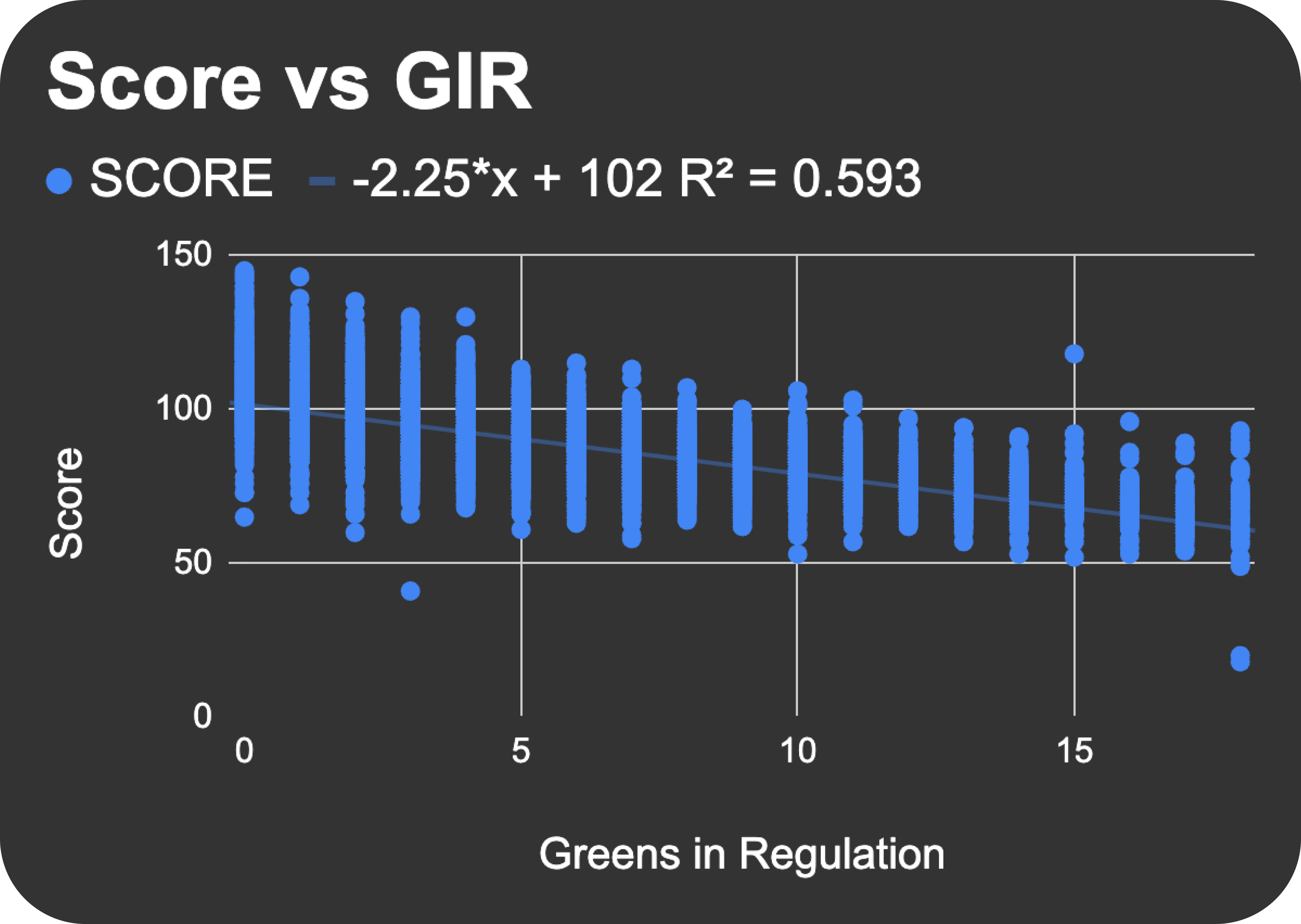
Greens in regulation is one of the only traditional stats that actually correlates to scoring. Others like number of putts and fairways hit just don't matter the way you'd think… but greens? Greens are king.
If you don't know what a Green in Regulation is, it's real simple. A green in regulation is when you get it on the putting surface in PAR minus 2 or fewer shots for a given hole. That means:
- 3 shots for a par 5
- 2 shots for a par 4
- 1 shot for a par 3
Keep in mind that hitting greens in regulation is hard. The best in the world (think PGA Tour) only average about 13 greens per 18 holes.
So how many do you need to hit to break 90?
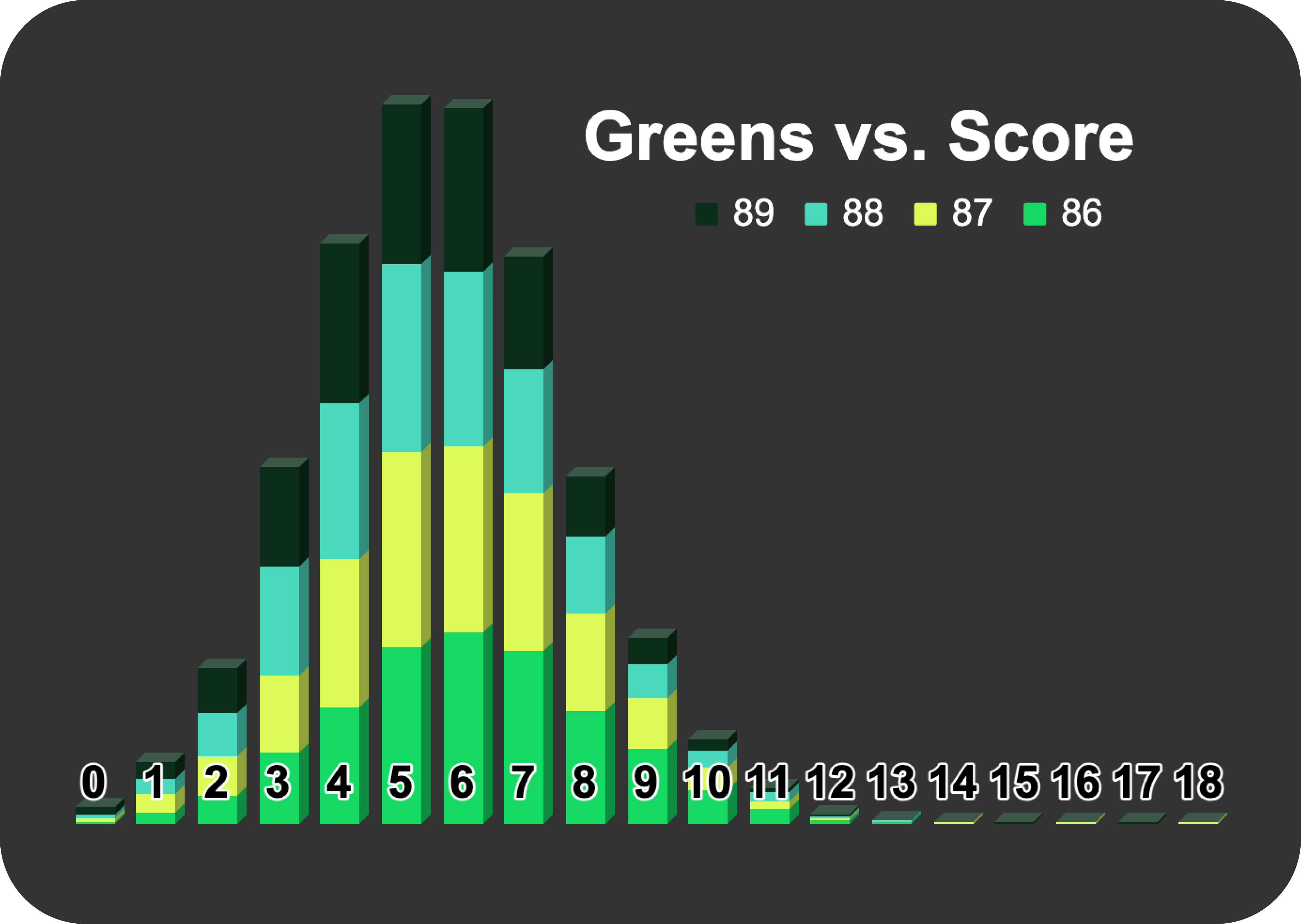
To break 90 you need 3-5 Greens in Regulation.
Not 10. Not elite level ball striking… You need 3-5 Greens in Regulation.
Hopefully that's less than you thought. Most of those are going to come on short par 4s and par 5s.
How to Hit More Greens in Regulation
You don't need a swing overhaul to add 1-2 GIRs per round. Here are the highest-leverage changes:
Club up on approach shots. Most amateurs come up short. If you're between clubs, take the longer one. The data consistently shows amateurs underclub, and the trouble in front of greens is almost always worse than behind. We wrote more about why coming up short kills scores here.
Aim for the center of the green, not the pin. On your approach shots, pick the fattest part of the green. You're not trying to make birdie — you're trying to get on the putting surface. A 30-foot putt is infinitely better than a tricky chip from a bunker.
Focus on strike quality. The number one reason amateurs miss greens isn't aim — it's inconsistent contact. Fat and thin shots cost you more greens than anything else. Our data on strike quality shows why impact location determines everything.
So what happens when you miss the green?
Get the GIRp1 (GIR-plus-one)
Now this is a stat you won't find on your traditional scorecard, but it's a game changer.
A GIRp1 (GIR-pee) is a Green in Regulation plus 1. That means you now have an extra shot to hit the green:
- 4 shots on a par 5
- 3 shots on a par 4
- 2 shots on a par 3
This is a mental unlock. It's difficult to hit a green in regulation, but a GIRp1?
That's just two competent shots and a short wedge on a par 4. We can handle that. Just avoid the big trouble.
Think about it. On your typical par 72, 18-hole course… to break 90 you just need 17 bogeys and 1 par. Bogey is your friend. For every double you make, you need to make an additional par.
If you were able to get 18 GIRp1s, that's 18 putts for par. You are going to make several of those in an 18-hole round. So how many GIRp1s do you need to break 90?
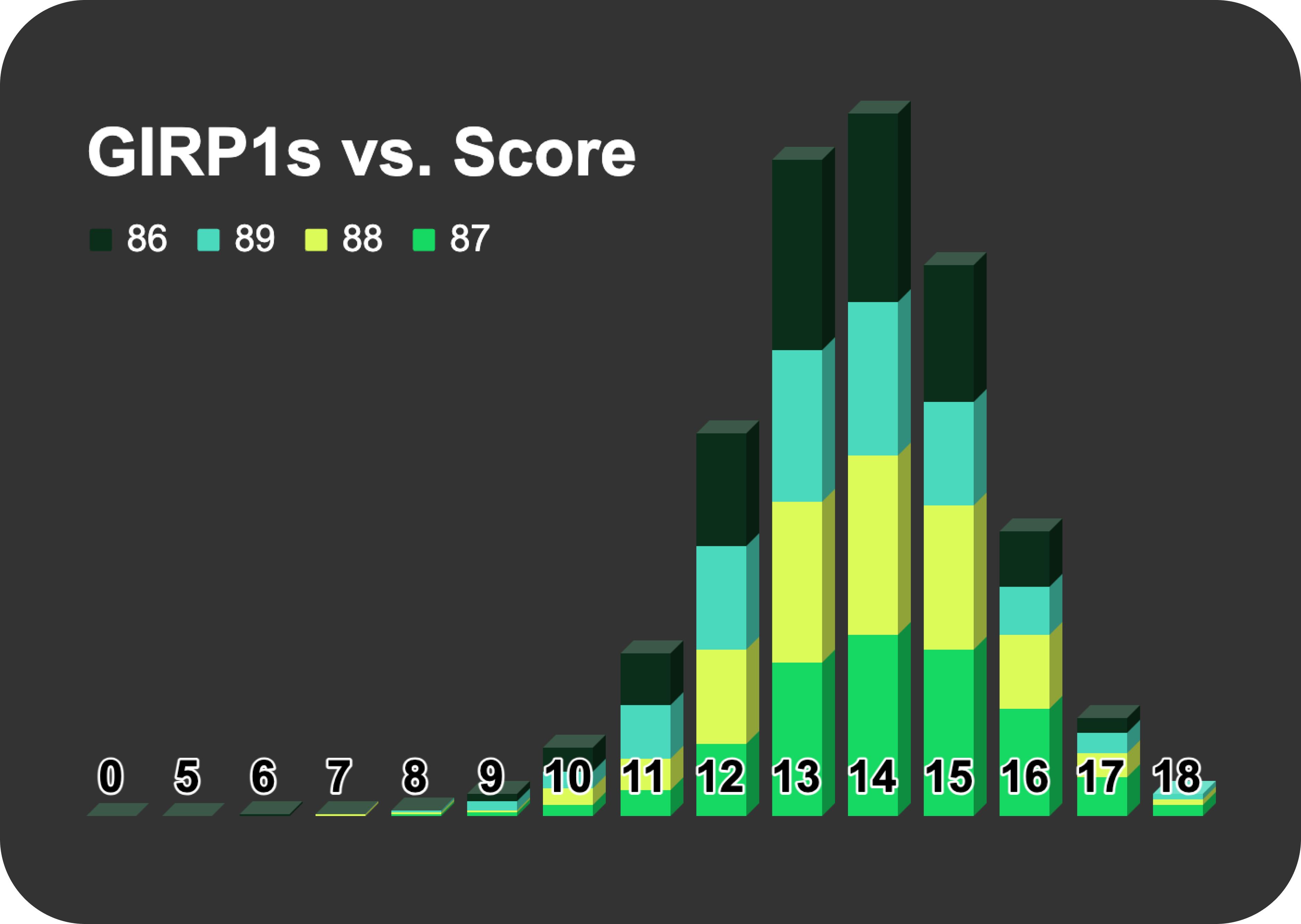
You need 13 or more GIRp1s to have a great chance to break 90.
So that's still not perfect golf. But if you can take the stress out of trying to be perfect and just get GIRp1s… that's a lot of par putts and hopefully some easy 2-putt bogeys.
The whole goal of the GIRp1 is to keep the ball near or around the green so that your short game can give you a realistic chance at par or bogey. It's a lot better than chipping out sideways from the trees.
How to Get More GIRp1s
The GIRp1 target is really about course management — keeping the ball in play and giving yourself simple third shots.
Play for position, not distance. Off the tee, your only job is to advance the ball as far as you can without taking on big trouble. If driver puts water or OB in play, hit a 5-wood or hybrid. A 170-yard approach from the fairway is easier than a 130-yard approach from the trees.
Don't always go for the green. If you have a long club in that could leave you short sided or in big trouble, it's okay to lay up on a par 4. You'd much rather have a simple pitch from 40 yards than be stuck in a bunker with no hope of getting out.
Avoid the big miss. GIRp1s are less about hitting great shots and more about not hitting terrible ones. Hazards, OB, and penalty strokes are the enemies. A boring shot to the middle of the fairway sets up a GIRp1 almost every time. This is the philosophy behind our TRACER framework for simpler golf.
Avoid Doubles (and worse)
Double bogeys and worse are where rounds blow up. When we look at the data, the difference between shooting 88 and 92 is almost always the number of doubles.
Players that break 90 consistently are making 4 or less doubles.
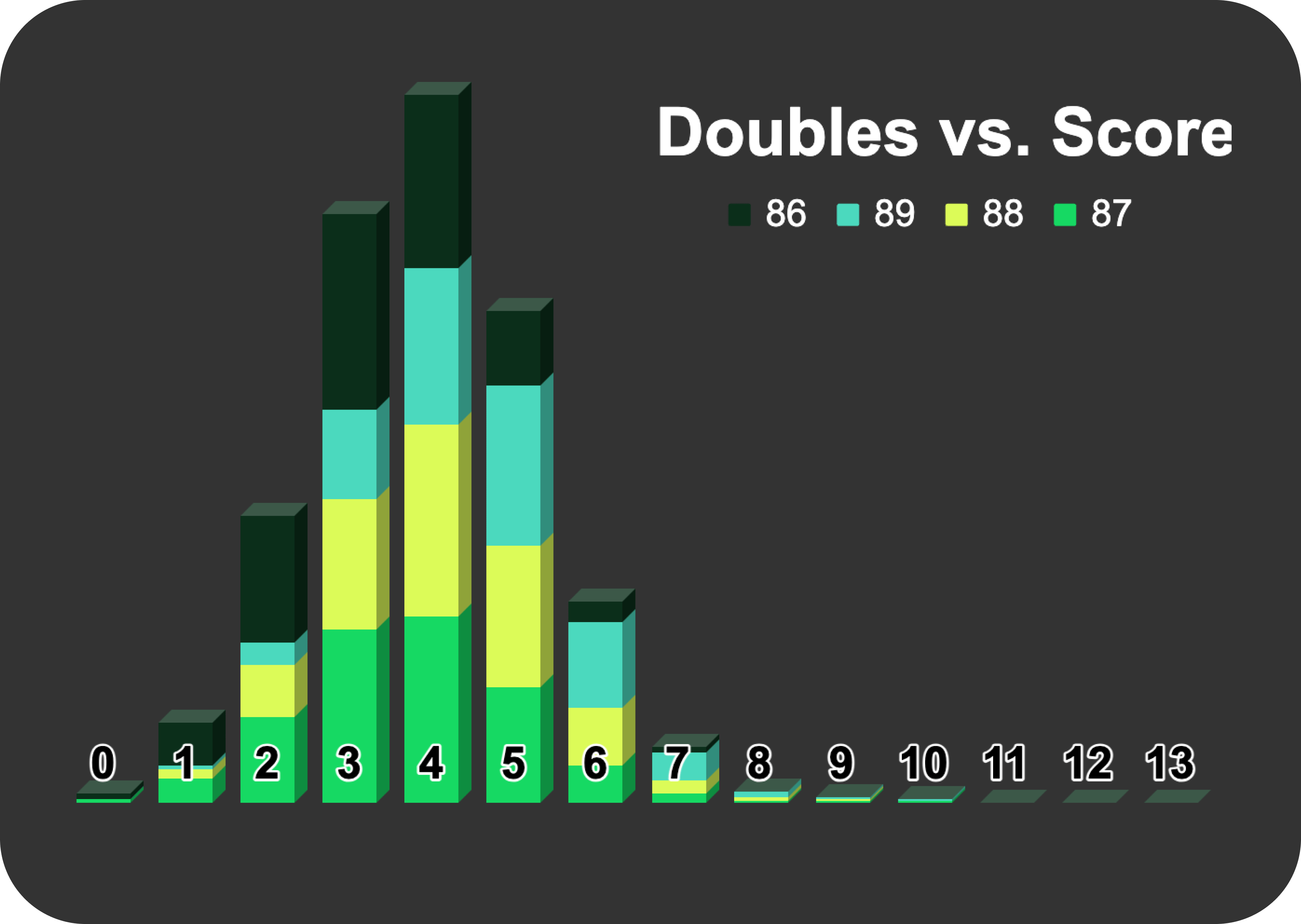
You are allowed to make mistakes. You’re going to make doubles. Just know that realistically for every double bogey (or more) that you make, you need an additional par. That’s making a putt on a GIRp1 or hitting an additional GIR to cancel out the double.
You're going to avoid doubles by:
- Aiming away from hazards — when there's water left, aim right of center. Don't flirt with trouble.
- Choosing a club off the tee that gets in play — not always driver. A 3-wood in the fairway beats a driver in the trees.
- When in trouble… prioritize getting out! — No hero shots. Chip sideways back to the fairway. Take your medicine.
- No super-hero shots — that 200-yard carry over water to a tucked pin? Lay up. Every time. The math doesn't support the gamble.
The Hidden Cost of a Double Bogey
Here's a way to think about it that might change your on-course decisions: every double bogey you make requires you to "find" an extra par somewhere else in your round just to break even. If you make 6 doubles instead of 4, you need to find 2 more pars — and that's a lot harder than just avoiding the double in the first place.
The fastest way to lower your scores isn't to make more birdies. It's to turn doubles into bogeys. A bogey is a perfectly fine score on most holes.
Avoid 3-Putting
It's a lot of hard work getting the ball on the green. The last thing we want to do is throw it away with a careless 3-putt.
Putting is hard. The hole is small. But we've been trained by seeing highlight reels on TV to think we should make every putt.
To break 90, we just need to avoid 3-putts. That means great speed control and discipline to not be overly aggressive on the greens… but still… you don't have to be perfect.
To break 90, Tangent golfers are making 3 or less three-putts.
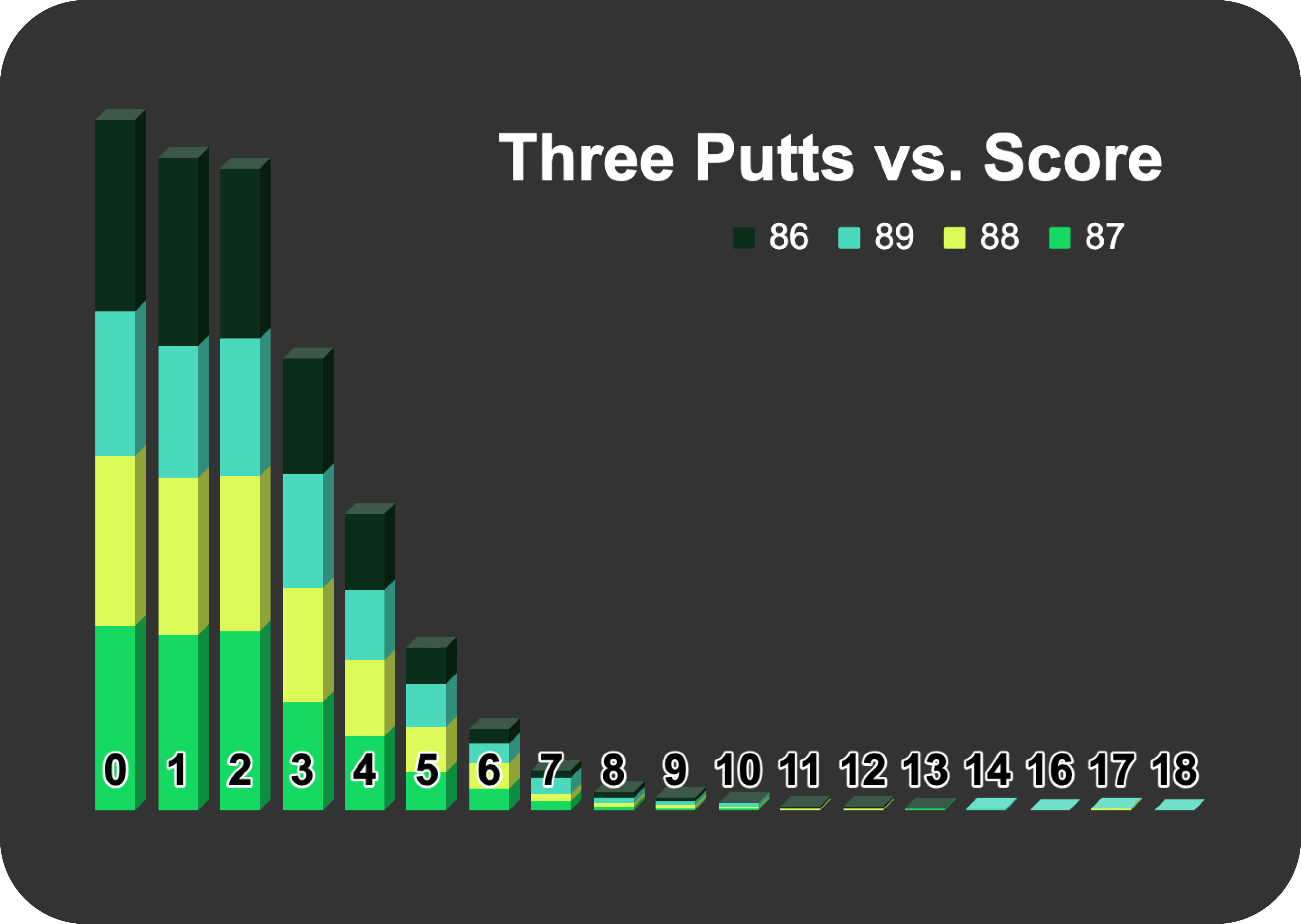
To break 90, Tangent Golfers are making 3 or less three putts. Similarly to Doubles… every time you 3 putt, you need to make up for it with a 1 putt GIRp1 or another GIR.
But 3 putts happen. Especially with putts outside of 30 feet. Putting is hard. Work on speed control and everything gets easier.
How to Eliminate 3-Putts
Three-putting almost always comes down to one thing: the first putt was too far from the hole. Here's how to fix it.
Practice lag putting, not 6-footers. Most of your practice time on the putting green should be spent on controlling speed. That's the skill that eliminates 3-putts. Get the speed right and direction takes care of itself.
Read the green for speed, not just line. Amateurs obsess over which way the putt breaks. What they should focus on first is whether it's uphill or downhill and how fast the green is. Speed is 80% of the equation on long putts.
Use the "2-putt zone" rule. On any putt outside 20 feet, your only goal is to leave it inside 10% of the starting distance. Don't try to make it. Just get it close. Aggressive putting from long range is one of the biggest score killers we see in the data.
Putting It All Together
Breaking 90 doesn't require elite level ball striking. It requires good decisions, managing your misses, and aiming for a lot of GIRp1s.
Here's your break 90 checklist:
| Stat | Target to Break 90 |
|---|---|
| Greens in Regulation | 3-5 per round |
| GIRp1s | 13 or more per round |
| Double Bogeys (or worse) | 4 or fewer per round |
| Three-Putts | 3 or fewer per round |
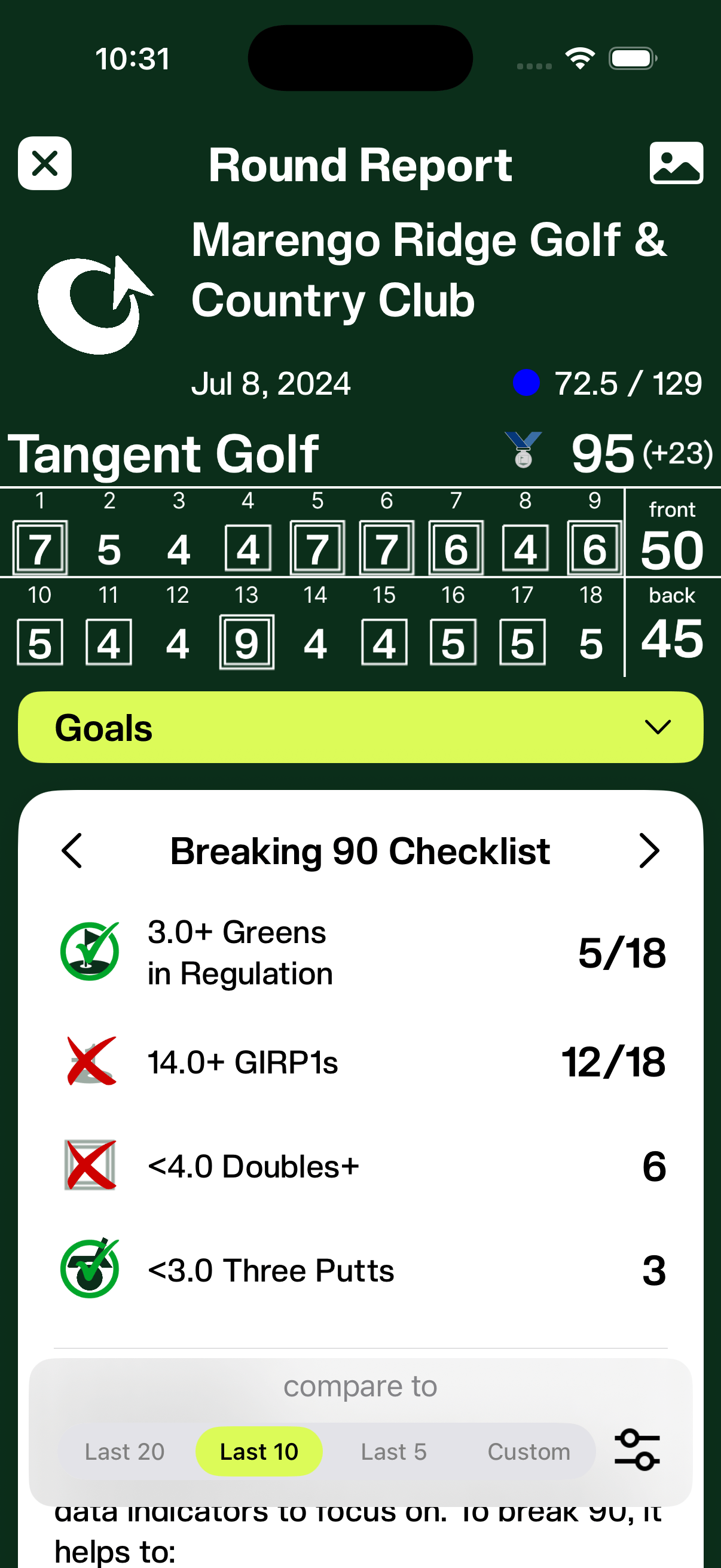
These four numbers tell you almost everything you need to know about why you're shooting what you're shooting. If you're hitting 4 GIRs but making 7 doubles, your issue isn't ball striking — it's course management. If you're only getting 10 GIRp1s, you need to focus on keeping the ball in play off the tee.
At Tangent, we aim to make this easier. Your round report gives you these key metrics automatically after every round — so you can track your progress and see exactly where you're leaving shots on the course.
What About Breaking 80?
If you've already conquered 90 and are chasing 80, the targets shift — but the framework stays the same:
| Stat | Break 90 | Break 80 |
|---|---|---|
| GIR | 3-5 | 8-10 |
| GIRp1 | 13+ | 16+ |
| Doubles | ≤4 | ≤1 |
| Three-Putts | ≤3 | ≤1 |
The jump from breaking 90 to breaking 80 is significant — it requires much more consistent ball striking and nearly eliminating big mistakes. But the process of tracking these stats and identifying your weakest area is exactly the same. Our post-round review process helps you identify what to work on after every round.
Let's make better decisions, focus on the right tasks, and we can do this consistently. Let's improve together.
If you want to accelerate your path to breaking 90 and beyond, consider subscribing to Tangent Golf. Subscribe today to unlock all these features and more.
Frequently Asked Questions
What percentage of golfers can break 90?
Only about 26% of golfers consistently break 90, according to USGA handicap data. That means if you break 90 regularly, you're already in the top quarter of all golfers. It's a meaningful milestone that's worth celebrating — and it's more achievable than most people think.
How many greens in regulation do I need to break 90?
Based on our data from thousands of tracked rounds, you need 3-5 greens in regulation to break 90. That's far fewer than most golfers expect. The key is what you do on the holes where you miss the green — which is where the GIRp1 stat becomes critical.
What is a GIRp1 in golf?
GIRp1 stands for "Green in Regulation Plus 1." It means you reached the putting surface in one shot more than regulation — so 4 shots on a par 5, 3 shots on a par 4, or 2 shots on a par 3. Tracking GIRp1s reframes your strategy around making bogey (or better) on every hole rather than chasing pars you don't need.
Is it better to practice putting or ball striking to break 90?
Both matter, but eliminating three-putts is often the faster win. Our data shows that golfers who three-putt 3 times or fewer per round have a significantly higher chance of breaking 90. Lag putting practice (long putts focused on speed control) is the highest-leverage putting skill for most amateurs. Then just focus on avoiding mistakes with your ball striking.
How many double bogeys can I make and still break 90?
On a par 72 course, you can make up to 4 double bogeys and still break 90 — but you'll need to offset each one with a par somewhere else. The fewer doubles you make, the less pressure there is on the rest of your game. Most doubles come from penalty strokes and hero shots, both of which are avoidable with smarter course management.
What's the fastest way to go from 95 to 89?
Focus on reducing doubles and three-putts first — they're the lowest-hanging fruit. A golfer shooting 95 with 7 doubles and 5 three-putts can often break 90 without hitting a single better full shot. Just turn 3 of those doubles into bogeys (smarter tee shots, no hero shots) and eliminate 2 three-putts (better lag putting), and you're at 89.
If you want to accelerate your path to breaking 90 and beyond, consider subscribing to Tangent Golf.
Subscribe today to unlock all these features and more.