

When a golfer treats their game like a product to be measured, improved, and iterated on, the results follow. Keith Muir — blogger, obsessive putter-tester, and one of Tangent’s most thoughtful power users — is a perfect example. Over the past year he used Tangent every round, tested dozens of putters, learned AimPoint Express, and turned what used to be intuition into repeatable, measurable change. The story isn’t just interesting — it’s instructive for anyone on the fence about subscribing.
Keith is a paying user of Tangent. All of the content linked here was created out of his own love of the game. He has not been compensated in any way by Tangent.
The arc: testing, tracking, and choosing a “gamer”
“In theory, theory and practice are the same. In practice they are not.” -Einstein (and Keith)
Keith’s approach is methodical: test many putters the same way, log every on-course putt, and then let the numbers point to a decision. On The Golf Improvement Podcast he explains the process he used to identify a SeeMore Mini Giant FGP as his new “gamer” after trying multiple heads and setups — and he backs that choice with Tangent-driven data from both practice and competitive rounds.
Why it matters: putter feel and confidence are real, but Tangent turns subjective impressions into objective comparisons. Instead of “I think this putter rolls better,” Keith can say “this putter improved my SGP by X over Y tested putts,” and show the before/after distributions.
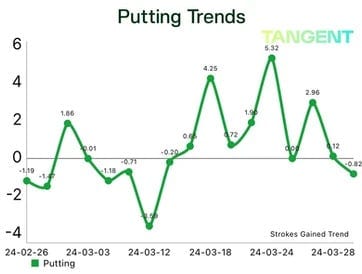
Trend from Keith’s Lab Putter Update
“I’ve been testing putters all year — Tangent gave me the data to make a confident choice.” -Keith on The Golf Improvement Podcast
Another takeaway from Keith’s hands-on reviews: fit to your stroke, not the other way round. Some putters (and manufacturers’ instructions) ask you to alter ball position or arc to “make the head work.” Keith’s DF3 update shows that when a putter demands a radical stroke change, the initial gains can reverse — and confidence can crash. Tangent helps you spot that pattern quickly by splitting make% and miss-direction over time, so you can either persist with a deliberate change or cut the experiment early and move on.
From method to mastery: quantifying AimPoint
Learning AimPoint Express changed how Keith aimed, but the key moment was when he used Tangent to measure the change. He wrote and podcasted about taking AimPoint training and then comparing his strokes-gained putting, start-line consistency, and make% in Tangent before vs. after adoption. That’s the difference between anecdote and evidence.
Concrete ways Tangent helped quantify AimPoint for Keith:
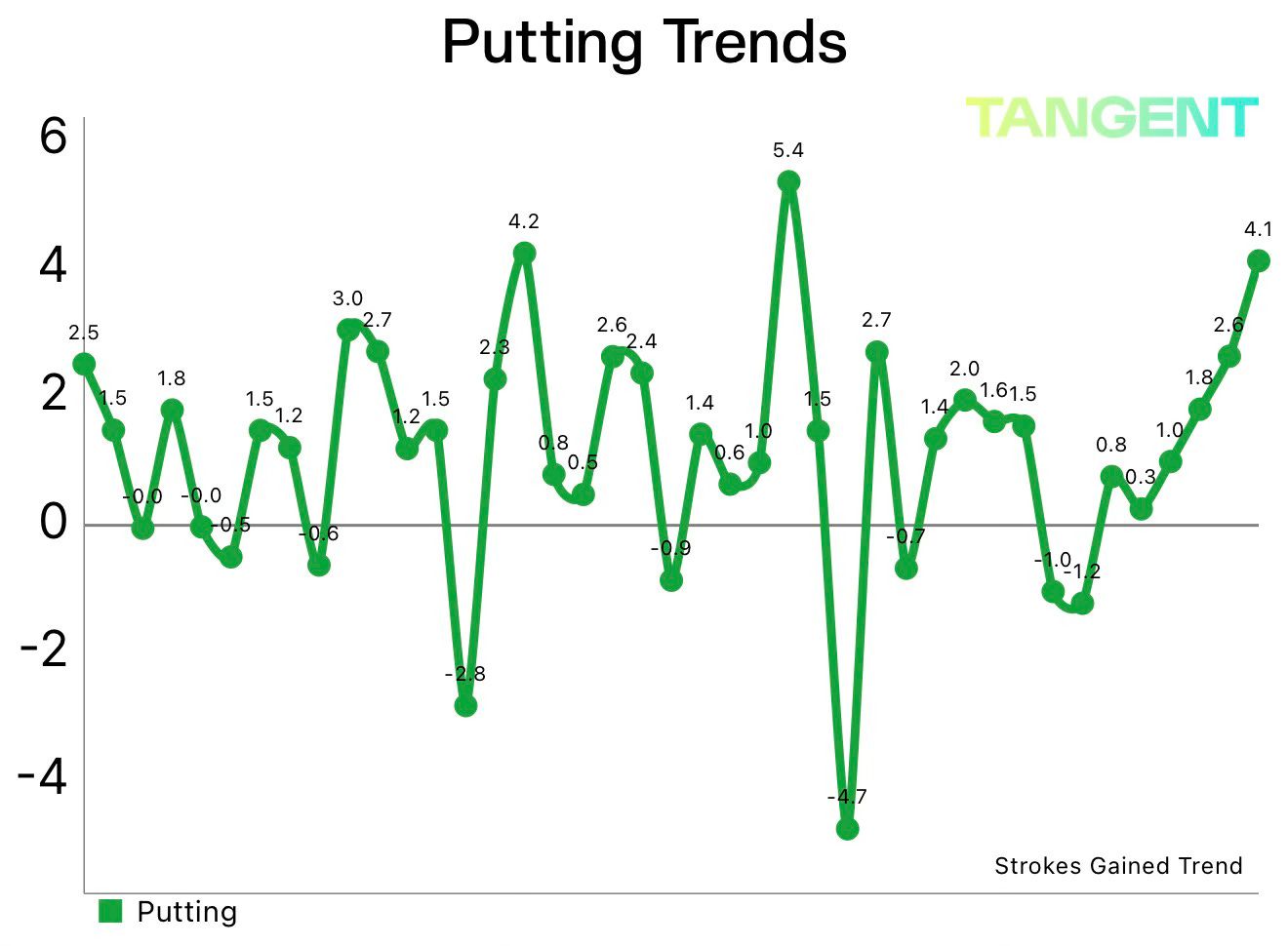
- Strokes Gained (Putting) trend: compare weekly/monthly SG: Putting splits to show trajectory.
- Make% by range: show improvement inside 6–10 ft (where aim + confidence matters most).
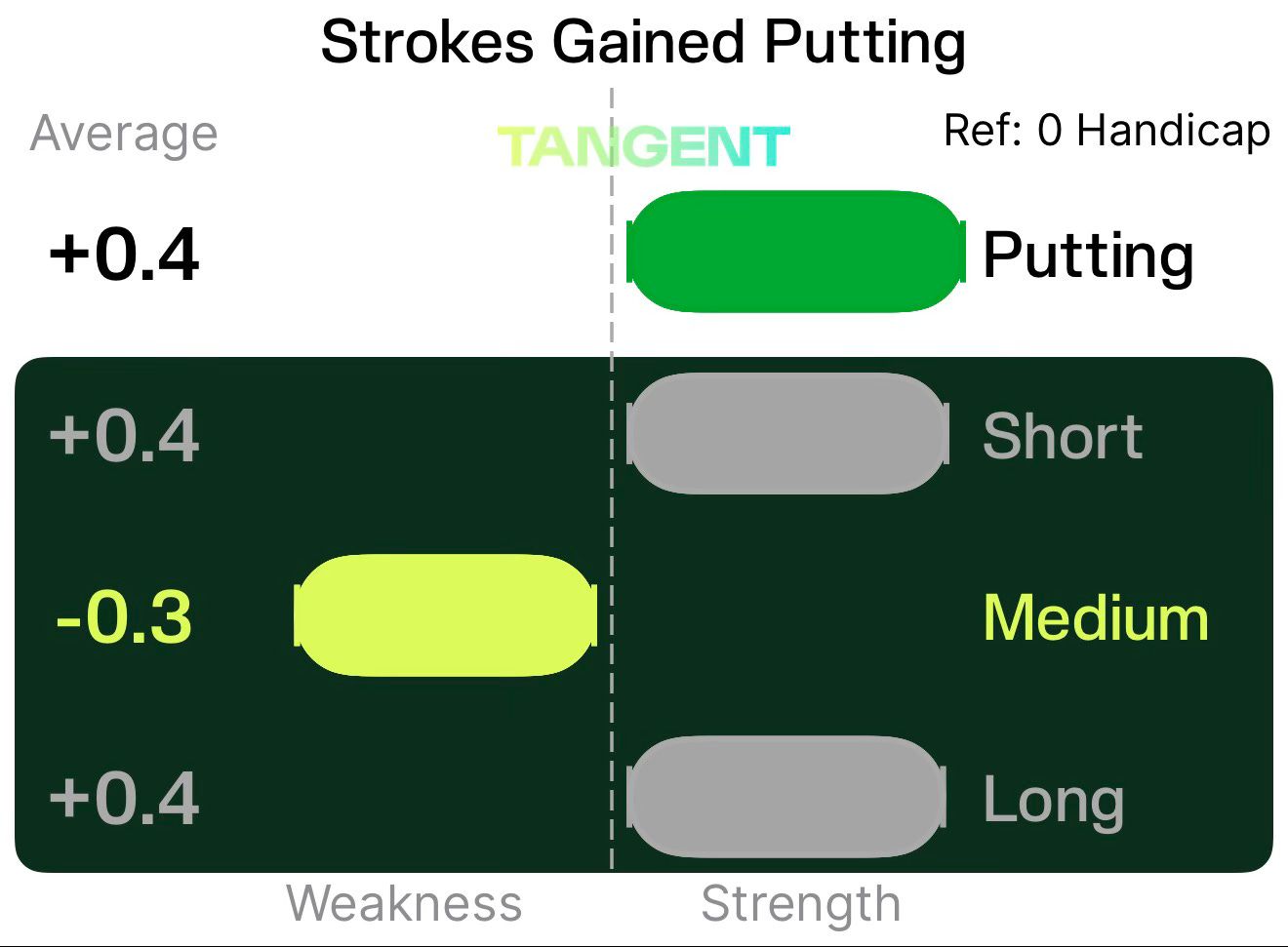
Keith’s Pre-Aimpoint Putting Stats. Already a great putter.
Start-line success: measure how often the ball starts on the intended line in practice vs. rounds.
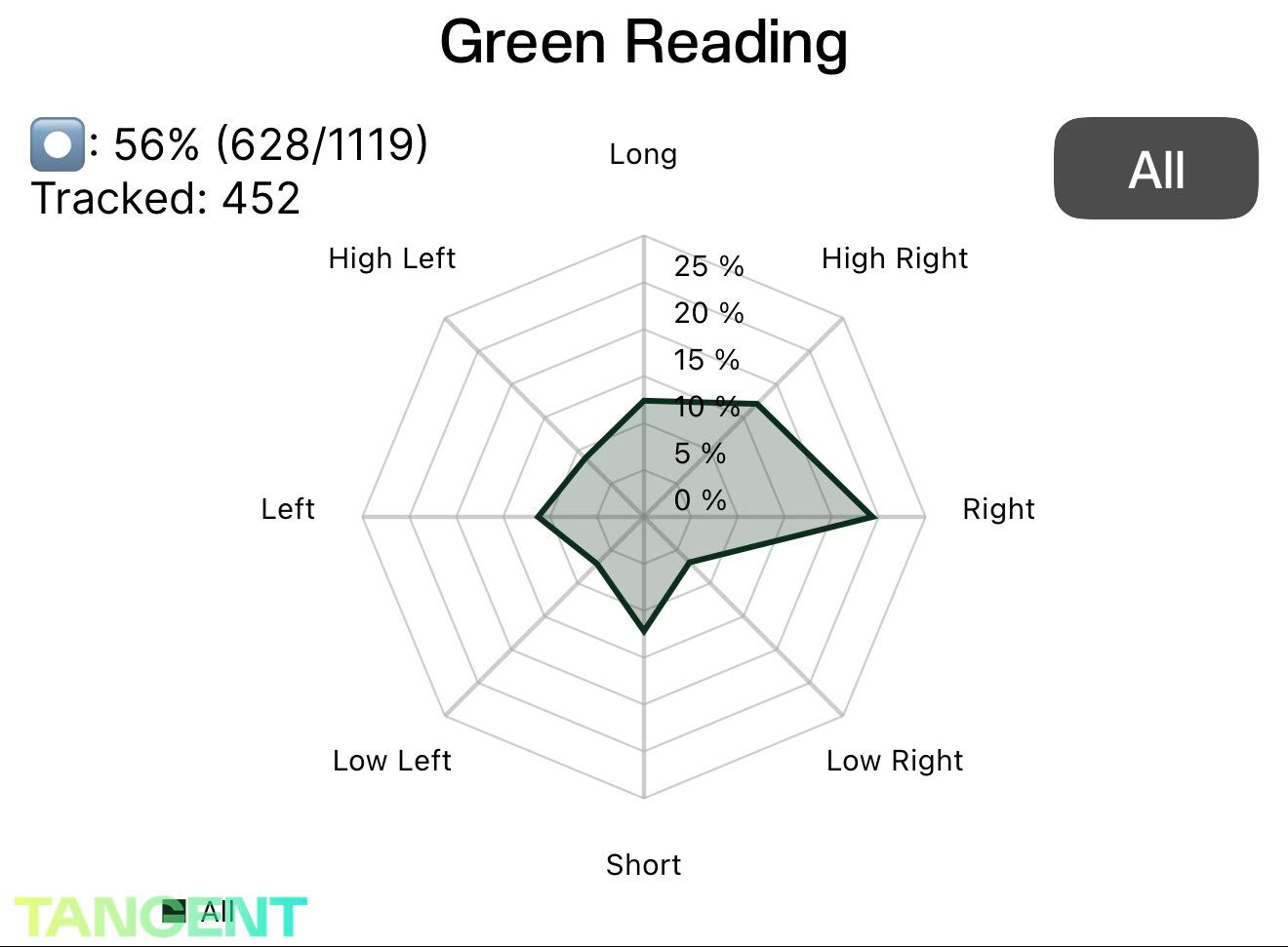
Those are the exact metrics Keith used to tell himself — and his readers — that AimPoint produced a measurable uplift and he did, improving his putting per round by almost a full stroke!
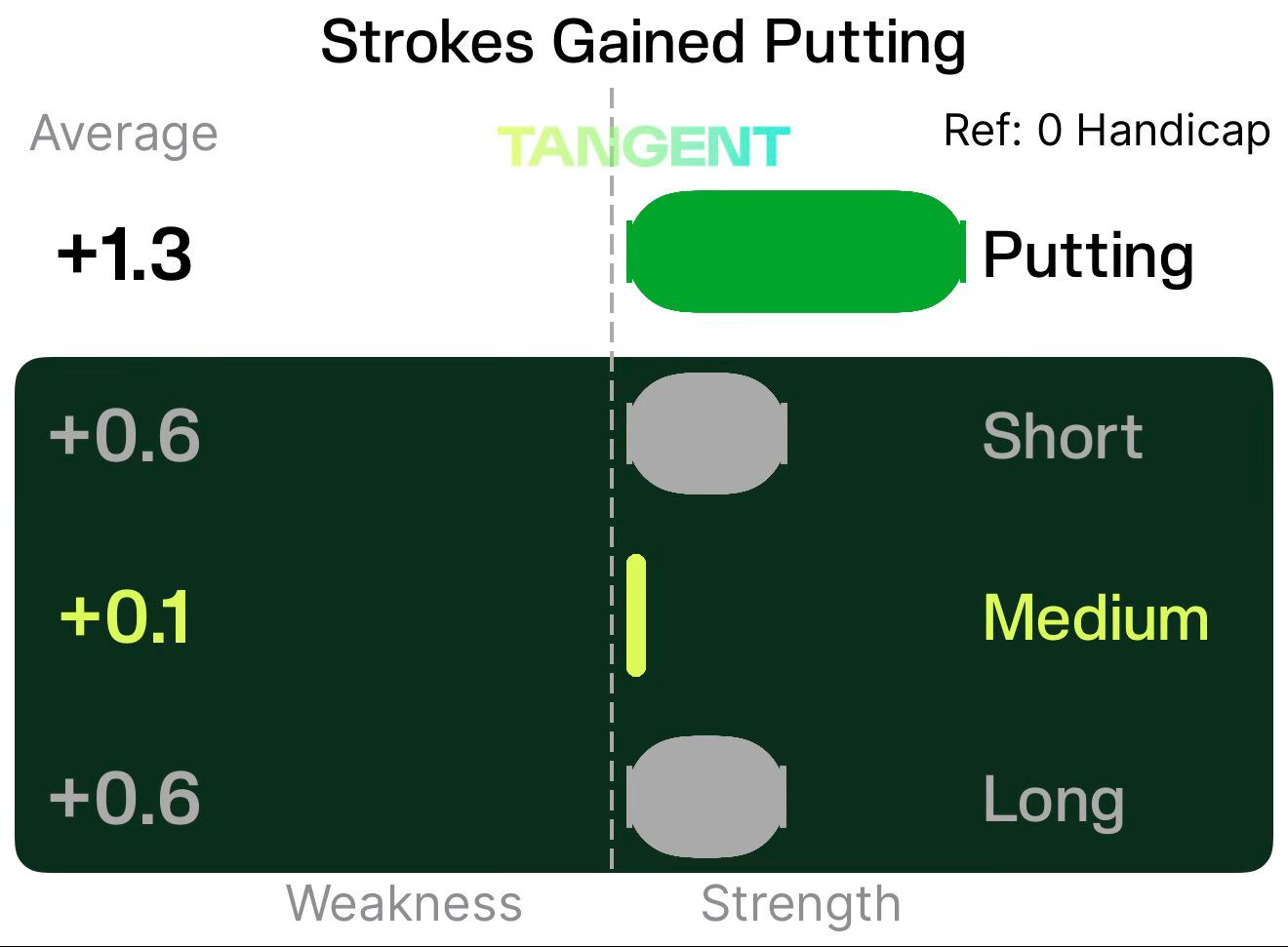
Keith’s Post Aim-Point Putting. Elite-level Putting!
The 250-round check-in: consistency and confidence
After 250 rounds logged in Tangent, Keith publicly summarized what the app helped him change: swing/fit insights, putter selection, and clearer practice priorities. That breadth of data (course-by-course, season-by-season) is exactly why a consistent tracking tool is powerful — not for one great round, but for reliable evidence across many conditions.
What Tangent made visible for him
Where he consistently lost strokes (e.g., proximity from 150–175 yds).
How putter changes shifted his SG:P (putting) distribution in competitive rounds.
Which practice drills produced measurable on-course transfer.
One of the clearest lessons from Keith’s testing is that early gains can be a mirage unless you log enough rounds to see the trend. As Keith himself shows when testing new putters, a promising start can fade as the “new putter” effect wears off — which is exactly why his 22 rounds (and later his 250-round archive) in Tangent were indispensable for a rational verdict, not a hunch. Tangent doesn’t celebrate one good week — it highlights long-term performance and when short-term noise is actually a signal.
Why Keith’s story matters to you
Keith isn’t a tour player — he’s a thoughtful, data-minded amateur with a low handicap who used Tangent like a scientist. The lesson: if you track deliberately, you can (a) narrow equipment choices quickly, (b) measure the real impact of technique changes (like AimPoint), and (c) prioritize practice that moves the needle on the scorecard.
One of the most interesting things Keith said on the pod… He thought he was a bad putter before he started measuring results with Tangent. Sometimes our expectations do not match reality, but now Keith can confidently say that he has gone from a very good putter… to a great putter.
Keith has his own blog with thoughtful golf and life articles. I highly encourage you to give him a follow.
You can follow Keith on X (Twitter) here. You can read his blog here. You can hear him on The Golf Improvement Podcast here.
📲 Subscribe to Tangent today to get more out of your golf. Tangent has the data to help you cut those fractions of a stroke that leads to wins, just like Keith has done with his putting.