No swing changes required. Just better numbers and better decisions.
The difference between shooting 79 and shooting 85 usually comes down to a few shots.
Not a few swings. A few shots. And those shots tend to come from very specific places.
We've analyzed over 100,000 rounds and 6 million shots inside Tangent, and the data is pretty clear on this one. There are four stats that almost perfectly predict who's shooting in the 70s and who isn't.
If you've read our breaking 90 stats article, the framework is going to look familiar. Same four categories… much tighter margins.
Here's what the numbers say, and more importantly, how to actually hit them.
Watch the Full Breakdown
Watch the full video on YouTube
Dallas walks through all four stats, plus the on-course footage. Everything below is the written version.
1. Greens Are Still King
If you've been around Tangent for any length of time, you've heard me say it. Greens are king.
More greens equals lower scores. That correlation doesn't break down at any handicap level we've measured.
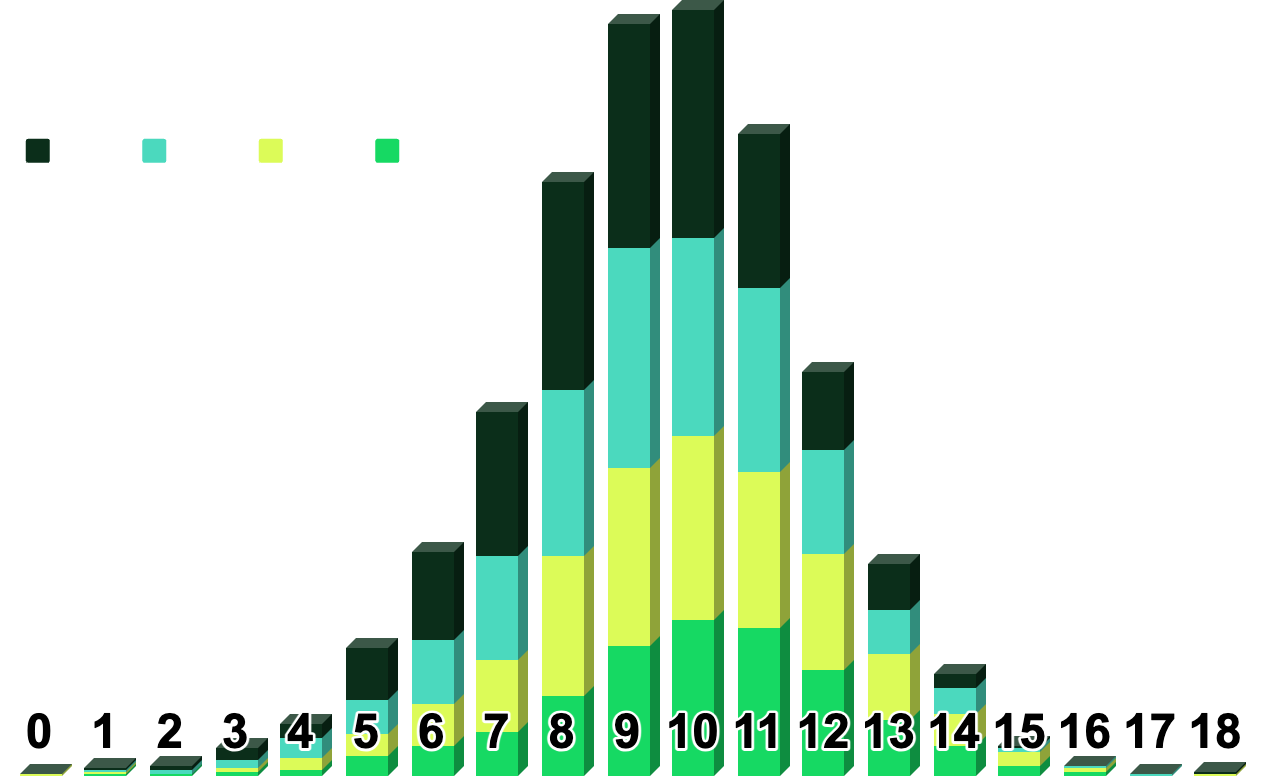
To break 90, you needed 3 to 5 greens. To break 80, the data says you need 9 to 11 per round. Just over half.
That's a real jump. But notice what it also means… you're still missing 7 to 9 greens every single round. Golfers shooting in the 70s are not hitting it pure all day. They're missing plenty.
The difference is what happens after the miss.
2. GIRp1 — The Stat That Protects Your Round
GIRp1 (say it out loud… "girpie") means hitting the green in regulation plus one.
- 2 shots on a par 3
- 3 shots on a par 4
- 4 shots on a par 5
That's it. Get on the green in regulation-plus-one and the absolute worst you're walking off with is a bogey.
Here's why this stat is so powerful: most double bogeys don't come from one bad swing. They come from one bad decision after a bad swing.
You're in the trees. There's a gap. You could probably squeeze one through there and get it on the front edge…
You know how that story ends. Trying to force a green through trees or over water turns a bogey into a disaster.
If you're in trouble, make the decision that guarantees the GIRp1. Punch out. Take your medicine. Play to the fat part.
That one mindset change will fix the next stat almost by itself.
3. One Double Bogey. Maybe Two.
This is where the margin really tightens up.
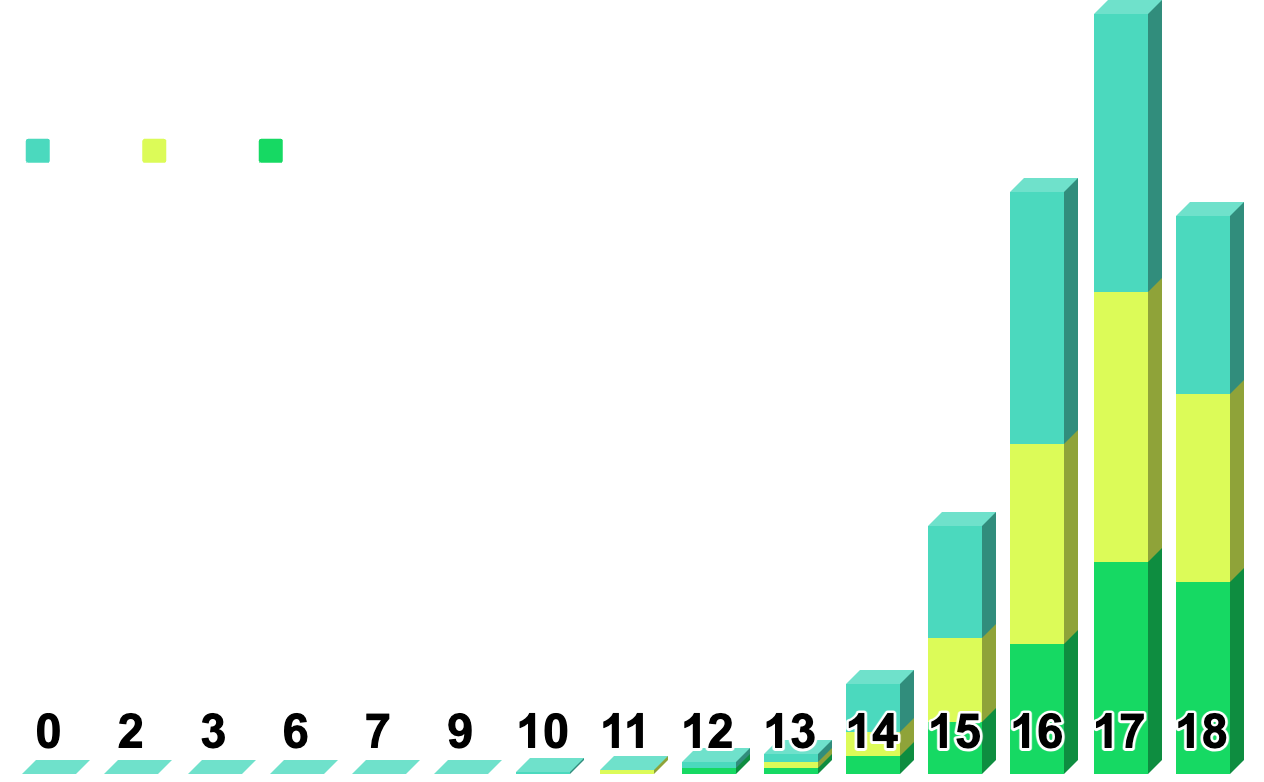
To break 80, you can afford one double bogey. At most two. Every one beyond that has to be paid back with a birdie or a stack of extra pars.
And here's the problem — golfers shooting in the 70s aren't making many birdies. One, maybe two a round. That's it. You don't have the offense to cover a bunch of big numbers.
The good news is the same as always: most doubles come from poor decisions, not poor swings.
Choose better targets and you can survive some genuinely bad golf shots. That's the entire game.
4. Two Three-Putts. Or Fewer.
Here's the part that catches people off guard.
When you start hitting more greens, your first putts get longer.
Sounds backwards, right? But think about it. When you miss a green, you're often greenside with a chance to chip it close and leave a short putt. When you hit greens from longer distance, you're regularly left with 30, 40 feet or more for your first putt.
More greens means more long putts. Which means breaking 80 requires genuinely good lag putting.
The data says golfers who consistently shoot in the 70s average two or fewer three-putts per round. Not perfect. Just excellent speed control.
And let's be honest about the goal here. You're not trying to pour in highlight-reel putts and make everything you look at. You're trying to leave yourself a stress-free tap-in.
Don't get mad at easy pars.
Your Break 80 Checklist
- Greens in Regulation — 9 to 11 per round
- GIRp1 when you miss — almost every time
- Double bogeys or worse — 1, at most 2
- Three-putts — 2 or fewer
That's the whole thing.
Now Let's Actually Hit Those Numbers
Targets are useless without a plan. Here's what moves them.
Aim Like a Flashlight, Not a Laser Pointer
This is maybe the single biggest gap between golfers in the 80s and golfers in the 70s, and it has nothing to do with the swing.
Even the best players in the world miss their target most of the time. What they understand — and most amateurs don't — is dispersion.
Most golfers aim like they're using a laser pointer. Point at the flag, ball goes to the flag.
Golf shots behave like a flashlight. Every shot has a pattern of possible outcomes, and that pattern is a lot wider than you think.
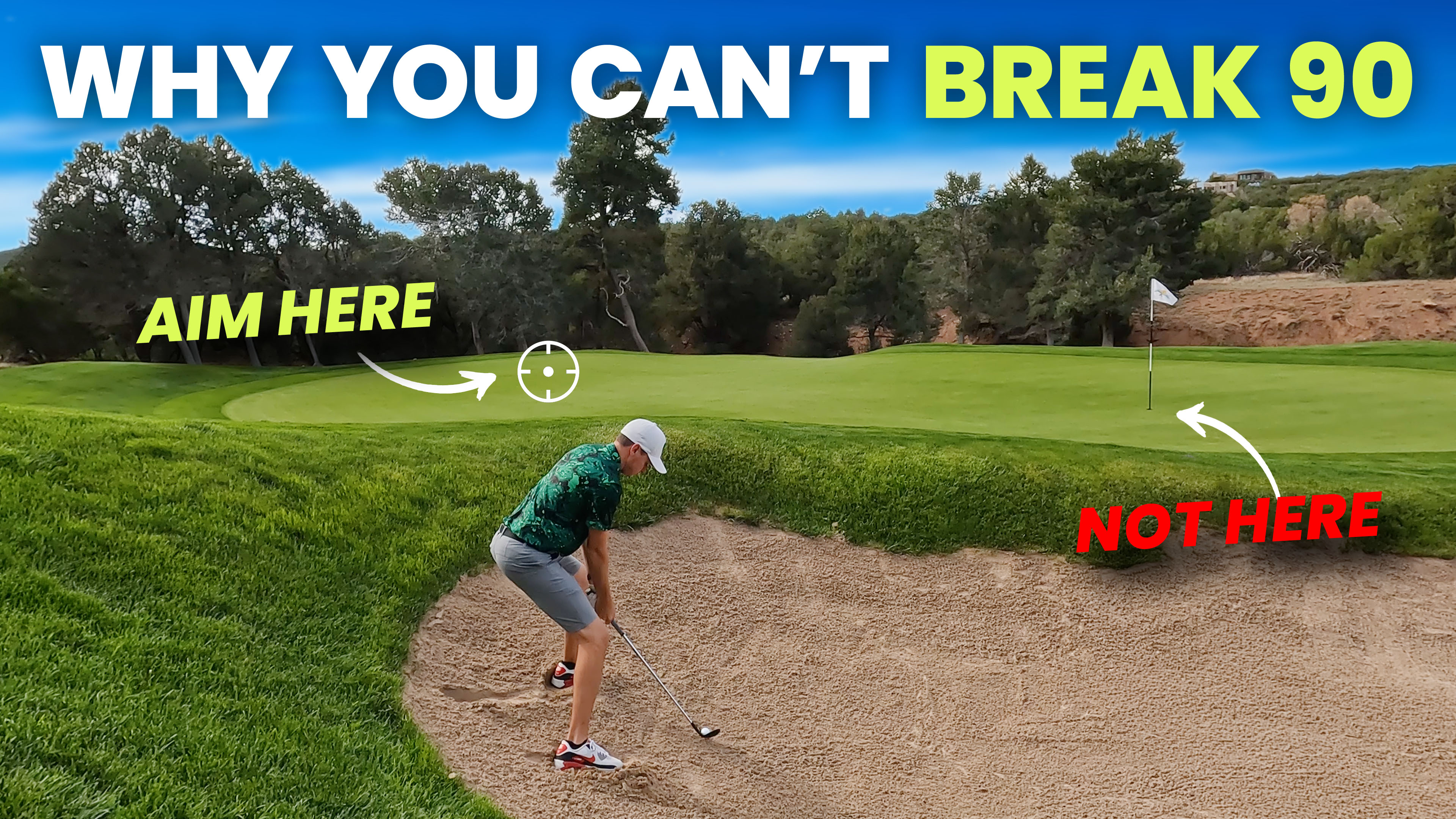
So when you aim straight at a flag sitting near water, part of your dispersion pattern overlaps the hazard. Some of those are getting wet. That's not bad luck. That's math.
Good players aim so their entire pattern stays safe. Sometimes that means aiming further from the pin and accepting a longer putt. Sometimes it means a short chip from off the green.
If it eliminates a double, I'll make that trade every single time.
The catch is that most golfers have no idea how large their shot pattern actually is. That's exactly what Tangent measures — it tracks your shots automatically, learns your real distances and dispersions, and helps you pick targets that keep your misses out of trouble.
But even if you never download the app… understanding this one concept will improve your course management dramatically.
Stop Short-Siding Yourself
You're going to miss greens. Seven to nine of them. So the short game has to hold up.
In the breaking 90 article we talked about avoiding two-chips. That's still critically important. But now we need to take the next step — turning some doubles into bogeys, and some bogeys into pars.
The easiest way to do that isn't better technique. It's leaving yourself easier shots.
I would much rather be in the rough with a lot of green to work with than in the rough with barely any green, or in a bunker, or scrambling from well in front of the green. Give me room to work every time.
Tour players aren't great around the greens because they hit miracle flop shots with any regularity. They're great because they rarely leave themselves short-sided.
Short-sided means there's very little green between you and the flag. It turns a routine shot into a dramatically harder one. And it's almost always the result of a target choice you made well before you got there.
Keep the Short Game Boring
Smart targets give you easier shots. Then keep the technique as simple as possible.
My rule: use the least loft you can get away with.
- If I can putt it, I putt it
- If I can bump and run it, I bump and run it
- If I have to carry it further, I hit a simple pitch
That's the whole menu. One reliable bump and run, one reliable pitch, and enough reps that you trust both under pressure.
That alone will save you multiple shots per round.
Par 5s Are Where Your Birdies Live
You're only making one or two birdies a round at this level… and they almost always come on par 5s.
Par 5s are where scoring happens.
That doesn't mean playing recklessly and going for every green in two. It means getting the ball as close to the green as possible in two shots without bringing hazards into play.
A short wedge into a par 5 creates a birdie chance and a very easy par. And easy pars are exactly what breaking 80 is built on.
Know Your Real Distances (Not Your Best Ones)
Ask a golfer how far they hit their 7-iron and you'll almost always get their best number. The one they hit downwind, downhill, in July.
That's not the number that helps you score.
What matters is your typical distance. Because you don't hit every shot perfectly — in fact, most of your shots are some level of mishit. That's not pessimism, that's what the data shows.
Club off your maximum distance and you'll come up short constantly. We see it all over the place in our amateur data. Short is where the bunkers are. Short is where the trouble is. Short is where doubles get made.
Tracking your real distances over time fixes this quietly and permanently. It's another place a shot tracking tool earns its keep — Tangent learns how far you actually hit each club and uses that to help you choose better clubs and better targets.
The Recap
Breaking 80 looks like this:
- 9 to 11 greens in regulation
- Consistent GIRp1s when you miss
- One double bogey, two at the absolute most
- Two or fewer three-putts
- Smart targets that account for your real dispersion
- A short game built on easy shots, not hero shots
Not a single one of those requires a swing change.
Want Help Getting There?
This is the exact framework I used to go from a 6 handicap to a plus player — while working full time and raising a family. I didn't rebuild my swing. I got better information and made better decisions.
That's what we built Tangent to do.
It tracks every shot automatically. It learns how far you actually hit each club and how wide your patterns really are. It suggests smarter targets on the course, then shows you exactly where your strokes went after the round — with integrated practice and drills so your range time is actually pointed at something.
Download Tangent Golf and join thousands of golfers doing the same thing.
Let's go break 80.
Frequently Asked Questions
How many greens in regulation do I need to break 80?
Our data says 9 to 11 greens in regulation per round. That's a significant step up from the 3 to 5 you need to break 90, but notice it still means missing 7 to 9 greens every round. Breaking 80 isn't about hitting it perfectly — it's about what you do after the misses.
How many double bogeys can I make and still break 80?
One, and at most two. The margin is tight because golfers shooting in the 70s only make one or two birdies per round, so there's very little offense available to cover a big number. The good news is that most doubles come from poor decisions rather than poor swings.
Why do my three-putts go up when I hit more greens?
Because hitting greens from longer distances leaves you longer first putts — often 30, 40 feet or more. When you miss a green you're frequently greenside with a chance to chip close. Hitting more greens is still worth it, but it means lag putting becomes a required skill. Golfers who break 80 average two or fewer three-putts per round.
What is dispersion in golf, and why does it matter?
Dispersion is the pattern of where your shots actually finish, not the single point you aimed at. Most golfers aim like a laser pointer; shots behave like a flashlight. If you aim at a flag near water, part of your pattern is in the water. Aiming so your entire pattern stays safe is one of the biggest differences between golfers in the 80s and golfers in the 70s.
What does short-sided mean and how do I avoid it?
Short-sided means there's very little green between you and the flag, which makes an already difficult shot dramatically harder. You avoid it by choosing approach targets that leave your miss on the side with the most green to work with. Tour players aren't great around the greens because of miracle flop shots — they're great because they rarely short-side themselves.
Should I use my maximum distance or my average distance to pick clubs?
Your typical distance, every time. Most golfers quote their best-ever number, but most shots are some level of mishit. Clubbing off your maximum means coming up short constantly, and short is usually where the trouble is.