You don't need a new swing to break 100. You need four skills.
If you're struggling to break 100, it probably feels like you need to fix everything. New grip. New takeaway. Learn how to shallow the club. Reinvent the whole thing.
You don't.
You just need to learn how to do a few things a little bit better.
Breaking 100 is the first big milestone most of us face, and it's not nearly as complicated as it seems. We've analyzed over 100,000 rounds of shot-by-shot data from real golfers — and used it to help thousands of them get through this exact wall.
Here's what the data says actually matters.
Watch the Full Breakdown
Watch the full video on YouTube
Dallas covers all four skills, plus a few swings you'll recognize. Everything below is the written version.
First, Some Good News: Greens Don't Matter Yet
If you've read our articles on breaking 90 or breaking 80, you've heard me say it over and over. Greens are king.
That's still true… just not for you. Not yet.
To break 100, you do not need to hit a single green in regulation.
Golfers who are stuck shooting in the 90s are typically hitting one or two GIRs per round. You can get away with zero.
You just need to get the ball on the green eventually, and do it without disasters.
That's a genuinely different game than what we talk about in the other two articles, and it changes what you should be working on.
The Stat That Actually Matters: GIRp1
At Tangent we track a stat we call a GIRp1 — green in regulation plus one. Say it out loud and it comes out "girpie."
It means you get one extra shot to hit every green:
- 4 shots on a par 5
- 3 shots on a par 4
- 2 shots on a par 3
Get there and the worst score on your card is a bogey.
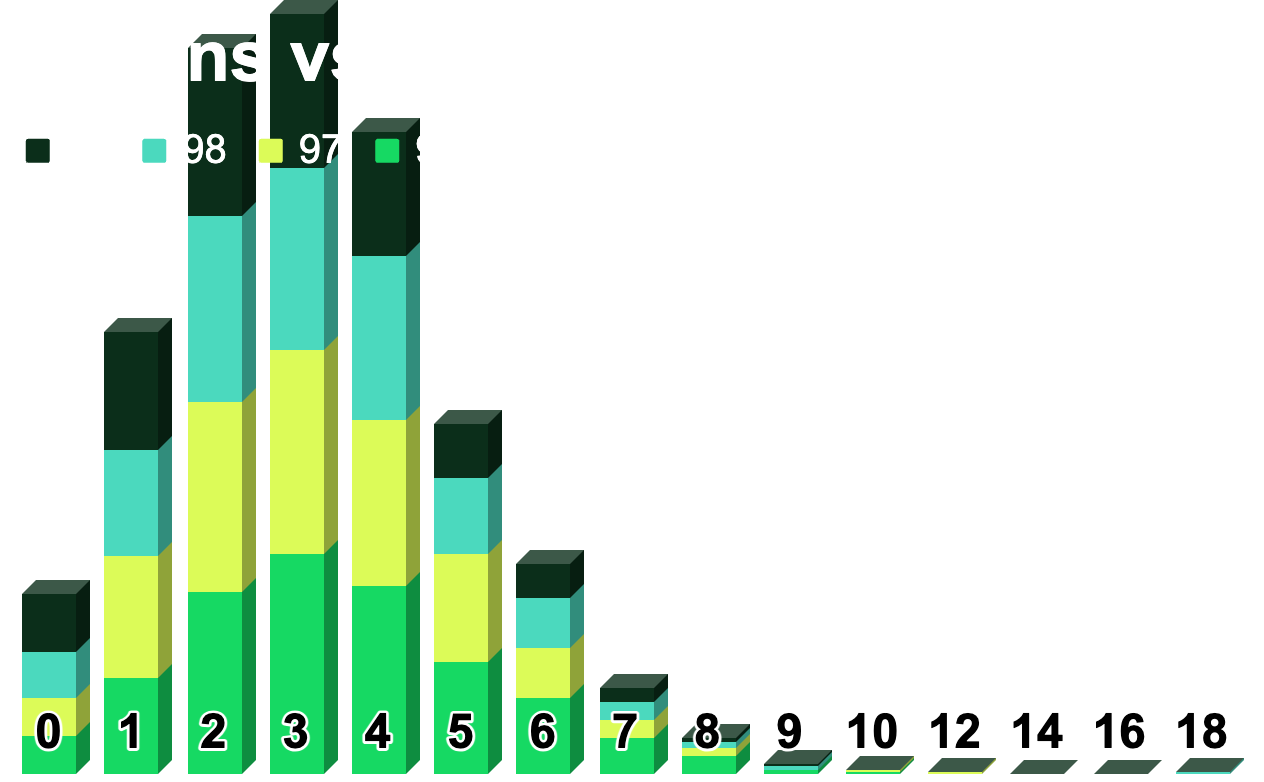
Golfers who break 100 are hitting 9 to 11 GIRp1s per round.
Read that again. That's half the holes. On the other half — the other nine holes — you can still mess up quite a lot and break 100.
That should take some pressure off.
You're Going to Make Big Numbers. That's Fine.
Let's be realistic about where you are.
You're going to make doubles. You're probably going to make some triples. Golfers shooting in the 90s are still averaging seven to eight doubles or worse per round — and they've already broken 100.
So the goal isn't perfect golf. The goal is much simpler than that:
Turn triples into doubles. Turn doubles into bogeys.
That's the whole job. Nothing more heroic than that.
Why Strategy Won't Save You (Yet)
Here's where breaking 100 is different from everything else we write about.
In the breaking 90 and breaking 80 articles, I start with strategy. Aim away from the water. Club up. Play to the fat side. Pick smarter targets.
At this level, that advice doesn't work yet.
I can tell you all day long to aim away from the hazard — but if you don't know where the ball is going, strategy doesn't matter. Targets are meaningless if the ball isn't going anywhere near them.
So we're going to skip strategy entirely and focus on the skills that make you functional first.
The Four Skills That Determine Ball Striking
These four skills determine your consistency at every level of golf. And honestly? If you just improve the first two, you'll break 100 a lot faster than you think.
1. Low Point Control
This is the big one. Arguably the most important skill in golf.
Low point is simply where your swing bottoms out.
- Bottom out behind the ball and you chunk it
- Bottom out ahead of the ball and you thin it
This is the number one issue for higher-handicap golfers, full stop.
If you've ever hit it fat, then thin, then fat again… that's low point control. And my personal favorite is when you get so scared of blading it over the green that you decelerate into a chunk that travels half the distance. Classic. I never get tired of it.
Until you fix low point, nothing else really works. Make it your number one practice priority.
This is exactly what Tangent's practice section is built for. We have drills specifically for low point control in the app, with tutorials on how to train it and a way to measure whether you're actually getting better. Focused practice improves results by over 50% compared to just beating balls.
2. Face Control
Face control effectively determines start direction.
It's a bit of an oversimplification, but for a right-handed golfer:
- Ball starts right, and your face was probably open relative to your target
- Ball starts left, and your face was probably closed relative to your target
That's it. Don't overcomplicate it.
You almost certainly already know what your miss is. You just need a way to change what the face is doing at impact.
Most golfers trying to break 100 are just trying to get the ball somewhere near the target. Learning to control where the face points at impact is enormous — and it's the skill that makes everything downstream possible.
Tangent has an aim drill built specifically for this.
Because here's the thing: if you can't hit the ball in the general direction you're aiming, targets don't matter.
3. Strike Location
Even with today's forgiving clubheads, if you're catching it near the heel or the toe, you're bleeding distance and control on every shot.
The fastest way to fix it is embarrassingly simple: measure it.
Get impact spray or impact tape and find out where you're actually hitting it on the face. Most golfers are guessing — and guessing slows improvement way down.
We've written more about why strike quality is the strongest predictor of consistency we've found in our data. If you're struggling to find the center, the impact drill in Tangent is built for this.
4. Path
Path controls curve. And at this level, don't overthink it.
Here's why: if you improve your contact and your face control, your path problems tend to shrink automatically.
Better still — if you get genuinely good at face control, you can make almost any path functional on the golf course. Plenty of good players have unconventional paths. Very few have bad face control.
Work on the first two. Path will mostly take care of itself.
Two Fast Wins While You're Building Skills
The four skills above take time. These two will drop strokes almost immediately.
Fast Win #1: Putting Speed Control
Speed is everything. If your speed is off, your read doesn't matter — you're just going to leave yourself another long putt.
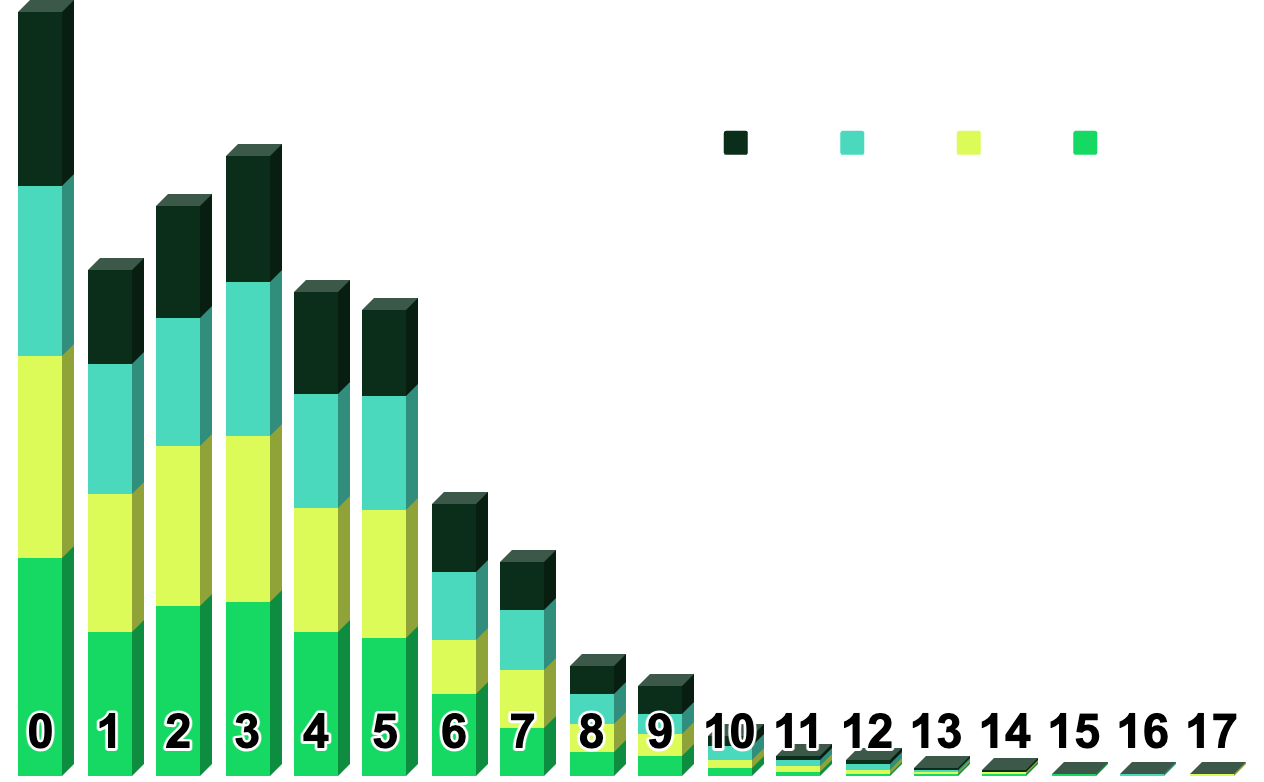
Golfers trying to break 100 are still three-putting three to five times per round.
That's low-hanging fruit sitting right there on the scorecard.
Spend your putting practice on:
- Ladder drills — putt to progressively longer targets to calibrate distance
- The pullback drill — if you miss, putt from where the ball finished rather than tapping in, which trains you to leave yourself easy second putts
Distance control is a trainable skill, and it's a lot easier to improve than your golf swing.
Fast Win #2: Simplify Your Short Game
This is where a huge number of strokes get thrown away.
The biggest mistake? Too much loft — which forces too big a swing.
Think it through. A big swing means a wider range of possible outcomes. That's how you get the classic skull that airmails the green into somebody's backyard… which leads directly to the "oh god, don't hit it over again" chunk that goes halfway there.
Both of those came from the same decision.
Take less loft and make a smaller swing. Pitching wedge instead of lob wedge. A smaller swing means a smaller range of outcomes. A little thin or a little fat, and the ball still ends up somewhere useful.
Simple. Controlled. Predictable.
You don't need to hit perfect shots. You just need to get the ball on the green.
Your Break 100 Checklist
- Greens in Regulation — not required, zero is fine
- GIRp1s — 9 to 11 per round
- Big numbers — turn triples into doubles, doubles into bogeys
- Three-putts — currently 3 to 5, and your fastest available win
- Practice priority — low point control, then face control
Notice what's missing from that list. Nothing about strategy. Nothing about target selection. Nothing about your driver.
Get functional first. Everything else comes after.
What Comes Next
Once you're through 100, the game changes and strategy finally starts to pay off.
Watch what happens to the greens requirement as you climb:
- Break 100 — no greens required
- Break 90 — 3 to 5 per round
- Break 80 — 9 to 11 per round
Greens don't matter at all right now. They become everything later. That's the arc.
Once you're functional, we start talking about dispersion, target selection, and playing the percentages.
Tools to Get There Faster
If you want help actually building these skills instead of guessing at them, download Tangent Golf.
We'll help you control your low point, get the face starting in the right direction, improve your strike, cut your three-putts, and simplify your short game — with drills that tell you whether you're actually improving, and automatic shot tracking that shows you where your strokes are really going.
You're going to cruise past 100. And once you do, we can start talking about strategy, targets, and getting into the 80s.
Frequently Asked Questions
How many greens in regulation do I need to break 100?
None. Our data shows you can break 100 without hitting a single green in regulation. Golfers still stuck in the 90s typically hit only one or two per round. What matters far more at this level is the GIRp1 — getting on the green in regulation plus one, which golfers who break 100 do 9 to 11 times per round.
What is low point control in golf?
Low point is where your swing bottoms out relative to the ball. If it bottoms out behind the ball you hit it fat; if it bottoms out ahead of the ball you hit it thin. It's the single most common ball-striking issue we see in higher-handicap golfers, and it should be the first thing you work on in practice.
Do I need to fix my slice to break 100?
Not necessarily. Curve comes from path, and path is the last of the four skills we'd have you work on. If you can start the ball in a predictable direction and make consistent contact, a slice is very playable. Fix your low point and face control first — path problems often shrink on their own once those improve.
Should I work on strategy or skills to break 100?
Skills, without question. Course strategy is powerful, but it assumes you can hit the ball roughly where you're aiming. If you can't yet, aiming away from the water doesn't help you. Build functional ball striking first, then strategy starts paying dividends — which is exactly the shift you'll see in our breaking 90 article.
What's the fastest way to break 100?
Two things you can do this week: work on speed control to cut into the three to five three-putts you're currently making, and stop using your lob wedge around the greens. Less loft means a smaller swing, and a smaller swing means fewer disasters. Those two changes alone can be worth several strokes before you touch your full swing.