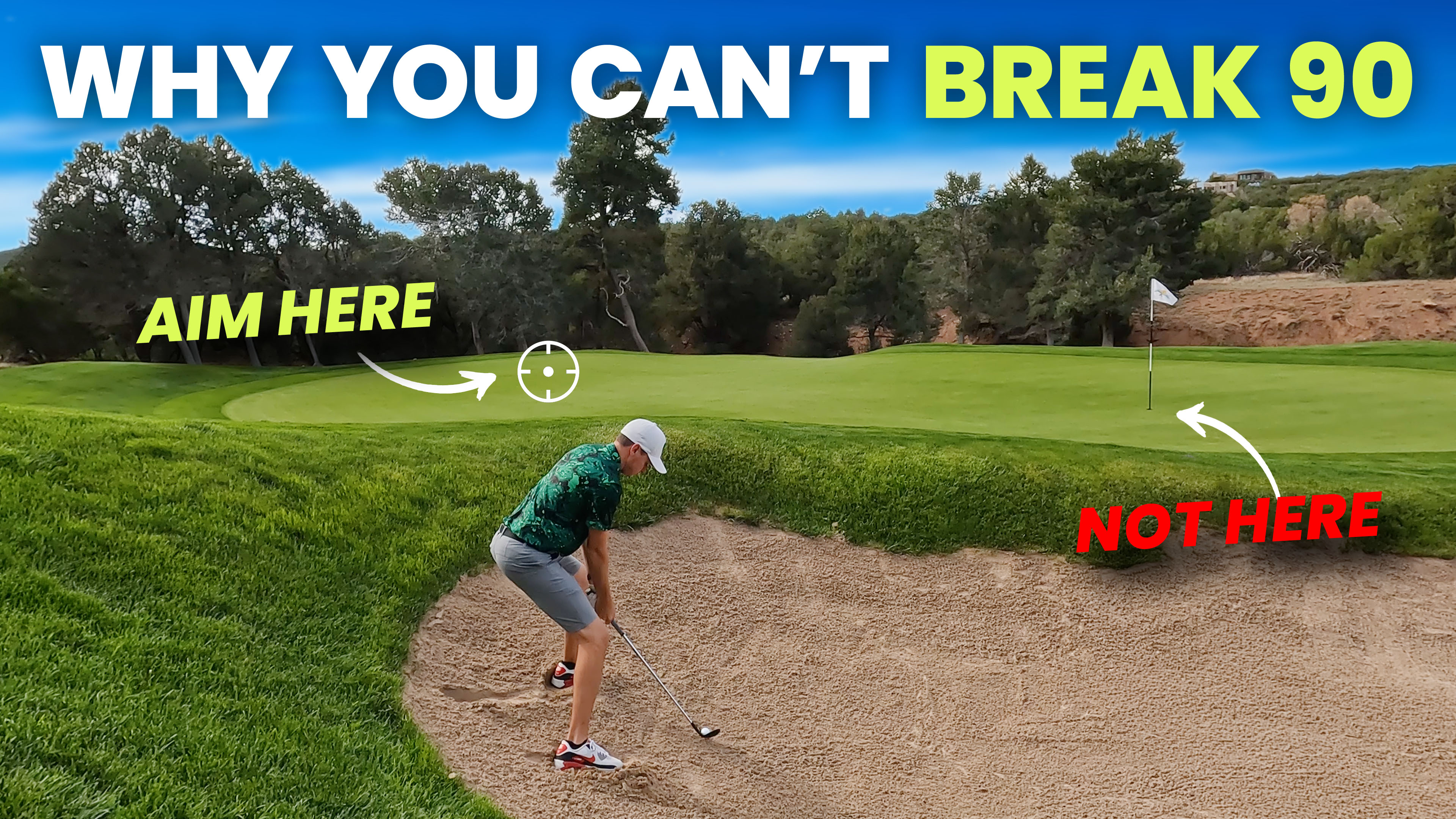
Damage control, not perfect golf. No swing changes required.
If you're struggling to break 90, this one's for you.
Breaking 90 is the milestone where most golfers finally feel like they belong out there. And the good news is that it takes far less ball striking than you think.
We've analyzed over 100,000 rounds shot by shot from real golfers, and the framework that consistently gets players into the 80s is remarkably simple. Four key metrics, and a handful of strategies to hit them.
No swing changes. Just smarter golf.
Watch the Full Breakdown
Watch the full video on YouTube
Dallas walks through the framework with on-course examples. Everything below is the written version.
1. Greens in Regulation: Only 3 to 5
Greens are king.
GIR is one of the only traditional golf stats that actually correlates to score. Hit more greens, shoot lower scores. It really is that direct.
Quick refresher on what counts: a green in regulation means getting the ball on the putting surface in par minus two or less.
- 1 shot on a par 3
- 2 shots on a par 4
- 3 shots on a par 5
Hitting greens is hard. But here's the surprise…
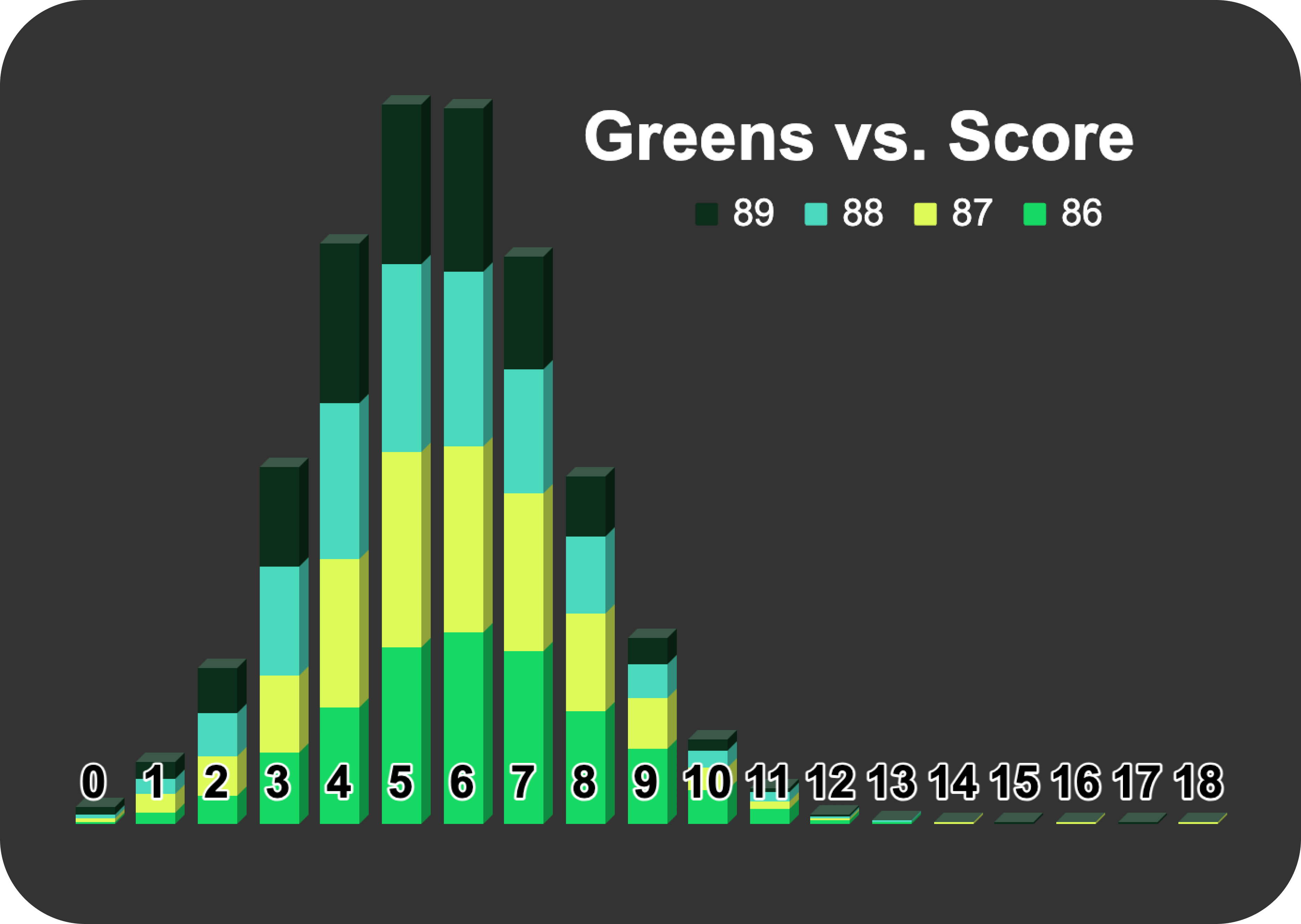
To break 90, you only need three to five greens in regulation.
That's it. Not 10. Not tour-level ball striking. Almost certainly fewer than you assumed.
And those greens usually come from the same places — short par 4s and easy par 5s. You don't have to manufacture them out of nowhere.
2. The GIRp1: 13 or More
Here's the stat I made up, and it's the most important one in this article.
A GIRp1 — green in regulation plus one. Say it out loud and it comes out "girpie." It sounds a little silly, but it's a genuine mental unlock.
Think about what breaking 90 actually requires. On a par 72, shooting 89 means 17 bogeys and one par.
That's the whole assignment.
Which means you get one extra shot to reach every green. Miss the green in regulation? Fine. You've still got a short chip to get on, two putts, and a bogey that keeps you exactly on pace.
For perspective: the best players in the world only average about 13 greens in regulation in an 18-hole round. Hitting greens is genuinely difficult.
But a GIRp1 on a par 4 is just two competent shots and a decent wedge. That's achievable on almost every hole.
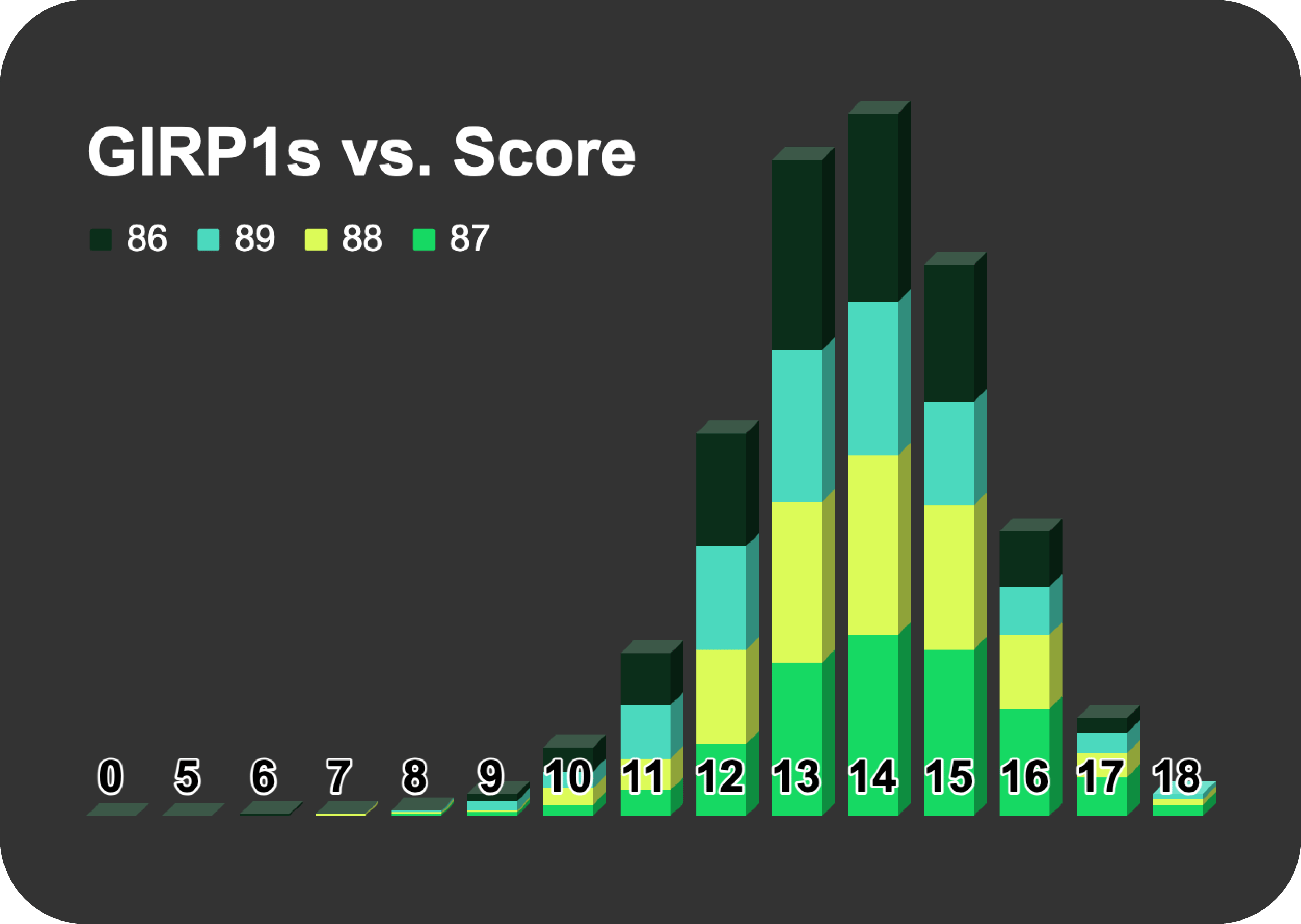
Target: 13 or more GIRp1s per round.
Let that free your mind a little. It should also protect your score.
3. Double Bogeys: 4 or Fewer
The reality of breaking 90 is that it's about avoiding big numbers.
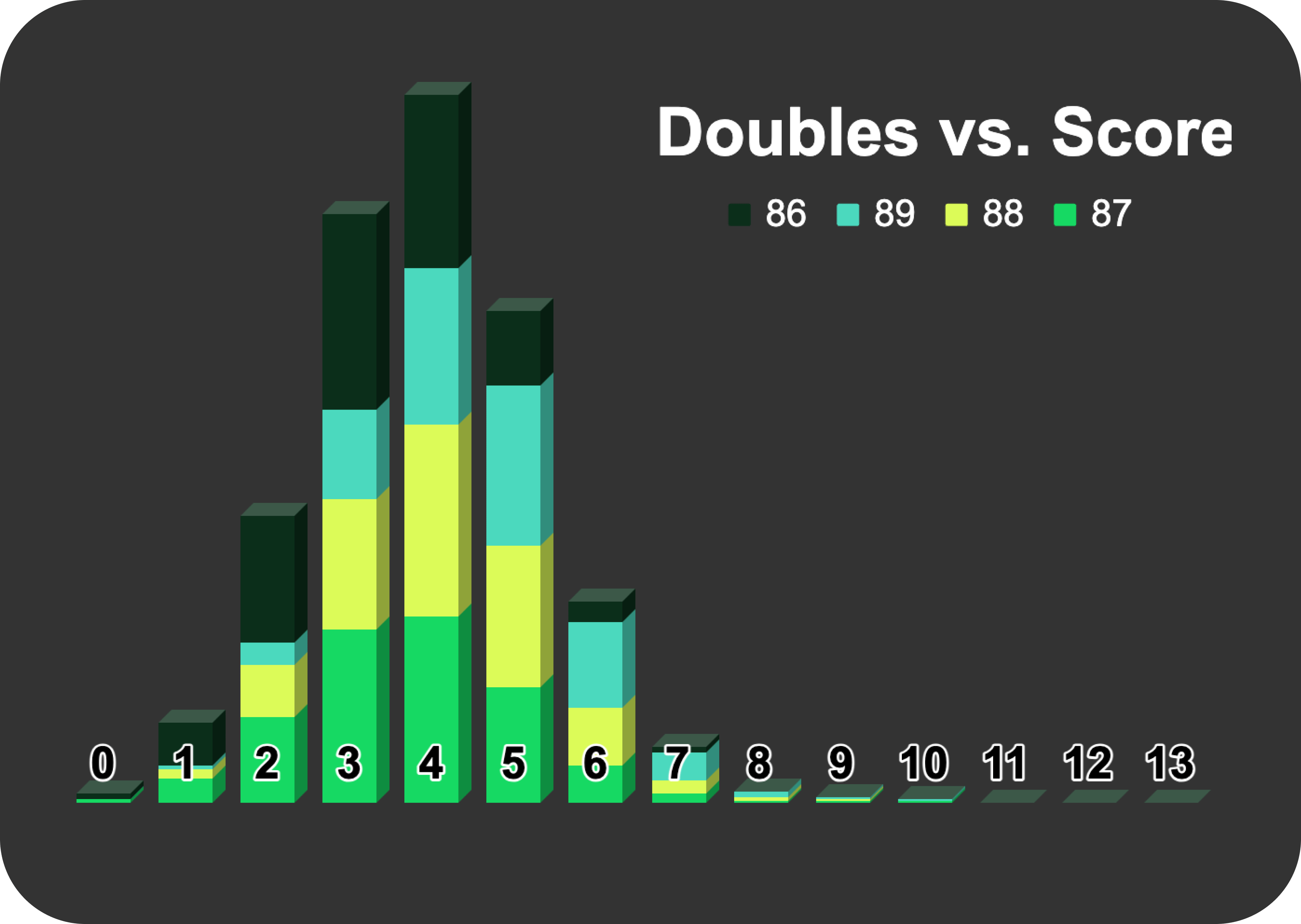
Players who break 90 make four or fewer doubles or worse.
Sit with the implication for a second: you can miss 14 greens and still break 90. Ball striking is not what's stopping you.
But it gets a lot tougher if you're making six doubles.
And most doubles don't come from bad swings. They come from penalties, recovery shots, two-chips, and our fourth metric.
4. Three-Putts: 3 or Fewer
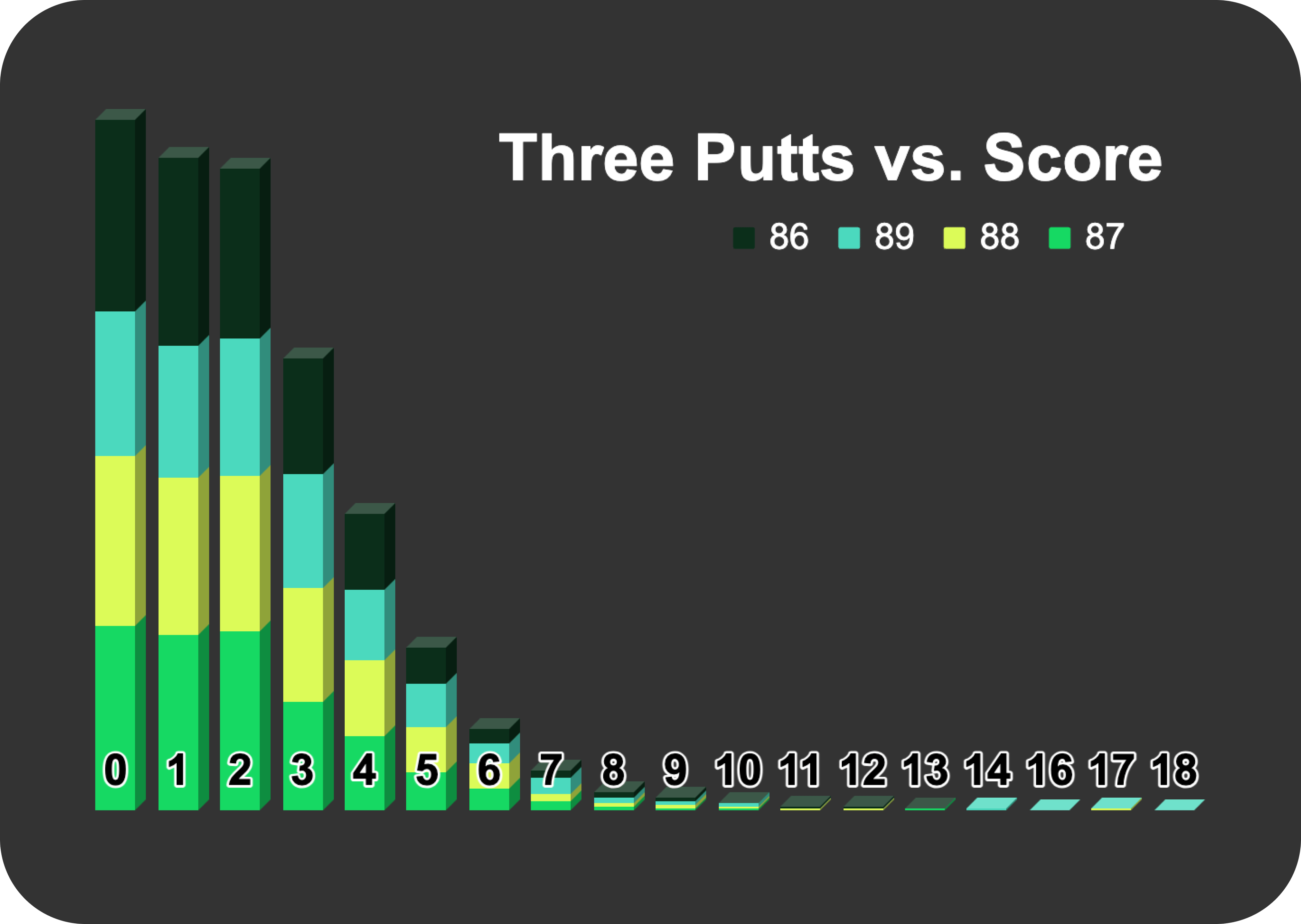
The data says you want three or fewer three-putts to give yourself the best chance at breaking 90.
Three-putting throws away all the hard work you just did to hit the green. It's the most frustrating way to lose a shot, and it's very fixable.
By now the theme should be obvious. Breaking 90 is not about perfect golf.
It's damage control.
Strategies to Hit Those Numbers
Off the Tee: Find the Ball
To break 80 and get to scratch, you'll eventually need to learn to love your driver. But at this stage, distance doesn't matter.
Finding the ball matters.
I don't obsess over fairways at all — fairways hit simply doesn't correlate with score the way people assume. What I care about is avoiding penalties, bunkers, and punch-outs from the trees.
Hitting it in the rough is fine. Re-teeing is not.
Aim Away From Trouble
This is where golfers quietly lose most of their strokes. They don't play for their dispersion, so they bring trouble into play on shots that never needed to be risky.
Every shot you hit has a pattern of possible outcomes, not a single destination. If part of that pattern is in the water, you're going to find the water eventually. That's not bad luck — it's just the odds catching up.
So aim away from hazards. Sometimes that means deliberately favoring the rough. That's a fine trade.
Tangent shows you your real distances and dispersions and gives you a target that keeps you out of danger. But with the app or without it, the principle holds: remember, we just need a GIRp1.
When You're In Trouble, Just Get Out
Rule number one. Get out.
We've all watched the hero shot highlights. But consider this: a tour pro in a recovery situation — trees, bunkers, that kind of trouble — makes bogey more than 80% of the time.
A tour pro. Making bogey. Eight times out of ten.
So what exactly makes us think we're going to pull off the miracle?
Get out. Preserve the GIRp1. Take the bogey that was always going to happen anyway.
Most of your big numbers come from trying to do too much. Do less and you'll score less.
Around the Greens: One Rule
If you're trying to break 90, there's exactly one short game rule that matters.
Avoid two-chips.
A two-chip is when it takes you more than one shot to get on the green from inside 50 yards. It's a wasted stroke that came from nothing but ambition.
And honestly? I don't care how close you hit it.
Getting it on the green is more important than getting it close.
So use as little loft as necessary and pick the shot you can most reliably get onto the putting surface. Make that your default. This is where scores blow up.
When You're Short-Sided
Occasionally you'll find yourself short-sided — very little green to work with and a genuinely difficult shot ahead.
Here's a mindset test that'll fix this instantly.
If I bet you $100 that you couldn't hit the green from there, would you still hit the shot you're planning?
If the answer is no, you're taking on too much risk.
Forget the pin. Just get a putt. I would much rather have a 25-footer than another bunker shot.
And on bunkers specifically — you don't have to be great from sand. You just have to be able to get out in one. Any putt is a win. Practice bunkers just enough to feel confident you'll escape, and stop pin-seeking from them.
Better still: avoid them entirely with your approach shots. A tour pro would never blindly aim at the pin. Choose better clubs and targets and you convert short-sided nightmares into easy bumps from the side of the green.
That's the real reason tour pros look so good around the greens. They tend to leave themselves in easier spots.
Putting: Speed Over Everything
Putting is hard. The hole is small.
The secret to breaking 90 isn't making putts. It's avoiding three-putts. And you do that with speed control.
Speed matters for two reasons that compound on each other.
Your read depends on your speed. Hit it too hard and the ball doesn't break. Hit it too soft and it breaks more. So if your speed is inconsistent, you can't read greens properly — and you can't even get reliable feedback on whether your read was any good.
Good speed forgives a bad read. You can misread a putt fairly dramatically, and if the speed is right, you're still left with a makeable second.
The goal is tap-ins, not highlights.
If I had a dollar for every time I watched a buddy get aggressive from inside 10 feet and three-putt, I probably wouldn't need to make these videos.
Bonus: You're Probably Playing the Wrong Tees
Here's one more, since you made it this far.
If you're hitting more than an 8-iron into most greens after a good drive, your tees are too long.
The average golfer shooting around 90 drives it about 213 yards and should be playing courses around 6,200 yards.
Golf is more fun when the greens are actually reachable. And you'll never hit three to five greens in regulation from tees that require your best swing on every hole.
Move up. Nobody's watching.
Your Break 90 Formula
- Greens in Regulation — 3 to 5 per round
- GIRp1s — 13 or more
- Double bogeys or worse — 4 or fewer
- Three-putts — 3 or fewer
Plus smart targets off the tee and speed control on the greens.
That's the entire formula. Not one line of it requires a swing change.
Tools to Get the Job Done
If you want help tracking these numbers and holding yourself accountable, download Tangent Golf. It was designed from the ground up for exactly this journey.
Tangent learns your game, suggests smart targets, and shows you these precise stats after every round — along with guidance on what to work on next.
I used this framework to go from a 6 handicap to a plus player, all while working full time and raising a family.
Frequently Asked Questions
How many greens in regulation do I need to break 90?
Only three to five per round. That's far fewer than most golfers assume, and it usually means capitalizing on short par 4s and reachable par 5s rather than hitting greens across the board. You can miss 14 greens and still break 90.
What is a GIRp1?
A GIRp1 is a green in regulation plus one — getting on the putting surface with one extra shot beyond regulation. On a par 4 that means three shots. It's the single most useful stat for breaking 90 because shooting 89 on a par 72 only requires 17 bogeys and one par. Aim for 13 or more GIRp1s per round.
How many double bogeys can I make and still break 90?
Four or fewer. Six doubles makes it very difficult. Most doubles come from penalties, recovery attempts, two-chips, and three-putts rather than from poor ball striking, which means they're largely preventable through better decisions.
Do fairways hit matter for breaking 90?
Not much. Fairways hit doesn't correlate with score the way most golfers expect. What matters off the tee is avoiding penalties, bunkers, and punch-outs from the trees. Hitting it in the rough is perfectly fine — re-teeing is not.
Should I try to hit the hero shot from the trees?
No. Tour professionals in recovery situations make bogey more than 80% of the time. If a tour pro is making bogey eight times out of ten from there, the realistic outcome for the rest of us is considerably worse. Get the ball back in play and preserve the GIRp1.
What is a two-chip and why does it matter?
A two-chip is when it takes more than one shot to get the ball on the green from inside 50 yards. It's the single biggest short game leak for golfers trying to break 90. Use as little loft as necessary and prioritize getting the ball on the putting surface over getting it close.
What tees should I play to break 90?
If you're hitting more than an 8-iron into most greens after a good drive, your tees are too long. Golfers shooting around 90 average roughly 213 yards off the tee and should generally play courses near 6,200 yards.
How do I stop three-putting?
Focus on speed control rather than making putts. Your read depends entirely on your speed — too hard and the ball won't break, too soft and it breaks more. Good speed also rescues a bad read by leaving you a makeable second putt. The goal is tap-ins, not highlights.