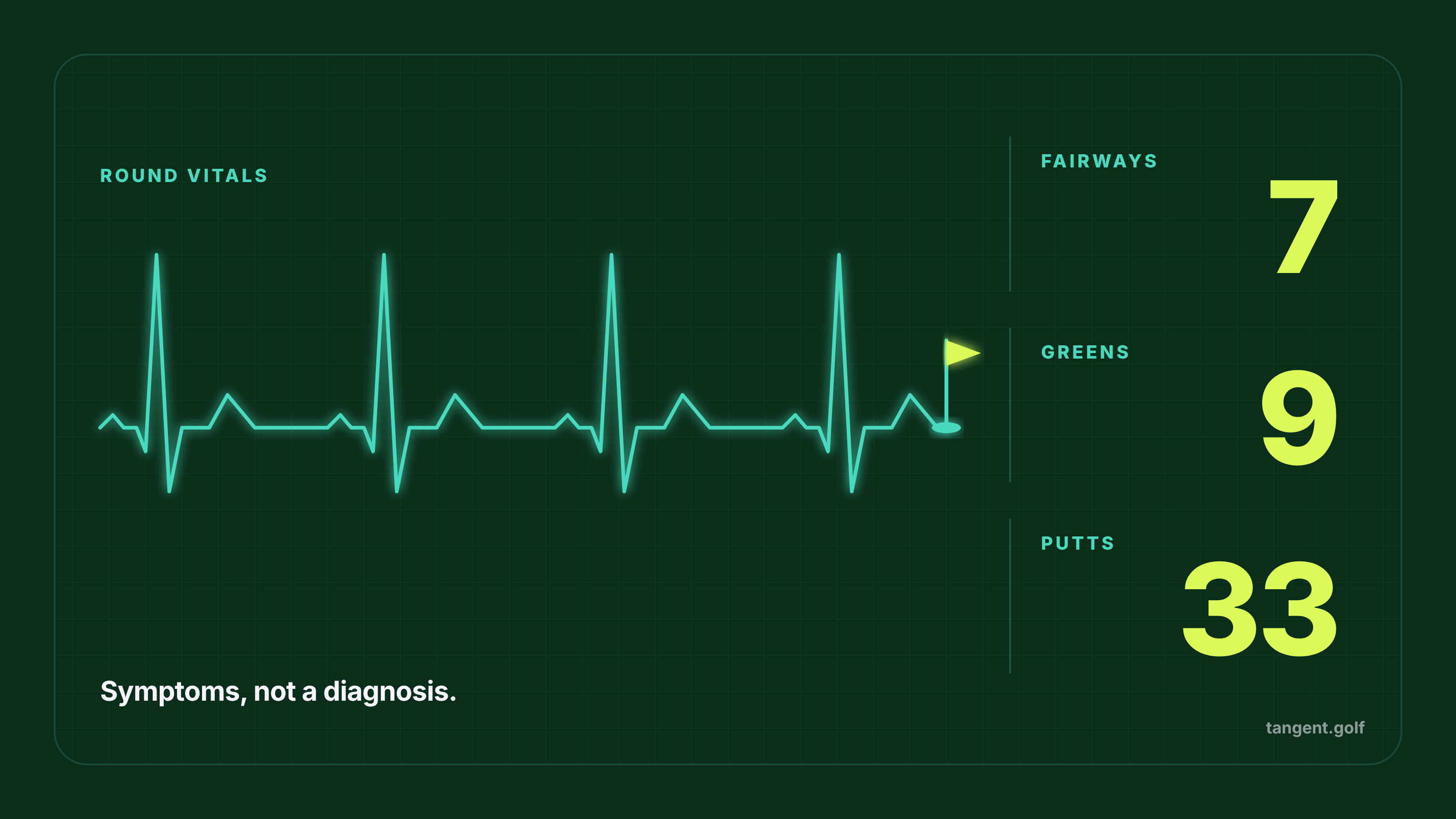
Ask most golfers what's standing between them and a lower score and they'll point at their swing. More distance, cleaner contact, fewer bad misses.
But look at where the big numbers on a scorecard actually come from, and the swing is rarely the whole story. Usually it's one bad shot followed by a mistake that turns a bogey into a double.
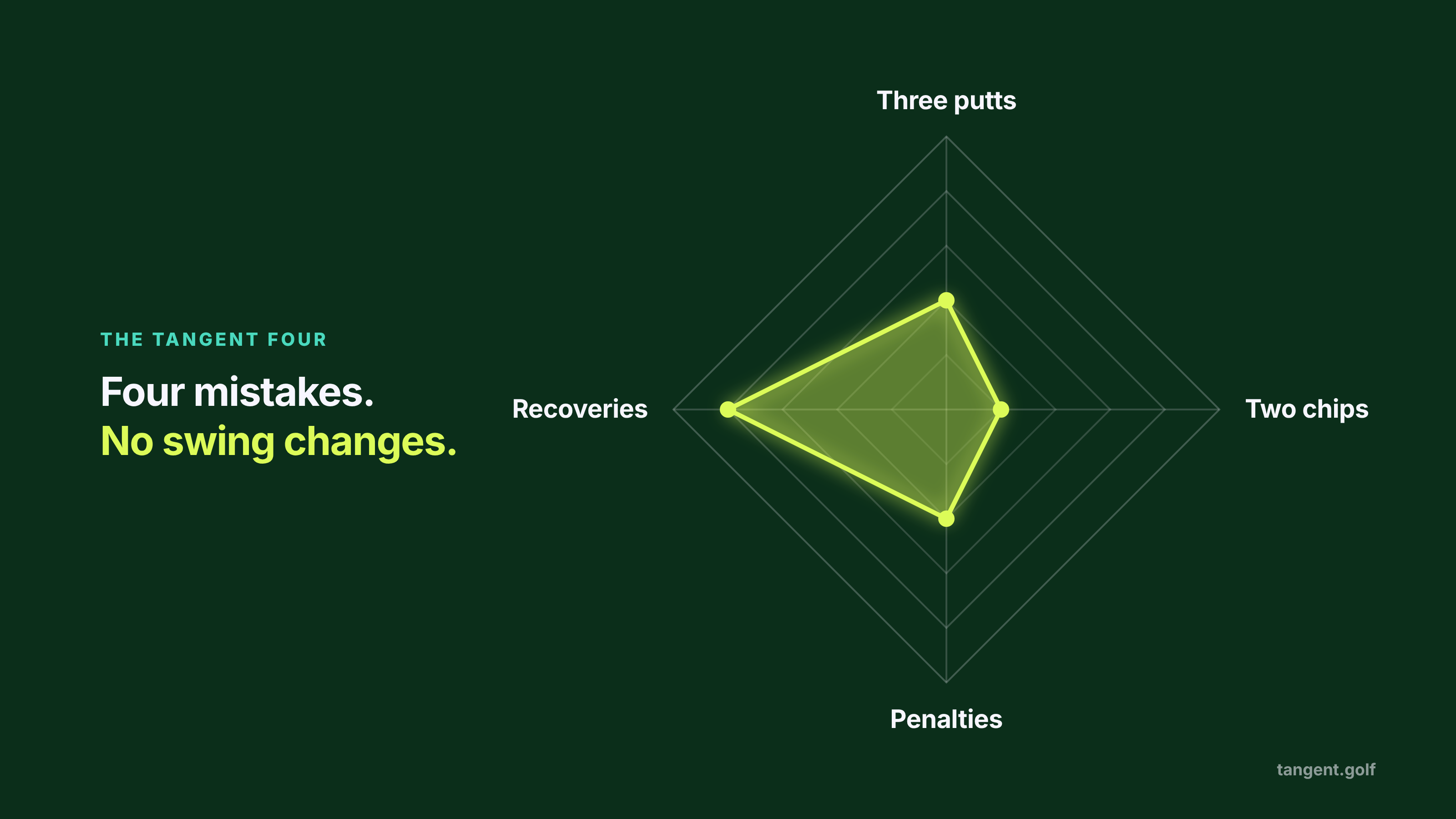
Those mistakes fall into four categories. Remove them, and what's left is the score your current swing can already produce.
Where Big Numbers Come From
In his breaking 90 video, Dallas points out that most double bogeys come from the same four places: penalties, recovery shots, two chips, and three-putts. Not from a single bad swing, but from what happens around it.
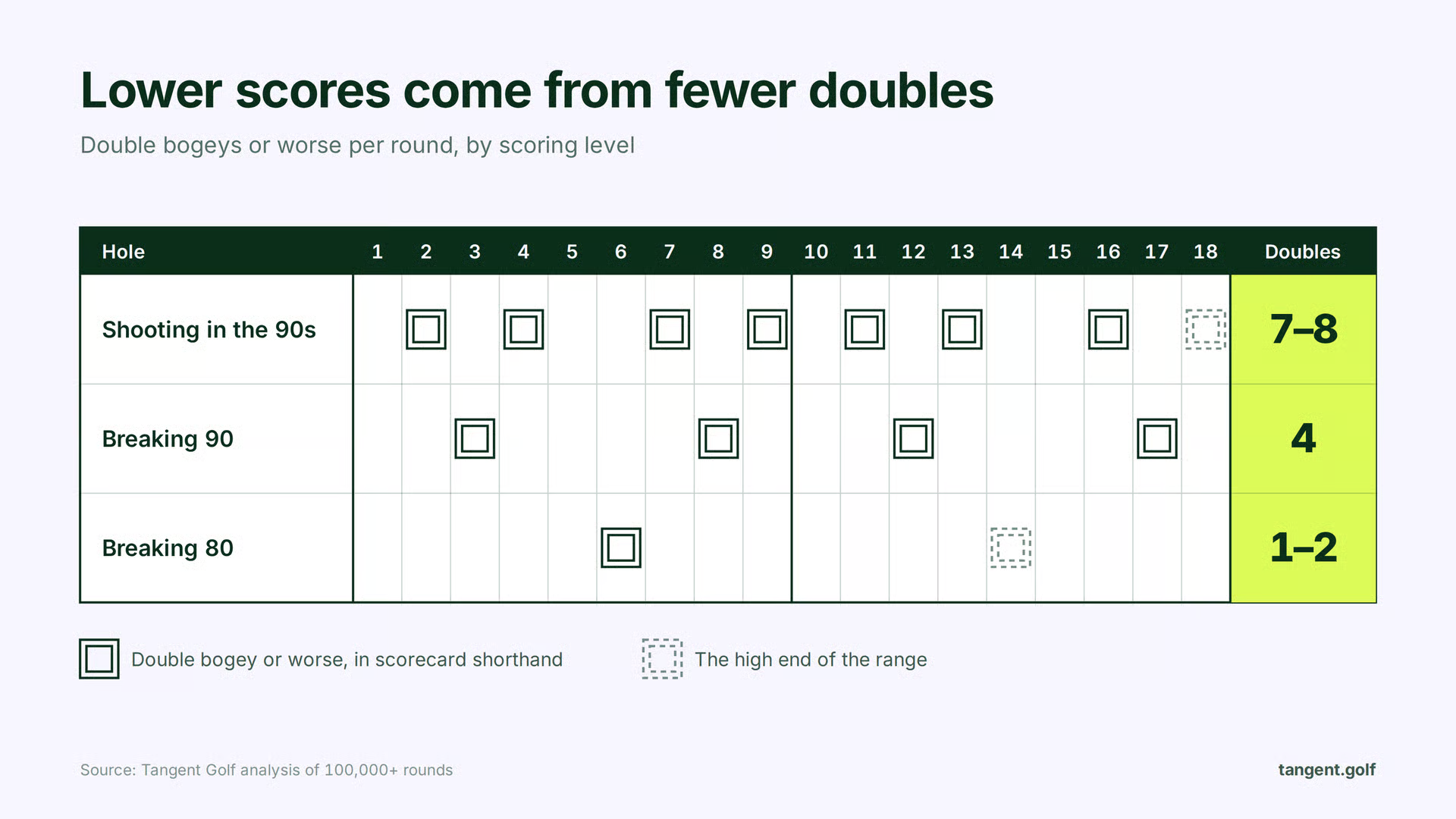
That matters because big numbers are what separate scoring levels. Golfers stuck in the 90s average seven to eight doubles or worse per round. Breaking 90 takes four or fewer. Breaking 80 takes one, or two at most.
At Tangent, these four are called the Tangent Four. They're the strokes you give away, rather than the ones the course takes from you.
Watch the breaking 90 breakdown on YouTube
You don't need to watch it to use any of this, but it's where the framework comes from.
The four have three things in common:
- They're avoidable without a swing change. Most come down to club choice, target selection, or speed — decisions and basic skills, not technique.
- They compound. Each one turns a manageable miss into a lost stroke or more.
- They're more controllable than birdies. Even golfers who break 70 do it mostly by avoiding bogeys, not by making more birdies.
Two Chips
A two chip is when it takes you more than one shot to get on the green from inside 50 yards.
It's one of the most expensive mistakes in golf because the costs are lopsided. Hitting a chip close saves you a fraction of a stroke. Failing to get it on the green — a chunk, a blade, a second chip — costs you a full stroke or more.
Most two chips come from the same few decisions:
- Too much loft. More loft means a bigger swing, and a bigger swing means a wider range of results.
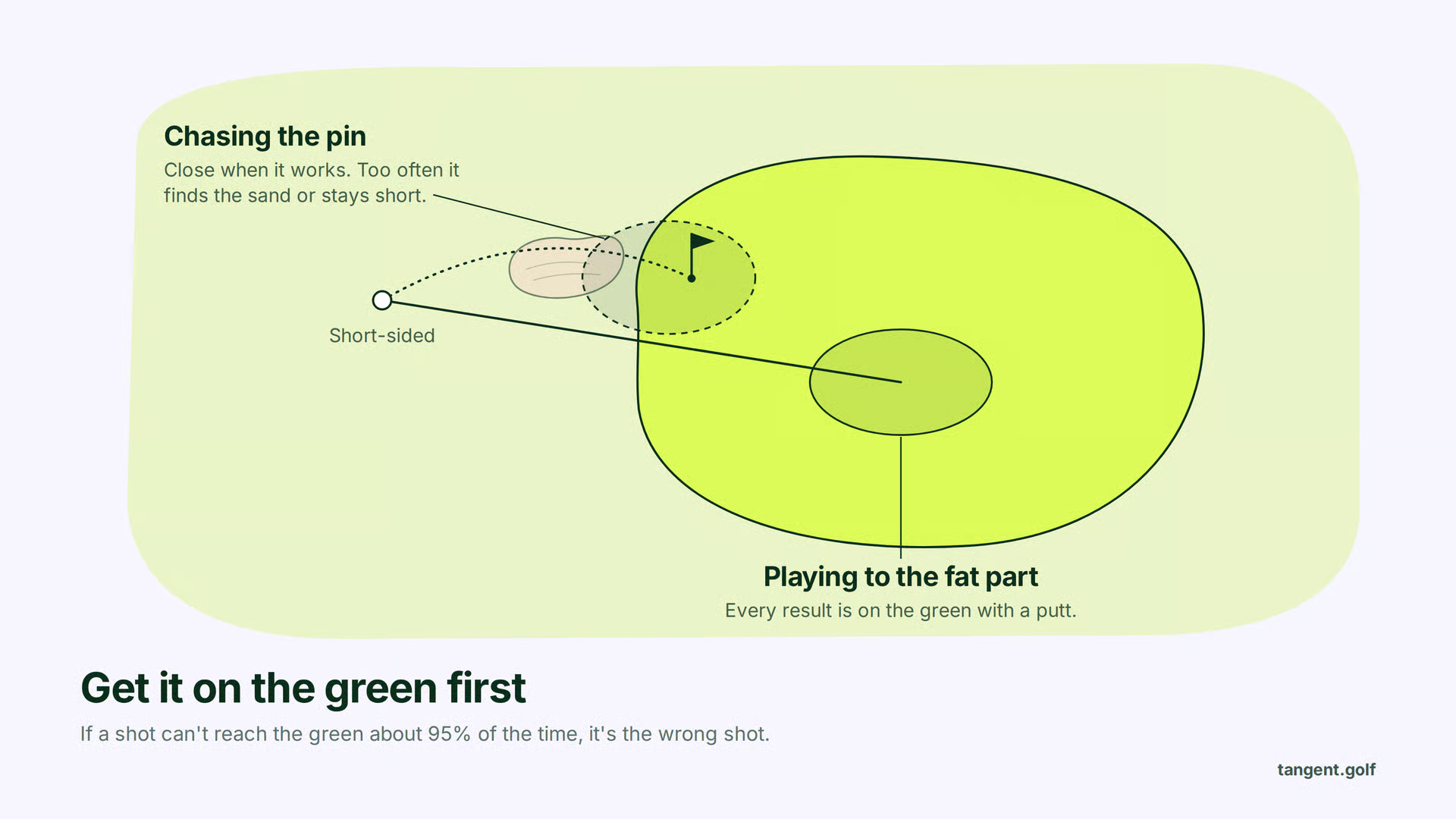
- Chasing the pin when the safe play was the fat part of the green.
- Getting short-sided by the approach shot before it, leaving very little green to work with.
The fix starts with priorities: get the ball on the green first, and close second. Choose the lowest-lofted shot that can do the job. Putt if you can, bump-and-run if you can't, and pitch only when you need the carry. A good test is that if you can't get the ball on the green with a shot about 95% of the time, it's the wrong shot.
When you're short-sided, forget the pin. Play to the part of the green where you have room, and accept a longer putt. We cover this in more detail in our short game article.
Recoveries
A recovery is a shot from trouble: behind a tree, in a deep bunker, or blocked out with no real angle to the green. There's no penalty on the scorecard, but the shot is mostly spent getting back into position.
They cost even tour players a little over half a stroke. And once you're in trouble, the odds are worse than they feel: tour pros in recovery situations make bogey more than 80% of the time.
Recoveries usually start on the tee, from aiming your shot pattern at trouble you could have avoided. They get more expensive in the trees, where it's easy to talk yourself into a gap you'd only thread one time in ten.
Two fixes:
- Off the tee, ask what the most expensive miss is, and move your target far enough away that your normal bad shot still avoids it. Rough with a clear look at the green isn't a problem. A ball behind a tree is.
- Once you're in trouble, ask how often you'd pull off the shot, not whether you can. If the honest answer is rarely, punch out. Don't turn one recovery shot into two.
Our article on how to recover from a bad shot walks through those decisions in detail.
Penalties
Out of bounds is effectively a two-stroke penalty, whether you re-tee or take the two-stroke drop up ahead. Penalty areas cost a little more than one stroke, since you can usually drop and keep moving forward.
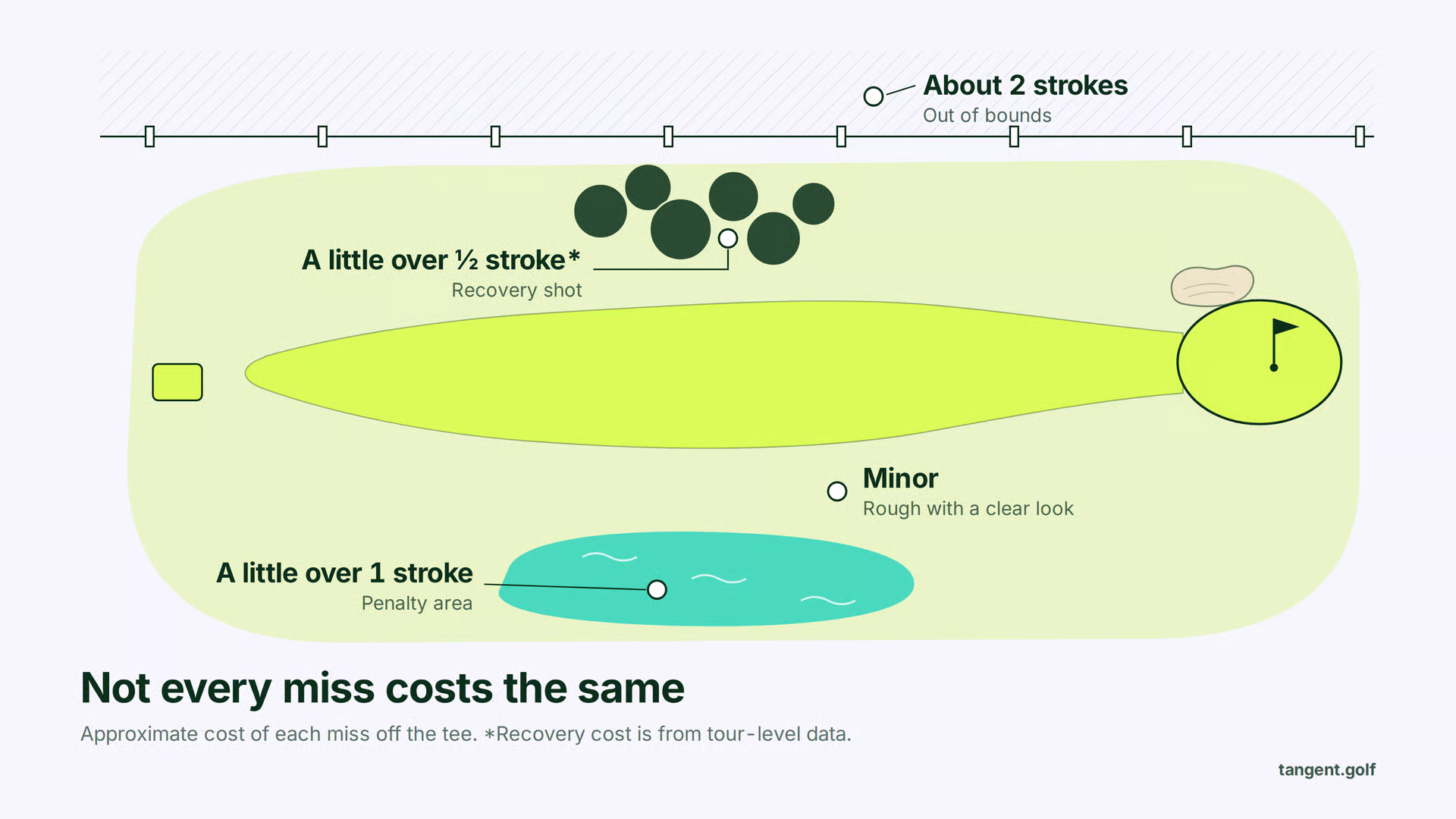
That gives you a clear priority order off the tee: avoid out of bounds first, then penalty areas, then recovery shots. Rough with a clear shot at the green comes last, because it's barely a problem at all.
Most penalties come from giving trouble an equal share of your shot pattern. Aiming down the middle of a fairway with water on one side and harmless rough on the other gives the water just as much of your dispersion as the rough. Shift the target toward the safe side. In Dallas's example, that drops fairways hit from about 60% to 50% — but takes the water from one drive in ten to none. More on that in our article on why you should stop aiming at the fairway.
And when you do take a penalty, don't try to win the stroke back. Lower your goal for the hole: aim for a GIRp1 (green in regulation plus one) and a putt for par, rather than firing at the pin.
Three Putts
Three-putts throw away all the work it took to reach the green, and they're more common than most golfers think. Golfers trying to break 100 typically three-putt three to five times a round. Breaking 90 takes three or fewer, and breaking 80 takes two or fewer.
Nearly all three-putts are speed problems, and two things cause most of them:
- Trying to make everything. A ball moving too fast can't use the whole hole. A putt that would roll one foot past can only use about 2.6 inches of the 4.25-inch cup, and one that would roll four feet past has less than an inch. On top of that, it leaves you a comebacker.
- Long first putts. Better ball striking means hitting more greens from further away, which means more 30- and 40-footers.
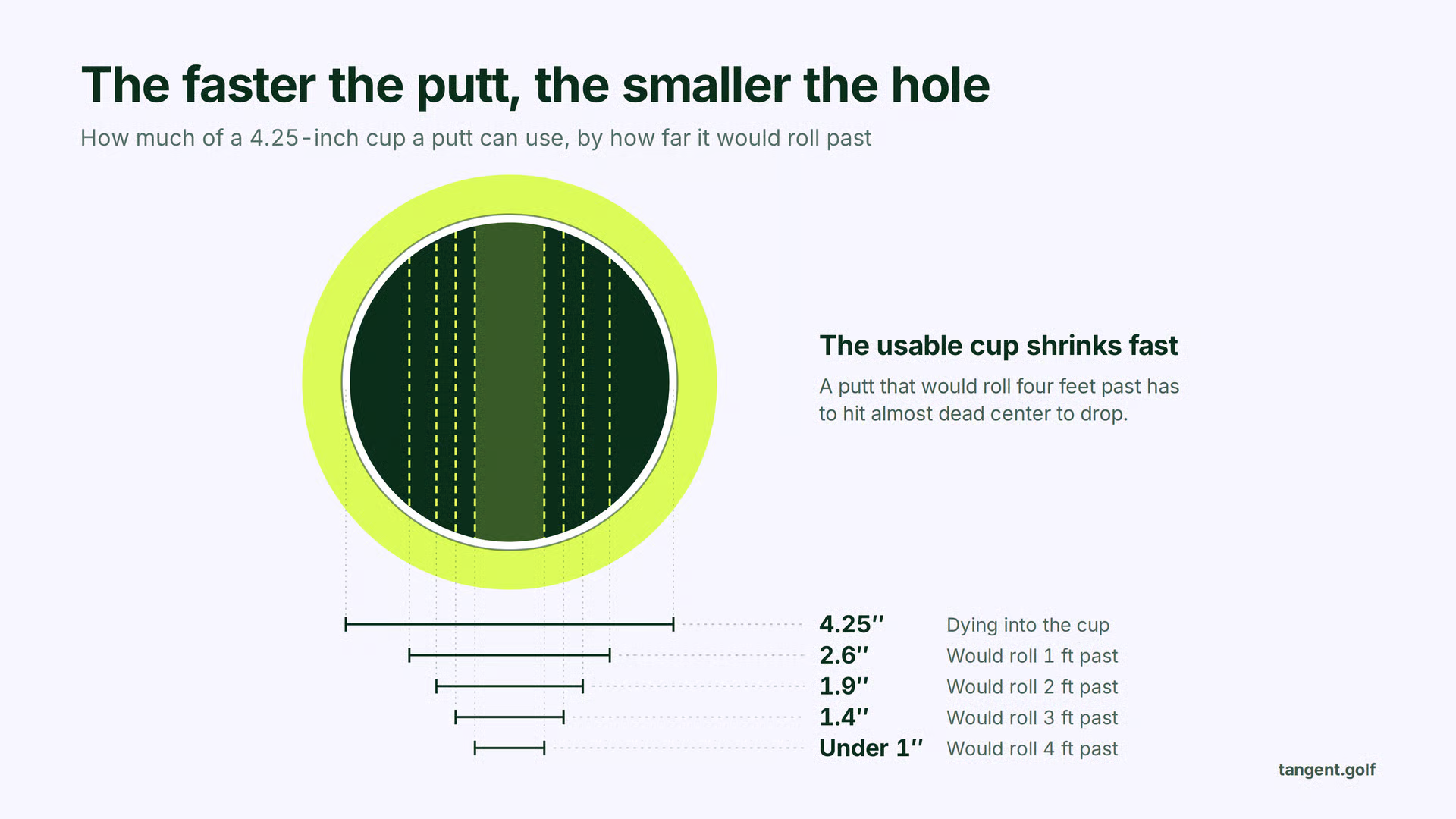
The fix is to lead with speed. A good lag finishes within about 10% of the starting distance, so six feet from 60 feet is a solid result. From outside about 15 feet, aim to center your distance pattern on the hole rather than past it. You'll leave a few short, but you'll leave far fewer long comebackers.
Practice it with the Putting Ladder Drill and the Pull Back Drill. Our putting article covers the full approach.
Your Potential Score
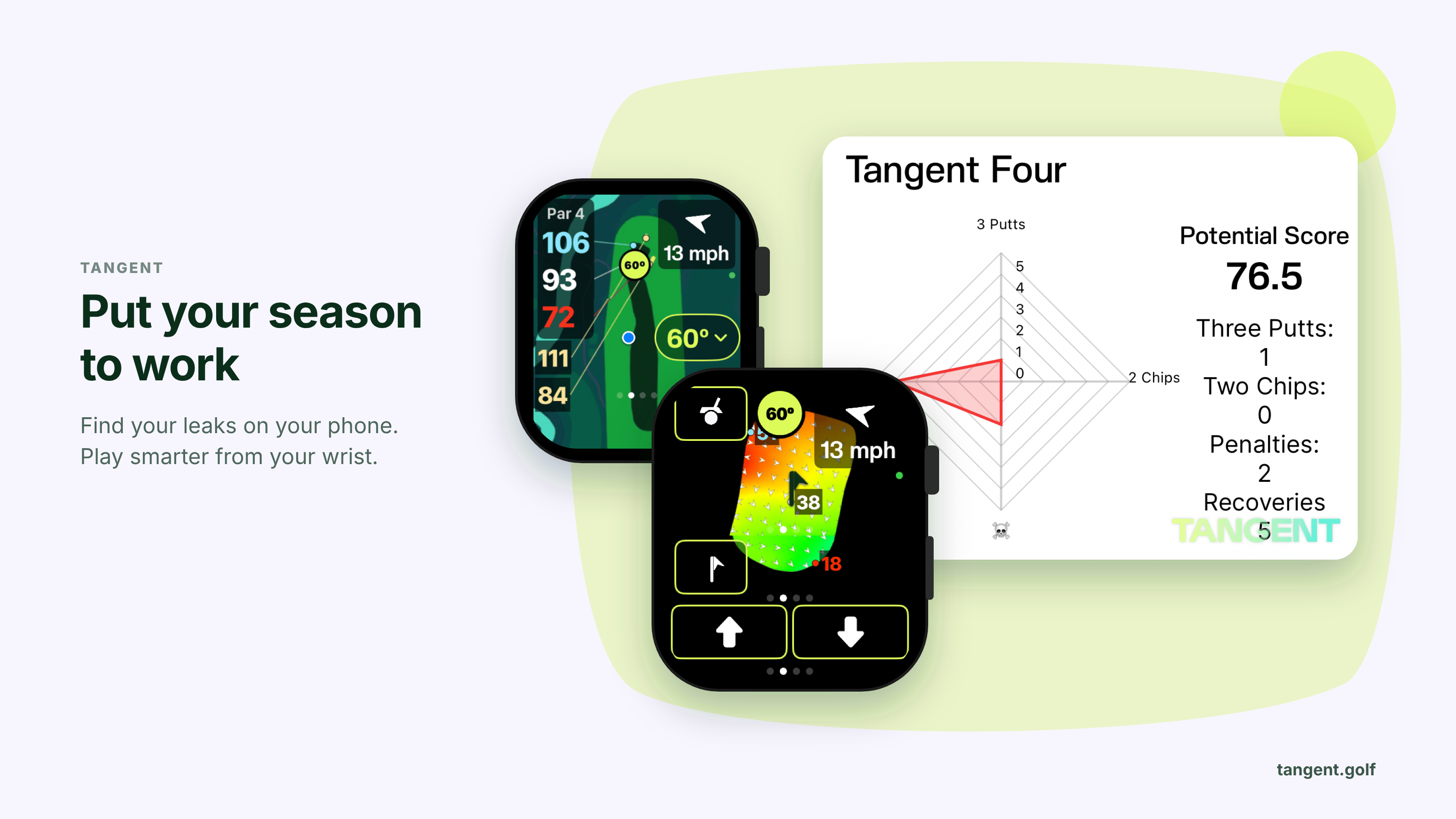
Tangent tracks all four from your shot data and shows the gap they create as your Potential Score: what your round could have been with the same swings, minus the strokes you gave away.
That gap is useful because it separates two very different problems. Strokes lost to your swing take time and practice to win back. Strokes lost to the Tangent Four mostly come back through better decisions, often starting with your next round.
Dallas's own tournament round is a good example. He shot 82 as a scratch golfer while coming back from an elbow injury. His Round Report showed only one three-putt, but multiple penalties and recovery shots — including a single par 4 where a topped 3-wood and two trips into the water added up to a nine. His takeaway was that it was an 82 that could easily have been a 77. He breaks the whole round down in our article on how to learn from a bad round.
The swing still matters. But the Tangent Four are usually the cheapest strokes on your card.
How to Close the Gap
After each round:
- Find which of the four cost you the most. One category usually stands out.
- Match it to the fix.
- Two chips: use less loft around the green, and build one bump-and-run and one stock pitch you trust.
- Recoveries: move your tee targets away from trouble, and punch out instead of threading gaps.
- Penalties: aim away from the most expensive miss, and stop trying to win strokes back.
- Three putts: work on speed control with the Putting Ladder Drill and the Pull Back Drill.
- Work on one at a time. Watch whether that category shrinks over your next few rounds before moving to the next.
Tracking all four by hand is tedious, which is why most golfers never do it. Tangent counts them automatically from your shot data, so you can see which one is costing you the most and whether it's actually shrinking.
Download Tangent Golf and find out what your Potential Score is.
Frequently Asked Questions
What is a two chip in golf?
A two chip is when it takes more than one shot to get the ball on the green from inside 50 yards. It's usually caused by using too much loft, chasing the pin, or being short-sided, and it typically costs a full stroke or more.
What counts as a recovery shot?
A recovery shot is a shot from trouble — behind a tree, in a deep bunker, or with no clear angle to the green. It doesn't add a penalty stroke, but it's spent mostly getting the ball back into position, and it costs even tour players a little over half a stroke.
How many three-putts per round is normal?
Golfers trying to break 100 typically three-putt three to five times per round. Golfers who break 90 usually have three or fewer, and golfers who break 80 have two or fewer.
What is Potential Score?
Potential Score is the score your round could have been without the Tangent Four: two chips, recoveries, penalties, and three-putts. It shows how many strokes you lost to avoidable mistakes rather than to your swing.