Most golfers would aim right down the middle of this fairway. It's the default, and it feels like the safe play.
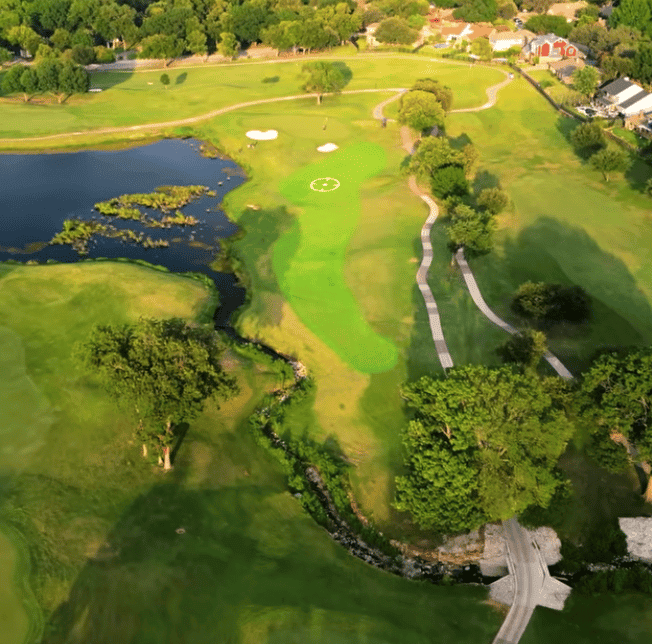
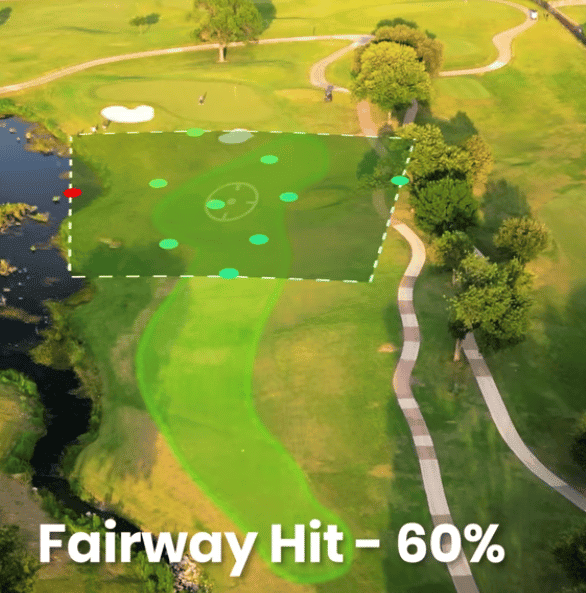
But for my normal driver pattern, aiming down the middle puts roughly one out of every 10 shots in the water.
So I'm going to aim somewhere else. I'll hit fewer fairways — and I've almost completely removed the penalty.
That's the whole idea. Fewer fairways can lead to lower scores, because the best target is the one that gives your entire shot pattern the best chance to score. And often that isn't the fairway.
Watch the Full Breakdown
Watch the full video on YouTube
Dallas shows the dispersion overlays and the tour data on course. Everything below is the written version.
The Fairway Is a Vanity Stat
We've been trained to judge driving with one question: did you hit the fairway?
The broadcast mentions it. You're probably tracking it on your scorecard. But golf doesn't hand you a lower score for finding short grass. It only cares what happens next.
How far are you from the hole? Did you avoid a penalty? Do you have a clear shot?
Put simply: what are your chances of hitting the green from here? That's what good driving actually buys you.
Strokes gained driving measures this properly, because it accounts for distance, accuracy, penalties, punch-outs, and every other consequence of your tee shot. Fairway percentage accounts for one of those things.
The Best Drivers Don't Hit the Most Fairways
If accuracy were the secret, the best drivers on tour would be the most accurate players. They aren't.
Compare driving distance to strokes gained driving and the relationship is obvious — longer players tend to be better drivers. Compare fairway percentage to strokes gained and you mostly get a cloud.
Accuracy isn't nothing. But distance is far more closely connected to good driving than fairways hit.
Which makes sense. Unless you're playing a US Open setup, would you rather be 100 yards out in the rough or 160 in the fairway? You'd take the rough almost every time. A longer drive makes nearly every next shot easier.
A missed fairway only gets expensive when the miss creates an actual problem. A penalty is a problem. A tree is a problem. A bunker that forces a layup is a problem. A decent lie in the rough with a clear shot at the green is not a problem.
Some names to put on it:
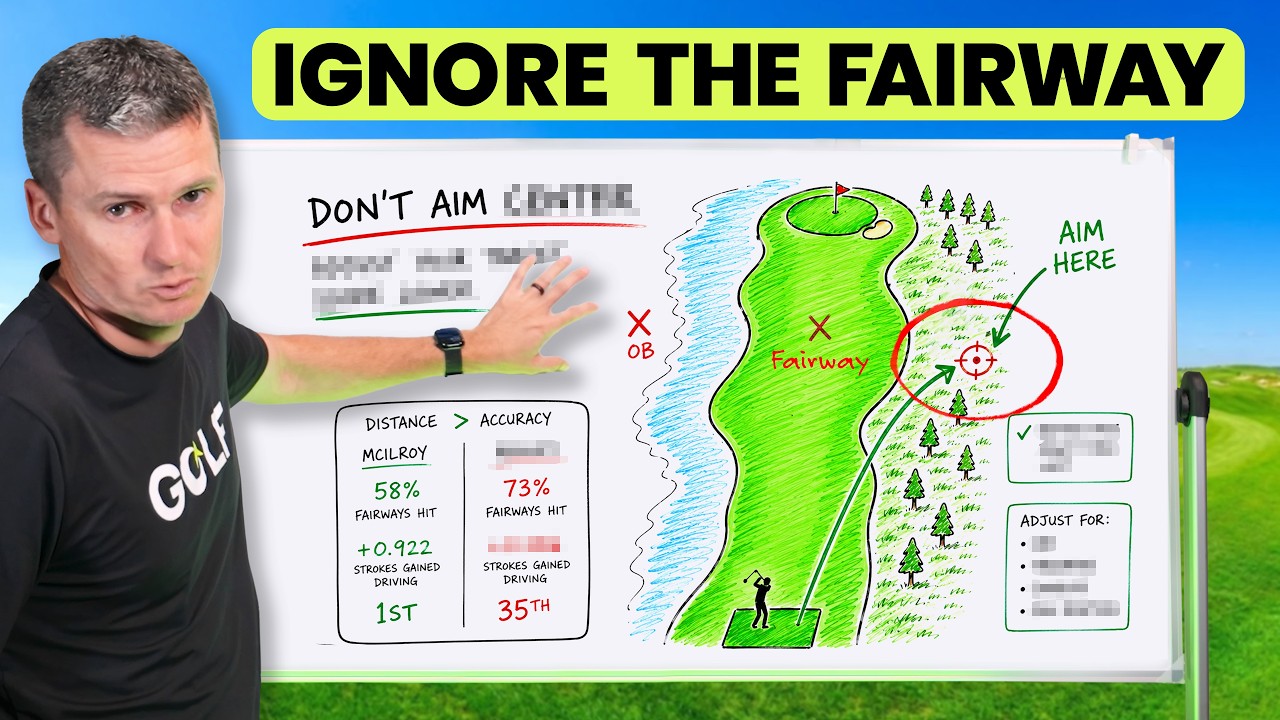
- Rory McIlroy is statistically one of the best drivers in the world while hitting roughly 60% of his fairways. At his speeds, a degree or two offline means missing the short grass — and he still ranks near the top in strokes gained off the tee.
- Russell Henley leads the tour in accuracy at 73%. That's still only seven out of ten. And because he gives up distance, he sits around 37th in strokes gained driving.
- Scottie Scheffler is the better model. Long enough, but his real superpower is that he almost never creates disaster.
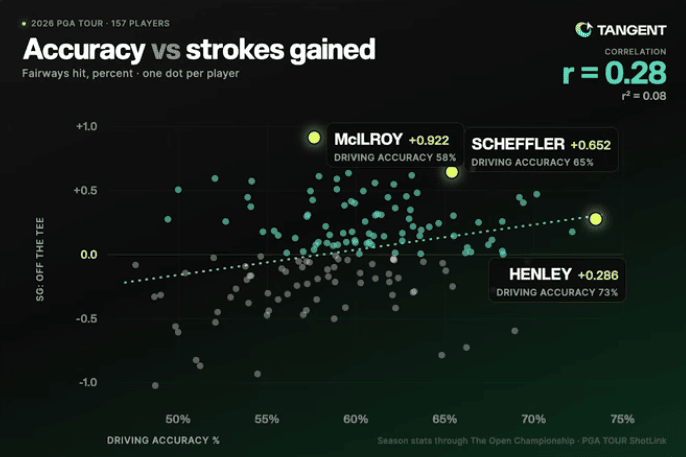
That's the formula. The best drivers aren't the players who hit the most fairways. They're the longest players who keep the ball in play.
Not All Misses Are Equal
Counting fairways treats a ball a few yards into light rough exactly the same as a ball stuck behind a tree. Those aren't close.
Here's a real priority order off the tee.
1. Avoid out of bounds. This is effectively a two-stroke penalty — you're either re-teeing or taking the stroke-and-distance relief. Nothing destroys a scorecard faster.
2. Avoid penalty areas. Water and red stakes still cost you, but you can usually keep moving forward with a drop. Typically a bit more than a one-shot penalty.
3. Avoid recovery shots. Trees, deep bunkers, blocked angles. No penalty on the card, but they force you to waste the next shot. These cost a tour player a little over half a stroke.
4. Rough with a clear look. Not a disaster. For most golfers, 130 yards from ordinary rough beats 165 from the fairway.
This is exactly where fairway percentage fails. It scores a ball one foot into the rough the same as a ball behind a tree, and it scores a center-cut layup as a success even when it left you 40 extra yards.
Those are not equivalent outcomes.
You Hit a Pattern, Not a Shot
Here's the mental model that changes how you aim.
You don't hit one tee shot. You hit a pattern. Over enough drives, your shots create a spread. Some finish left, some right, some long, some short, most in between.
Your target isn't where the ball will finish. It's the center of that dispersion — meaning roughly half your shots end up on one side of it and half on the other.
So when you aim down the middle of the fairway, you're handing yourself equal room on both sides.
That only makes sense if both sides are equally dangerous. And on a real golf course, they almost never are. Water left, rough right. Trees right, another fairway left. A bunker on one side and nothing on the other. Out of bounds left and an entire county to the right.
One side usually costs more. So why give it the same share of your pattern?
That's not conservative. That's lazy targeting.
The Trade Most Golfers Refuse to Make
Back to that hole from the start.
Aiming down the middle, I might hit the fairway 60% of the time. Sounds good — except the edge of my pattern reaches the water, and roughly one in ten drives finds it.
Move the target to the safe side and my fairway percentage drops to maybe 50%. I'll hit more shots in the right rough.
But my chances of finding water go from 10% to zero.
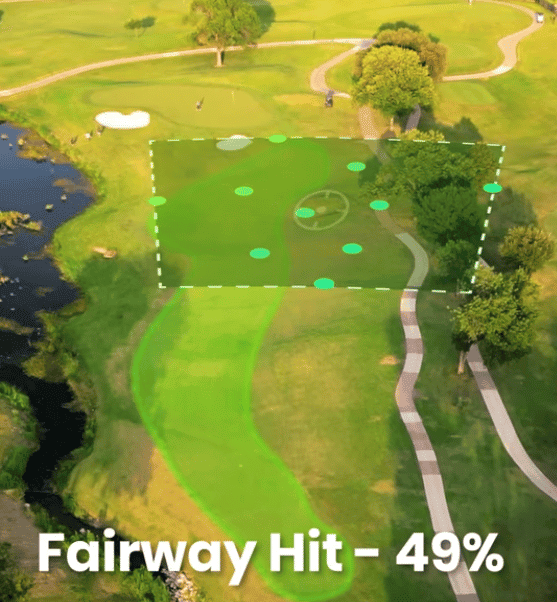
I intentionally hit fewer fairways and built a better scoring strategy. That's the trade most golfers won't make, because they're optimizing the wrong number.
Rough is cheap. Penalties and recovery shots are expensive. Trading harmless rough for disaster avoidance is the best trade in golf.
How to Find Your Target
You don't need a tour caddie to start thinking this way. Before every tee shot, ask one question:
What's the most expensive miss here?
Then move your target far enough from it that your normal bad shot still avoids the trouble. Not your absolute worst shot — you can't build a strategy around a ball that could go anywhere. But you should account for the normal edge of your pattern.
Sometimes you'll aim near the edge of the fairway. Occasionally you'll aim in the rough. That isn't a mistake. Your aim point is the center of your dispersion, not a demand for where the ball must finish.
That one change helps immediately. No swing change, no speed training, no new driver. Just a better target.
The hard part is knowing how far to move it, especially on unfamiliar courses. "Favor the left side" is useful advice, but by how much? Five yards? Fifteen? Should you change clubs entirely?
That depends on your actual pattern, the length of the hole, and what each possible miss costs in strokes — which is the same dispersion thinking behind breaking 80, applied off the tee.
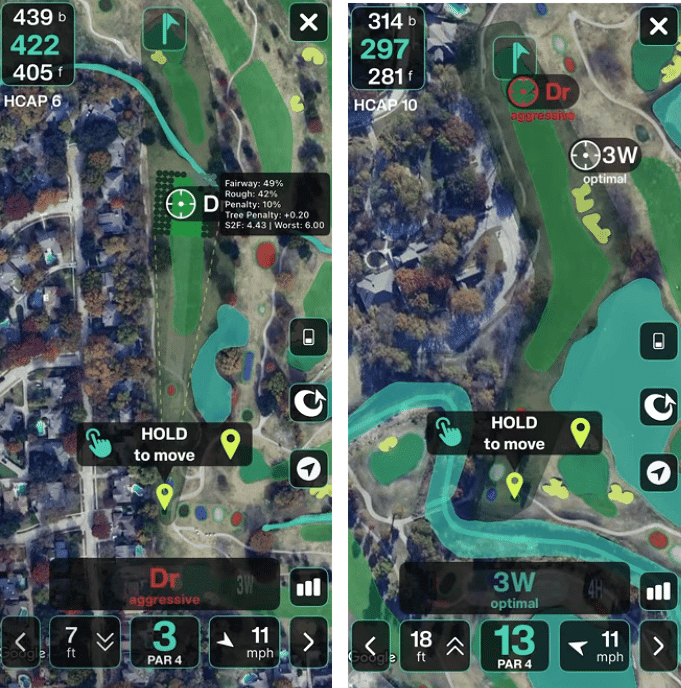
That's the exact problem I built Tangent's Smart Caddy to solve. It learns your real pattern from the shots you track — not Rory's, not a generic 15 handicap's, yours. Then it overlays that dispersion on the hole, evaluates the possible outcomes, and recommends the club and target expected to cost you the fewest strokes. Sometimes that's the middle of the fairway. Often it isn't. And when laying back genuinely removes a hazard or tightens your pattern, it'll tell you that too.
The point isn't always hit driver. The point is to stop guessing at how far to move your target.
Download Tangent Golf and find out where your misses actually go.
When You Should Lay Back
Taking less than driver is only safe when it buys you something.
Most golfers just assume a 3-wood means finding the fairway and playing from there. Check your actual dispersions first, because plenty of golfers are just as crooked with a 3-wood — some more so.
Now you're 30 yards further back and still in the rough. That's the worst of both worlds.
A shorter club makes sense when it genuinely removes a penalty from your normal pattern, stops short of a narrowing fairway, or is measurably more accurate for you. "This feels safer" is not enough.
And if a hole is tight and difficult even when you lay back, I'd rather send it. If I'm going to be in trouble, I'd prefer to be in trouble as close to the hole as possible.
If you don't know whether your 3-wood is actually straighter than your driver, that's worth finding out. For me, it isn't.
The Real Goal Off the Tee
So stop aiming at the fairway. Aim away from the expensive mistake.
Your goal off the tee was never to touch short grass. It's to leave yourself as close to the hole as possible, with a clear next shot and no penalty.
The fairway is great when it happens. It's just not the scoreboard.
Frequently Asked Questions
Is fairway percentage a bad stat?
It's an incomplete one. It treats a ball one foot into the rough identically to a ball behind a tree, and it counts a short layup in the fairway as a success even when it leaves you 40 extra yards. Strokes gained driving is a far better measure because it accounts for distance, penalties, and recovery situations too.
Should I aim somewhere other than the middle of the fairway?
Usually, yes. Aiming down the middle splits your dispersion evenly on both sides, which only makes sense when both sides carry the same cost. Since one side is almost always more expensive, shifting your target away from the bigger penalty is normally the better play — even if it means hitting fewer fairways.
Is hitting 3-wood off the tee safer than driver?
Only if it actually removes trouble from your pattern or is genuinely more accurate for you. Many golfers are no straighter with a 3-wood, which leaves them 30 yards further back and still in the rough. Check your dispersions by club before assuming the shorter club is the safe one.