I just shot 82 in a tournament as a scratch golfer.
The score doesn't tell the story. One hole made it look like a disaster, and honestly this is a round I'd rather forget ever happened.
But if you actually want to improve, you have to learn from every round. And the shot tracking from this one showed me something far more useful than the number. It showed me a pattern, and it told me exactly what to work on.
So this isn't a hole-by-hole recap. It's how you turn a bad round into a genuine opportunity — and buried inside this 82 is a lot of good golf.
Watch the Full Breakdown
Watch the full video on YouTube
Dallas walks through the round with the actual shot data and on-course footage. Everything below is the written version.
The Setup
Tour 18 in Flower Mound, Texas, playing a US Am Tour event.
I'm coming back from elbow tendinitis, so I hadn't practiced or played much. I genuinely wasn't sure which version of my swing was going to show up — which is exactly what makes it a good film room round.
The number was 82. The useful part was underneath the scorecard:
- A nine on a par 4, riddled with coachable moments
- One three-putt
- Multiple penalties and recovery shots
- A clear left miss with both driver and irons
- Poor ball striking, with streaks of brilliance
- A few shots that kept it from getting away from me, including a near hole-in-one
The Pattern: Everything Went Left
I was missing left. Not occasionally. Not one bad swing.
That matters because I'm normally a push draw player — I want the ball starting right at the target and turning back. But with the elbow injury I was struggling to get the face open, so everything came out low, closed, and left.
It started on the first hole and never stopped. Even the good drive on two had the wrong flight: low, left spin, closed face. Later a 50° wedge came out well outside my normal dispersion. Then a hybrid on 15.
That hybrid is exactly why post-round data matters. In the moment it feels like a random miss. By the end of the round it's a trend.
And that pattern explains the hole that wrecked my scorecard.


Hole 7: Strategy vs Execution
I was one over through six, stitching together a decent score despite poor ball striking.
Then hole seven, where I want to separate two things golfers constantly conflate: strategy and execution.
It's a replica of the 18th at Harbour Town, but we're playing up, so it's less than driver off the tee. Normally that's great. But with the elbow, I prefer the ball teed up to avoid ground contact — so with a 3-wood in my hand, my subconscious is busy protecting my elbow.
Cold top.
Out of position, still alive. The plan becomes simple: lay up, hug the cart path, wedge on, make bogey at worst. That's a fine strategy. The execution missed by 50 yards.
Water should never have been in play. But when you're injured, distracted, or uncommitted, your normal dispersion goes out the window.
So I'm dropping and hitting four into the green. The next wedge goes so far left it should have used a turn signal. Another drop. The one after that barely finds dry land.
Nine on a par 4.
The strategy was right. The execution was gone. Those require completely different fixes.
If I walk off thinking "bad strategy," I start second-guessing good decisions. Knowing it was execution sends me to work on the swing instead.
Emotion vs Statistics
Emotionally, that hole felt like the entire round. Statistically, it's one hole out of 18.
This is where golfers get themselves in trouble. You shoot 82, you make a nine, and the nine is all you remember.
I was seven over on the front. Five of those shots came on one hole. Despite not having my best stuff, I hit a lot of playable tee shots, made enough good decisions to avoid a total disaster, and only had one three-putt.
This isn't me pretending the 82 was good. It wasn't. But if I react only to the score, I'll go work on the wrong thing.
The scorecard says: you had one bad hole. The round report says: your ball striking was poor, your miss was left, and one blowup inflated everything.
The second one is a diagnosis. The first is just a feeling.
The Best Decision I Made All Day Was a Bogey
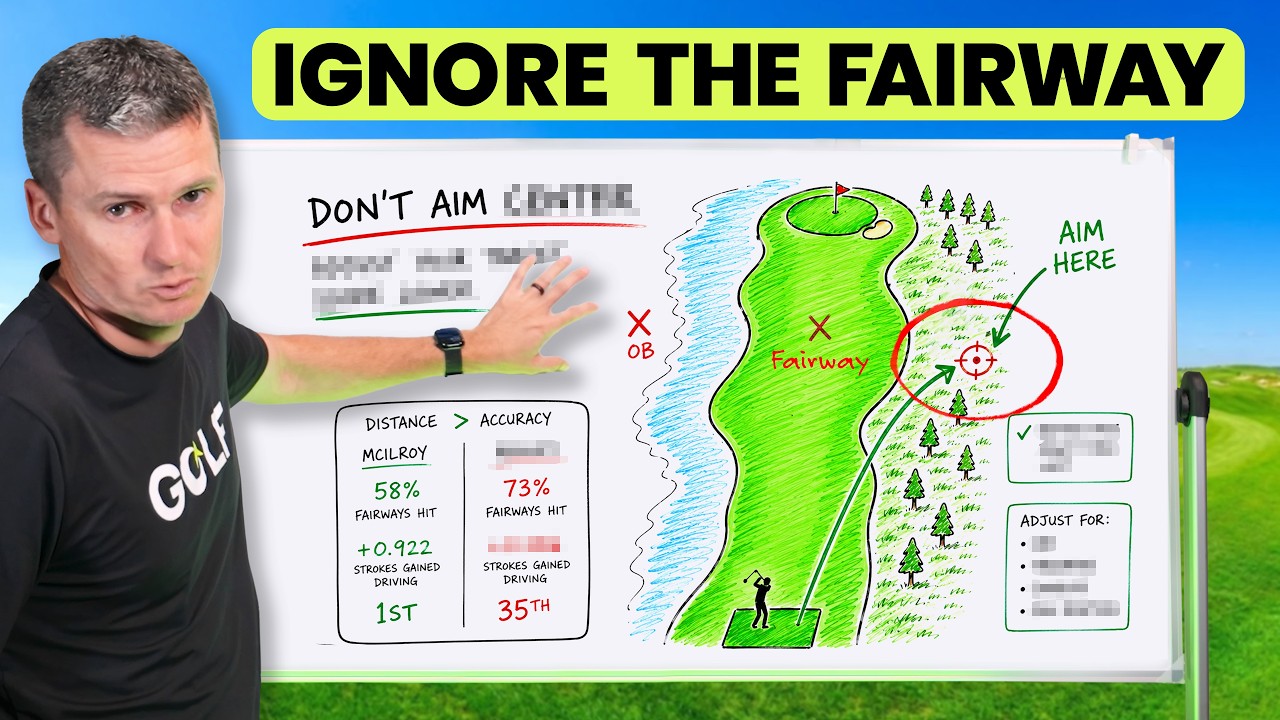
Hole five is a replica of the tented green at Winged Foot, and the front pin is bait. The bunkers look like the obvious miss, but they're dead — you're below the green, hitting across the narrowest section, and double comes very easily.
So my target was the back portion of the green. Not the flag. The shot that takes the bunkers out of play.
Then I hit it so far on the toe I nearly missed the ball entirely.
But because the target was smart, the miss was still playable. I'm in the rough with a choice: aim at the flag, bring the bunkers back into play and try to be a short game magician — or aim right, accept a long par putt, and eliminate double.
I eliminated double. Made bogey. Perfectly happy with it.
All three guys in my group made double, triple, or quad. The average score on that par 3 for my flight was 4.71. I made four, so I gained 0.71 strokes on the field by settling for bogey.
You don't lower scores by pulling off harder shots. You lower scores by making big numbers disappear.
It's the same principle behind the breaking 90 framework and the breaking 80 framework. It applies identically at scratch.
Finding the Good in the Bad
The round had genuinely good shots in it, and Tangent surfaces those too.
On hole 2, an average approach from a great position. Instead of getting annoyed, I poured everything into the putt and holed a 15-footer — worth 0.8 strokes gained, one of my best shots of the round. The emotional golfer remembers the bad chip. The patient golfer remembers the hole isn't over.
On hole 4, my longest drive of the day at 337 yards straight down the middle. I didn't convert it, but on a day I was struggling that tee shot was a real positive.
On hole 12, I hit the flagstick on the fly and kicked out to 33 feet. Unlucky, but a near ace.
On hole 14, I finally started launching the ball on line. The wedge flew long into a bunker, but only because I flushed it and had deliberately taken the water out of play. Solid bunker shot, made the nine-footer for par.
Across the round I gained almost two full shots with my short game, well above my typical performance.
That's what a round report does well. It stops the bad shots from taking over the whole story.
Adjusting Mid-Round
The other useful thing: I actually started to fix it.
On the front nine everything wanted to go left. On the back, I started getting the ball to start right at the target. Not perfect. Certainly not fixed. But closer to my normal pattern.
You don't always have your A game. Sometimes you don't even have your B game. Sometimes you get your injured, rusty, closed-face C game, and the job is to shoot the lowest score available with what you brought.
That back nine wasn't pretty. But it was functional.
What I'm Actually Going to Work On
It was an 82 that could easily have been a 77. Clean up hole seven and the whole story changes.
What the data actually told me:
- My driving wasn't as bad as it felt — four of my driving mistakes came when I was forced to hit less than driver
- My decision-making was pretty good in most spots
- My ball striking was clearly off, especially when I had to hit the ground
- And the biggest pattern was obvious: I was missing left
So that's the work. Not because I'm guessing, and not because I'm angry. Because the round handed me the answer.
I'm not going to overreact — I'm still coming back from an injury. But I am going to run aim drills in the app and stay focused on start direction as I ramp back to health.

Every Round Has Clues
This is why I built Tangent. Golfers don't need more emotional scorecards. They need better feedback.
Track your shots and Tangent will find the patterns, show you where you're actually losing strokes, and give you a plan for what to work on next. For me right now that's face control, ball striking, and getting healthy. For you it might be putting, short game, decision-making, or the one club that keeps quietly costing you strokes.
But you won't know unless you track it.
Download Tangent Golf, track your next round, and learn from every single shot.
Frequently Asked Questions
Why does one bad hole distort a whole round?
Because it dominates your memory far more than it dominates your scorecard. Five of the seven over-par shots on the front nine came from a single hole. Reacting emotionally to the total would have sent me to work on the wrong thing entirely.
What's the difference between a strategy mistake and an execution mistake?
Strategy is the shot you chose. Execution is how you hit it. On the blowup hole the plan was correct and the execution missed by 50 yards. Those need completely different fixes, and conflating them means you either abandon good decisions or ignore a real swing problem.
Can a bogey ever be a good score?
Absolutely. On a par 3 where the field averaged 4.71, making four gained 0.71 strokes on the field while all three players in the group made double or worse. Choosing a target that eliminated the big number was worth more than chasing a flag that was bait.
How do I know what to actually practice after a round?
Look for the pattern, not the worst shot. The worst shot is memorable; the pattern is actionable. Here the data showed a consistent left miss tied to a closed face, which points at start direction work rather than anything the nine on the par 4 might have suggested.